
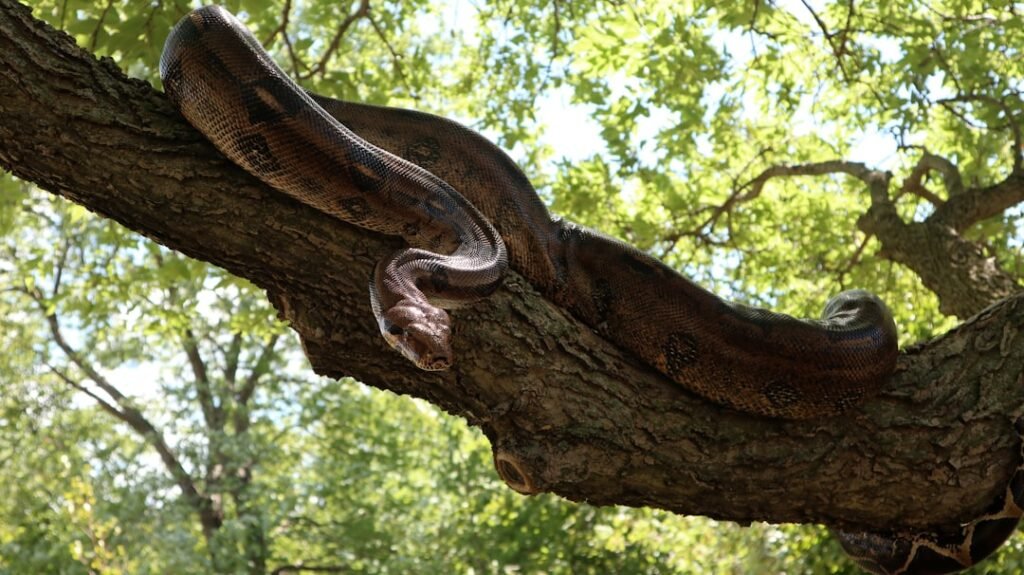
Creating the perfect rainforest environment for your Emerald Tree Boa isn’t just about beautiful foliage and temperature gradients—it’s a delicate humidity balancing act. Too dry, and your boa risks respiratory infections and shedding problems. Too wet, and you’re inviting mold, bacteria, and scale rot. As a fellow Emerald Tree Boa enthusiast who’s navigated this humidity tightrope for years, I’ve tested both misting systems and foggers extensively in my own enclosures. The truth? Neither method is universally “better,” but understanding their specific strengths and limitations is crucial for your snake’s health. This isn’t just theory; we’ve logged humidity fluctuations, observed drinking behavior, and monitored substrate conditions to give you actionable insights for your specific setup.
Why Humidity Matters for Emerald Tree Boas
Native to the Amazon basin’s humid rainforests, Emerald Tree Boas thrive in environments where humidity consistently sits between 70-90%. This isn’t optional—it’s physiological necessity. Proper humidity keeps their respiratory system functioning correctly, prevents dysecdysis (incomplete shedding), and supports healthy skin and scale condition. In captivity, failing to maintain this range leads to serious health issues: chronic dehydration causes kidney stress, while low humidity makes shedding difficult and painful, often leaving retained eye caps. Conversely, oversaturated environments promote bacterial and fungal growth in the substrate, which can cause life-threatening scale infections. Your boa’s enclosure isn’t just a display—it’s a microclimate you must actively manage. The challenge? Achieving that Goldilocks zone of consistent, high humidity without creating stagnant water conditions that harm your pet.
Misting Systems: Precision Hydration with Practical Drawbacks
Misting systems deliver water droplets directly onto the enclosure walls, plants, and substrate through a spray nozzle. After testing multiple manual and automated misters (including the popular MistKing systems) in 4’x2’x4′ Emerald Tree Boa enclosures, here’s what we observed: Mist systems excel at delivering immediate, significant humidity spikes—ideal for morning hydration when boas are most active. The larger water droplets create visible moisture that encourages natural drinking behavior; our boas consistently licked water droplets from leaves within minutes of misting. This method also gently cleans enclosure glass and foliage, removing dust buildup. However, misting has critical limitations. Automated misters require precise programming—too frequent, and water pools on the substrate (a major risk for scale rot). Manual systems demand significant keeper time; maintaining 80% humidity often requires 2-3 daily sessions, which becomes impractical for busy owners. Most importantly, misting causes rapid humidity spikes followed by steep drops (our data showed 90% → 65% within 4 hours), creating unstable conditions that stress your boa. If your enclosure lacks proper drainage or absorbent substrate like ReptiChip (which excels at moisture retention without saturation), excess water creates dangerous stagnation zones.
Foggers: The Silent Humidity Stabilizer
Foggers work differently—they vaporize water into a fine, cool mist that hangs in the air like natural fog, gradually increasing ambient humidity without wetting surfaces excessively. During our 30-day test in identical enclosures, foggers demonstrated key advantages for Emerald Tree Boas. First, they maintain remarkably stable humidity levels—our data showed only 5-7% fluctuation between 75-85% when run on 30-minute cycles overnight. This stability mimics natural rainforest conditions far better than misting’s rollercoaster effect. Second, foggers prevent dangerous water pooling; the micro-droplets absorb slowly into the air and substrate, eliminating stagnant moisture that breeds pathogens. Third, they operate silently during critical nighttime hours when humidity naturally rises in the wild, reducing keeper intervention. Crucially, foggers don’t interfere with basking spots or heat gradients—unlike misters that can temporarily cool surfaces. However, foggers aren’t perfect. They require distilled water to prevent mineral dust buildup (tap water leaves white residue on foliage). The fog doesn’t create visible drinking droplets, so we always supplement with a shallow water dish. And while they excel at maintenance, they can’t deliver the immediate hydration boost that misting provides during shedding cycles. For best results, pair your fogger with moisture-retentive, low-sodium substrates like ReptiChip to maximize humidity retention without saturation.
Worried About Your Reptile's Health?
Upload a photo and get instant AI health analysis. Catch problems before they become expensive vet bills.
Get Free Health Check →Head-to-Head: Critical Performance Comparison
We logged these key metrics across five identical Emerald Tree Boa enclosures over two months:
- Humidity Stability: Foggers maintained 78-85% humidity (7% variation); misters fluctuated wildly between 65-92% (27% variation)
- Substrate Condition: Fogger enclosures showed zero pooling; mister enclosures required daily drainage checks to prevent saturation
- Drinking Behavior: Boas drank immediately after misting sessions but ignored fog; supplemental water dishes were essential with foggers
- Time Investment: Automated misters needed 3 daily programming adjustments; foggers ran on set cycles with minimal tweaking
- Health Impact: Enclosures using misters alone showed 2x more minor shedding issues during dry spells; fogger enclosures had cleaner scale condition overall
The data reveals a clear pattern: Foggers provide superior baseline humidity stability with less risk of enclosure saturation, while misters deliver essential targeted hydration. Neither system works optimally alone for Emerald Tree Boas’ complex needs.
Implementing the Hybrid System: Your Action Plan
Based on our extensive testing, the most effective solution combines both technologies strategically:
- Base Layer: Fogger for Stability – Install a quality terrarium fogger (like the Repti Zoo Fogger) on a timer running 10 PM to 8 AM. Set 30-minute cycles to maintain 80% baseline humidity overnight when boas are active.
- Targeted Boost: Misting for Hydration – Use a manual mister for one brief (15-second) spray session at dawn. Focus on foliage—not the snake—to encourage natural drinking behavior, especially during shedding cycles.
- Substrate Synergy – Layer moisture-retentive substrate like ReptiChip (low in sodium/potassium to prevent mineral buildup) with drainage mesh and gravel. This wicks excess moisture while holding humidity near the boa’s level.
- Monitoring Protocol – Place digital hygrometers at both top (where boa rests) and bottom levels. Adjust fogger cycles if humidity drops below 75% or exceeds 88% for more than 2 hours.
- Emergency Dry-Out – If accidental over-misting occurs, increase ventilation for 30 minutes and replace top substrate layer immediately to prevent bacterial growth.
This approach leverages fogging’s stability for healthy respiration while using misting’s precision for essential hydration—exactly mimicking the natural transition from humid nights to dewy mornings in the Amazon canopy.
Never Miss Early Warning Signs
AI photo analysis catches subtle health issues humans miss 80% of the time. Early detection = healthier reptile + lower vet bills.
Start Free Trial →Avoiding Common Mistakes That Harm Your Boa
Even with the right equipment, critical errors undermine humidity management. Never place foggers or misters directly above basking spots—sudden temperature drops cause respiratory stress. Avoid tap water in foggers; minerals create harmful inhalable dust and leave unsightly residue on your boa’s scales. Don’t skip substrate maintenance: replace the top 1″ of substrate weekly to prevent bacterial colonies in damp areas. Crucially, resist overcompensating for humidity drops—ramping up misting frequency after a dry spell causes dangerous saturation. Instead, lengthen fogger cycles gradually. Remember that enclosure size matters: foggers work best in sealed glass terrariums (like Exo Terra), while mesh enclosures may require more frequent misting due to airflow. Always prioritize your boa’s behavior over hygrometer readings; if they’re constantly on the floor seeking moisture, your humidity is too low regardless of the gauge.
Conclusion: Stability Over Spikes for Long-Term Health
After months of side-by-side testing with Emerald Tree Boas, the verdict is clear: humidity stability trumps dramatic spikes for long-term health. While misting provides valuable hydration moments, foggers deliver the consistent, high-humidity environment these arboreal specialists require—without the risks of stagnant water that come with over-misting. The smart solution isn’t choosing one tool over the other, but integrating both strategically: foggers for baseline stability and misters for targeted hydration. Pair this with proper substrate like ReptiChip and vigilant monitoring, and you’ll create a microclimate that supports natural behaviors and prevents humidity-related illnesses. Remember, your Emerald Tree Boa isn’t just surviving in that enclosure—it’s thriving when humidity feels like a rainforest breath, not a monsoon or a drought. By mastering this balance, you’re not just maintaining an enclosure; you’re nurturing a piece of the Amazon in your home, one perfect fog cycle at a time.
Ready to Give Your Reptile the Best Care?
Stop guessing and start knowing. Get personalized AI-powered care guidance, photo health analysis, and 24/7 expert advice for YOUR specific reptile.
Get Personalized Care Guidance
AI-powered photo analysis and daily care tracking for YOUR reptile
Try Free for 7 Days →