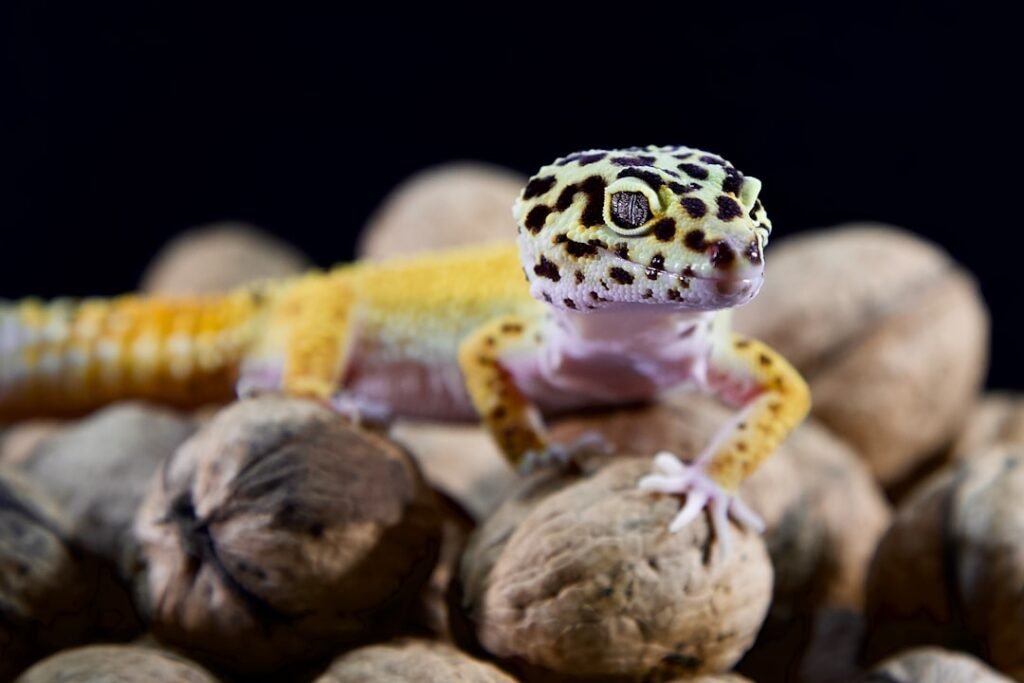
Imagine meticulously setting up your African fat-tailed gecko’s enclosure with the perfect heat lamp, cozy hide, and top-rated UVB bulb—only to discover months later that your pet is developing metabolic bone disease. Shocking, right? This scenario happens more often than you’d think, and it’s entirely preventable. While many reptile keepers follow care guides to the letter, they overlook one critical step: actually measuring UVB output with a dedicated meter. Unlike temperature where a thermostat gives instant feedback, UVB strength is invisible to the human eye and degrades silently over time. For these charming, crepuscular geckos who thrive under precise 5-7% UVB conditions, guessing isn’t just risky—it’s potentially life-threatening. This isn’t about complicating your routine; it’s about transforming good intentions into guaranteed results for your scaly companion.
Why Your UVB Bulb Isn’t Enough (Even If It’s “Correct”)
You’ve probably read that African fat-tailed geckos need a 5.0 or 5-7% T5 UVB bulb spanning one-third to half the enclosure length. But here’s the uncomfortable truth: two identical bulbs from the same box can emit wildly different UVB levels due to manufacturing variances. Add factors like fixture reflectivity (a poor fixture can slash output by 30%), mesh screen obstruction (blocking up to 50% of UVB), and bulb aging (losing 30-50% potency in 6 months), and “following instructions” becomes a gamble. Unlike diurnal lizards, fat-tails don’t bask openly, so they rely on subtle UVB gradients across their enclosure. Without a meter, you’re assuming the bulb works as advertised and that your setup replicates the manufacturer’s test conditions—which it almost never does. Zoo Med and Arcadia themselves state that UVB output varies significantly based on installation, making measurement essential for accuracy.
The Hidden Dangers of “Good Enough” UVB
Underestimating UVB needs leads to insidious health issues that creep up slowly. African fat-tailed geckos housed without verified UVB often develop subtle signs like lethargy, poor appetite, or “soft” tails long before obvious bone deformities appear. Research shows these geckos thrive significantly better with proper UVB—displaying better weight gain, stronger immune function, and natural behaviors like increased exploration. Without a meter, you might misinterpret “no visible symptoms” as “everything’s fine,” while your gecko silently struggles with impaired calcium metabolism. Remember: UVB isn’t just about preventing metabolic bone disease; it’s about enabling optimal health. A Solarmeter reading below 25-30 UVI at the basking zone (9-11″ below the bulb) means your gecko isn’t synthesizing enough vitamin D3, regardless of calcium supplements. This gap is impossible to spot without measurement.
Your Step-by-Step UVB Meter Testing Guide
Using a Solarmeter Model 6.5 (the gold standard for reptile keepers) takes 60 seconds and should be done monthly. Here’s exactly how to do it right:
Worried About Your Reptile's Health?
Upload a photo and get instant AI health analysis. Catch problems before they become expensive vet bills.
Get Free Health Check →- Prepare the enclosure: Turn on all lights for 30 minutes to stabilize output. Remove any glass or plastic covers blocking the bulb—UVB doesn’t penetrate these materials.
- Measure at basking height: Place the meter sensor where your gecko’s back would rest on the warm-side basking platform (typically 9-11″ below the bulb). Hold it parallel to the floor.
- Check the gradient: Take readings at three points: directly under the bulb, midway to the cool side, and at the coolest hide. Fat-tails need a gradient from 25-30 UVI down to near 0 UVI.
- Verify photoperiod: Test at both “dawn” (when lights turn on) and “midday” (3 hours after lights on) since UVB output fluctuates.
For albino or low-pigment morphs (amel, caramel, ghost), aim for 15-20 UVI at basking height—use a 2-3% T5 bulb if readings exceed this. If your meter shows inconsistent or low readings, immediately check for common issues: dirty bulb glass, non-reflective fixture, or expired bulb (replace every 6-12 months even if still glowing).
Debunking 3 Costly UVB Myths
Myth 1: “My bulb is labeled 5.0, so it’s perfect.” Bulb labels indicate output under ideal lab conditions—not your specific setup. A Zoo Med ReptiSun 5.0 T5 in a non-reflective fixture over mesh might deliver only 15 UVI instead of the needed 25-30 UVI. A meter exposes this gap.
Myth 2: “My gecko seems fine, so UVB must be adequate.” Fat-tails mask illness until it’s advanced. Early UVB deficiency causes subtle calcium depletion that accumulates over months. By the time you see symptoms like jaw swelling, irreversible damage has occurred.
Myth 3: “UVB meters are too expensive for casual keepers.” At $150-$200, a Solarmeter pays for itself by extending bulb life (you’ll replace only when output drops, not on a arbitrary schedule) and preventing $300+ vet bills for treatable conditions. Think of it as pet insurance you use monthly.
Never Miss Early Warning Signs
AI photo analysis catches subtle health issues humans miss 80% of the time. Early detection = healthier reptile + lower vet bills.
Start Free Trial →Troubleshooting Real Meter Readings (With Examples)
Let’s solve actual problems you might encounter during testing:
- Reading: 10 UVI at basking spot (too low)
Fix: Swap to a higher-output bulb (e.g., 7% instead of 5%) or move the fixture closer. If using mesh, elevate the fixture 2-3″ above the screen. Always remeasure after changes. - Reading: 40 UVI at basking spot (too high for albinos)
Fix: Install a 2-3″ layer of cork bark or foliage between bulb and basking zone to diffuse UVB. For severe cases, switch to a 2-3% T5 bulb. - Reading: 30 UVI directly under bulb but 5 UVI 6″ away (no gradient)
Fix: Your bulb is too short. Replace with a fixture spanning 50% of the enclosure length (e.g., 22″ bulb for a 48″ tank) to create a smooth UVB transition zone.
Remember: readings must be taken with the same fixture, distance, and obstruction as your gecko experiences. Never test through glass or plastic—these materials block all UVB. If your setup uses a linear T5 bulb (as recommended by Arcadia and Zoo Med), ensure the fixture has a polished aluminum reflector; cheap plastic fixtures can reduce output by half.
Why Meters Outperform “Set-and-Forget” Alternatives
Some keepers rely on bulb replacement schedules (e.g., “change every 6 months”) or digital UVB sensors built into thermostats. Both approaches fail. UVB degrades unevenly—bulbs in humid enclosures or poorly ventilated fixtures die faster. Built-in sensors lack calibration for reptile-specific UVI ranges and often can’t measure low-output T5 bulbs accurately. A Solarmeter, however, gives reptile-specific UVI readings validated by herpetologists. It also detects early bulb failure: a 5.0 bulb might still glow brightly at 6 months but emit only 15 UVI instead of 30 UVI. With a meter, you replace bulbs only when needed—saving money while ensuring safety. For context, Zoo Med’s own research shows UVB output can vary by ±20% between identical bulbs, making measurement the only reliable method.
Building Your Stress-Free UVB Routine
Integrating meter testing into your care schedule takes almost no extra time. Set phone reminders for the first day of each month: while checking temperatures, spend 60 seconds taking UVB readings at your gecko’s three key zones (basking, mid-enclosure, cool hide). Record results in a simple notebook—tracking trends helps spot gradual degradation. Pair this with visual bulb checks: clean the glass with isopropyl alcohol monthly (dust cuts UVB) and verify no debris blocks the fixture. For new setups, test daily for the first week to confirm stability. Remember that seasonal daylight changes affect your gecko’s natural photoperiod—adjust timer settings from 13 hours in summer to 11 hours in winter, but always verify UVB intensity matches after adjustments. This tiny habit transforms UVB from a “maybe it’s working” worry into a concrete, confidence-boosting part of your routine.
Join thousands of successful reptile owners
Try ReptileCoach Free →Final Thoughts: Health Through Measurement, Not Guesswork
Your African fat-tailed gecko deserves more than hope when it comes to UVB lighting. These sensitive creatures thrive only when their invisible environmental needs are met with precision—and that precision starts with a meter. By measuring UVB output monthly, you eliminate dangerous guesswork, catch problems before they harm your pet, and unlock the full health benefits research shows these geckos gain from proper UV exposure. Think of your Solarmeter not as an extra chore, but as your direct line to understanding your gecko’s world. In the end, the most loving thing you can do isn’t buying the most expensive bulb—it’s ensuring what’s inside that bulb actually reaches your gecko in the right dose. That’s the difference between keeping a gecko alive and helping it truly flourish.
Ready to Give Your Reptile the Best Care?
Stop guessing and start knowing. Get personalized AI-powered care guidance, photo health analysis, and 24/7 expert advice for YOUR specific reptile.
Get Personalized Care Guidance
AI-powered photo analysis and daily care tracking for YOUR reptile
Try Free for 7 Days →