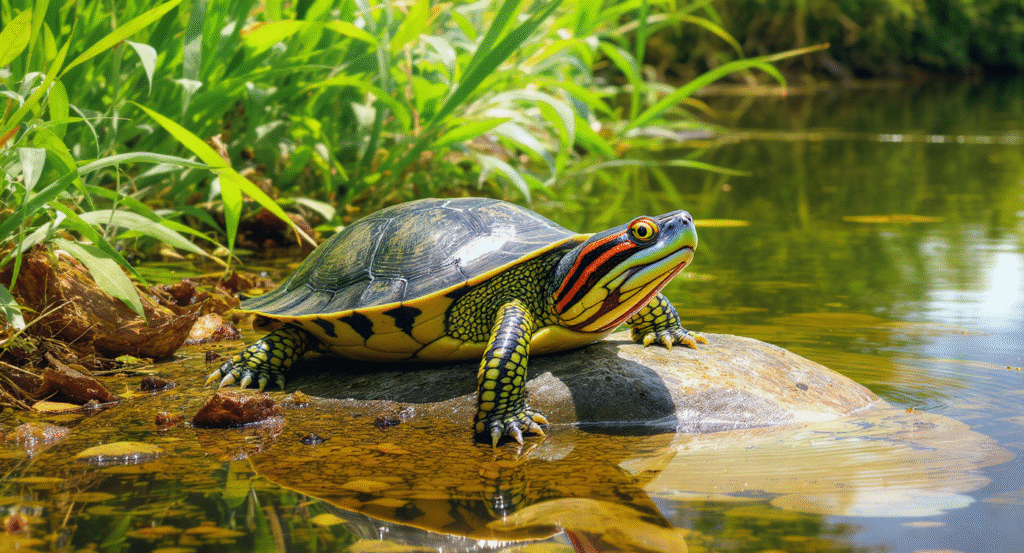
Red eared slider turtles are among the most popular pet reptiles in the world, known for their distinctive red stripe behind each eye and their engaging personalities. However, many new owners underestimate the commitment and specialized care these aquatic turtles require. This comprehensive guide will walk you through everything you need to know about red eared slider turtle care, from habitat setup to nutrition and health management.
Understanding Your Red Eared Slider Turtle
Red eared sliders (Trachemys scripta elegans) are semi-aquatic turtles native to the southern United States. They can live 20-40 years in captivity when properly cared for, with some individuals reaching even older ages. These turtles can grow quite large, with females reaching 10-12 inches and males typically staying around 8-10 inches in shell length.
Before bringing a red eared slider home, it’s crucial to understand that the tiny hatchlings sold in pet stores will grow significantly and require increasingly larger habitats throughout their lives. This long-term commitment requires dedication, space, and financial resources for proper equipment and veterinary care.
Setting Up the Perfect Habitat
Tank Size Requirements
One of the most common mistakes new turtle owners make is choosing a tank that’s too small. Red eared sliders are active swimmers and need substantial space to thrive. Here are the minimum tank size recommendations:
Worried About Your Reptile's Health?
Upload a photo and get instant AI health analysis. Catch problems before they become expensive vet bills.
Get Free Health Check →- Hatchlings (up to 2 inches): 20-gallon tank minimum
- Juveniles (2-4 inches): 40-gallon tank minimum
- Sub-adults (4-6 inches): 75-gallon tank minimum
- Adults (6+ inches): 100-125 gallon tank minimum, with larger being better
Many experienced keepers recommend following the “10 gallons per inch of shell” rule as a baseline. For multiple turtles, significantly increase the tank size to prevent territorial aggression and maintain water quality.
Water Requirements
Water quality is absolutely critical for red eared slider health. The water depth should be at least 1.5-2 times the turtle’s shell length to allow for natural swimming behavior. For an adult turtle, this typically means 12-18 inches of water depth.
Key water management considerations include:
- Temperature: Maintain water temperature between 75-78°F (24-26°C) using a reliable aquarium heater
- Filtration: Use a high-quality canister filter rated for at least 2-3 times your tank volume, as turtles are messy eaters and produce significant waste
- Water changes: Perform 25-30% water changes weekly, or more frequently if water becomes cloudy or smells
- Dechlorination: Always treat tap water with a dechlorinator before adding it to the tank
Basking Area Setup
Red eared sliders are semi-aquatic, meaning they need both water for swimming and a completely dry basking area. The basking platform should be large enough for your turtle to completely exit the water and turn around comfortably.
Never Miss Early Warning Signs
AI photo analysis catches subtle health issues humans miss 80% of the time. Early detection = healthier reptile + lower vet bills.
Start Free Trial →Basking area requirements:
- Accessibility: Provide a ramp or gradual slope for easy access
- Temperature: Maintain basking spot temperature at 85-90°F (29-32°C)
- Complete dryness: The platform must allow the turtle to dry completely
- Stability: Ensure the platform is secure and won’t tip when the turtle climbs on it
Lighting: The Foundation of Turtle Health
Proper lighting is non-negotiable for red eared slider health. These turtles require two types of lighting to thrive.
UVB Lighting
UVB light is essential for calcium metabolism and shell health. Without adequate UVB exposure, turtles develop metabolic bone disease, a painful and potentially fatal condition. Use a reptile-specific UVB bulb (10.0 or 12% UVB) positioned 10-12 inches above the basking area. Replace UVB bulbs every 6-12 months, even if they still produce visible light, as UVB output diminishes over time.
Heat Lighting
A separate basking bulb provides the necessary heat gradient. This can be an incandescent bulb, halogen bulb, or specialized basking bulb. Position it to create the proper temperature gradient, allowing your turtle to thermoregulate by moving between water, basking area, and cooler areas.
Join thousands of successful reptile owners
Try ReptileCoach Free →Maintain a consistent photoperiod of 10-12 hours of light per day, using a timer for consistency.
Nutrition and Feeding
A balanced diet is crucial for red eared slider health and longevity. Dietary needs change significantly as turtles mature from primarily carnivorous juveniles to more omnivorous adults.
Juvenile Diet (Under 1 Year)
Young red eared sliders require a protein-rich diet for growth:
- Commercial pellets: High-quality turtle pellets should form 25-30% of the diet
- Protein sources: Small feeder fish, earthworms, crickets, mealworms, and bloodworms (70-75% of diet)
- Vegetables: Small amounts of leafy greens (5% of diet)
- Feeding frequency: Once daily
Adult Diet (Over 1 Year)
Adult turtles shift toward a more plant-based diet:
"This app saved my bearded dragon's life. The AI caught early MBD in photos I thought looked completely normal. Worth every penny!"
— Sarah K., ReptileCoach User
Get Your Free 7-Day Trial →- Commercial pellets: 25% of diet
- Protein sources: Fish, insects, cooked chicken (25-30% of diet, 2-3 times weekly)
- Vegetables: Leafy greens, aquatic plants, vegetables (45-50% of diet, offered daily)
Excellent vegetable options include: collard greens, dandelion greens, red leaf lettuce, turnip greens, water lettuce, duckweed, and anacharis. Avoid iceberg lettuce and spinach.
Calcium and Vitamin Supplementation
Dust food with calcium powder (with vitamin D3) 2-3 times weekly for juveniles and 1-2 times weekly for adults. A cuttlebone can also be left in the tank for turtles to nibble on as needed.
Health Monitoring and Common Issues
Regular health checks help catch problems early. Monitor your turtle for these signs of good health:
- Clear, bright eyes without discharge
- Smooth, firm shell without soft spots or foul odor
- Active swimming and basking behavior
- Good appetite
- Regular, well-formed droppings
Common Health Problems
Respiratory Infections: Signs include wheezing, mucus around nostrils, lopsided swimming, and lethargy. Often caused by improper temperatures or poor water quality. Requires veterinary treatment.
Worried About Your Reptile's Health?
Upload a photo and get instant AI health analysis. Catch problems before they become expensive vet bills.
Get Free Health Check →Shell Rot: Presents as soft, discolored, or foul-smelling shell areas. Caused by bacterial or fungal infections, often from poor water quality or injuries. Needs prompt veterinary attention.
Metabolic Bone Disease: Results from inadequate UVB lighting or calcium deficiency. Signs include soft shell, lethargy, and difficulty swimming. Prevention is key; treatment requires veterinary intervention.
Parasites: Internal parasites are common in wild-caught or improperly maintained turtles. Annual fecal exams by a reptile veterinarian are recommended.
Behavior and Handling
Red eared sliders are primarily observation pets rather than handling pets. They can become stressed with frequent handling, though they often recognize their owners and may swim to the front of the tank at feeding time.
Never Miss Early Warning Signs
AI photo analysis catches subtle health issues humans miss 80% of the time. Early detection = healthier reptile + lower vet bills.
Start Free Trial →When you must handle your turtle:
- Wash hands thoroughly before and after
- Support the turtle’s body firmly with both hands
- Keep handling sessions brief
- Never drop or allow the turtle to fall, as shell damage can be serious
- Be aware that turtles can scratch with their claws and may bite if frightened
Take Your Red Eared Slider Care to the Next Level
Caring for a red eared slider turtle is a rewarding but complex responsibility that requires attention to detail and ongoing education. Every turtle is unique, and you may encounter specific situations or questions as you care for your pet. Whether you’re troubleshooting a health concern, optimizing your habitat setup, or simply want personalized advice for your specific situation, expert guidance can make all the difference.
Ready to become the best turtle owner possible? Visit ReptileCoach.com and try our AI-powered reptile care chat for instant, personalized advice tailored to your red eared slider’s specific needs. Get answers to your questions 24/7, troubleshoot problems in real-time, and ensure your turtle lives a long, healthy, and happy life. Your perfect turtle care companion is just a click away at ReptileCoach.com!
Ready to Give Your Reptile the Best Care?
Stop guessing and start knowing. Get personalized AI-powered care guidance, photo health analysis, and 24/7 expert advice for YOUR specific reptile.
Get Personalized Care Guidance
AI-powered photo analysis and daily care tracking for YOUR reptile
Try Free for 7 Days →