
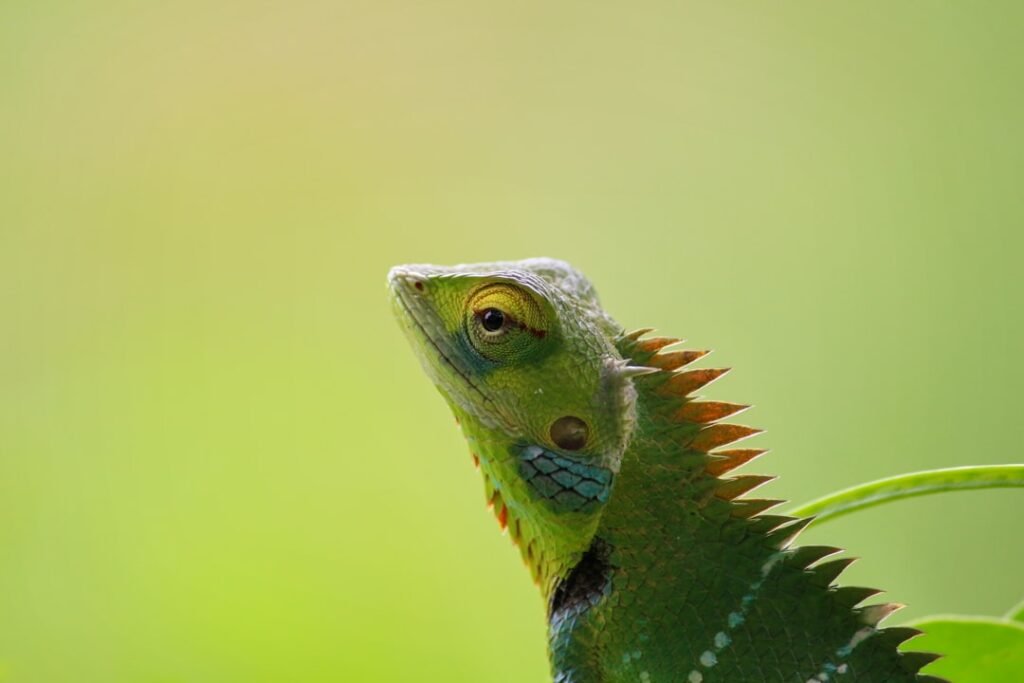
When setting up your first chameleon enclosure, you’ll face a fundamental decision that affects nearly every aspect of your pet’s care: should you create a natural habitat with live plants and organic materials, or opt for artificial alternatives that promise easier maintenance? This choice impacts everything from your chameleon’s health and behavior to your daily care routine and long-term costs. Understanding the differences between natural and artificial options will help you create an environment where your chameleon can thrive while matching your lifestyle and experience level.
Understanding the Natural vs Artificial Debate in Chameleon Keeping
The natural versus artificial debate in chameleon care isn’t about choosing one approach entirely over the other. Most successful chameleon keepers use a hybrid approach, combining the best elements of both methods. Natural setups aim to replicate the chameleon’s wild environment using live plants, natural branches, and organic substrates. Artificial setups rely on manufactured decorations, fake plants, and synthetic materials that are easier to clean and maintain.
Your chameleon species will influence this decision significantly. Veiled chameleons, for instance, are more forgiving of artificial setups and occasionally nibble on plants, making hardy live plants beneficial. Panther chameleons thrive in heavily planted natural environments that provide multiple humidity gradients. Jackson’s chameleons, native to cooler mountain forests, benefit from live plants that help maintain proper humidity levels throughout the day.
Lighting Options: Natural Sunlight vs Artificial UVB
Lighting represents one of the most critical decisions in chameleon care, directly affecting calcium metabolism, behavior, and overall health. Natural sunlight provides the full spectrum of UVB radiation that chameleons need to synthesize vitamin D3, which is essential for calcium absorption. If you live in a warm climate, placing your chameleon’s enclosure near a window with direct, unfiltered sunlight for a few hours daily can supplement artificial lighting. However, glass and plastic filter out beneficial UVB rays, making window exposure alone insufficient.
Worried About Your Reptile's Health?
Upload a photo and get instant AI health analysis. Catch problems before they become expensive vet bills.
Get Free Health Check →Artificial UVB lighting has become increasingly sophisticated and reliable. Linear fluorescent UVB bulbs, such as the Reptisun 5.0 or Arcadia 6% Forest, provide consistent UVB output across the enclosure length. These bulbs should span two-thirds of the enclosure length and be replaced every six to twelve months, as UVB output degrades even when visible light remains bright. Position UVB bulbs 8-12 inches from your chameleon’s basking spot, adjusting based on the bulb strength and manufacturer recommendations.
Mercury vapor bulbs combine heat and UVB in a single source, working well for larger enclosures but requiring careful distance management to prevent overexposure. LED UVB technology is emerging but remains expensive and less proven than traditional fluorescent options. Most experienced keepers recommend starting with linear fluorescent UVB bulbs for reliability and affordability.
Live Plants vs Artificial Foliage
Live plants offer numerous advantages for chameleon enclosures. They naturally regulate humidity through transpiration, provide drinking water through leaf surfaces, improve air quality, and create a psychologically enriching environment. Pothos, umbrella plants, ficus benjamina, and hibiscus are excellent choices for chameleon enclosures. These plants tolerate the moisture levels chameleons require and provide sturdy branches for climbing.
When using live plants, ensure they’re thoroughly washed and repotted in organic, fertilizer-free soil. Cover the soil surface with large river rocks to prevent your chameleon from accidentally ingesting substrate. Live plants require proper lighting themselves—full-spectrum LED grow lights work well for maintaining plant health while providing ambient lighting for your chameleon. Plan to rotate plants periodically, allowing stressed plants to recover outside the enclosure.
Never Miss Early Warning Signs
AI photo analysis catches subtle health issues humans miss 80% of the time. Early detection = healthier reptile + lower vet bills.
Start Free Trial →Artificial plants eliminate concerns about plant toxicity, soil maintenance, and plant death. High-quality silk plants look realistic and provide similar climbing and hiding opportunities. They’re easier to clean—simply remove them monthly and wash with reptile-safe disinfectant. However, artificial plants don’t contribute to humidity, require more frequent misting to maintain moisture levels, and lack the natural aesthetic that benefits both chameleons and keepers.
Many successful setups use a combination: a foundation of hardy live plants like pothos supplemented with artificial vines and leaves to fill gaps and create additional pathways. This hybrid approach provides natural benefits while reducing maintenance demands.
Branches and Climbing Structures
Natural branches from non-toxic trees like oak, maple, or manzanita provide the most realistic and beneficial climbing structures. They offer varying diameters that exercise your chameleon’s feet and prevent pressure sores. Collect branches from pesticide-free areas, then clean them thoroughly by scrubbing with hot water and baking in a 200-degree oven for 30 minutes to eliminate parasites and bacteria.
Natural branches create horizontal highways at different heights, allowing your chameleon to thermoregulate by moving between temperature zones. Position branches to create a gradient from the basking spot (85-95°F depending on species) down to cooler areas (70-75°F). Ensure branches are secure and can support your chameleon’s weight without wobbling.
Join thousands of successful reptile owners
Try ReptileCoach Free →Artificial vines and bendable branches offer convenience and adjustability. They’re pre-sanitized, won’t harbor mold or parasites, and can be repositioned easily as you refine your setup. However, they often have uniform diameters that don’t provide the same foot exercise as natural branches. Some artificial vines contain wire cores that can become exposed and injure your chameleon, so inspect them regularly.
The best approach combines both: natural branches for primary climbing and basking areas, supplemented with artificial vines to create additional pathways and fill vertical space. This provides structural stability while maintaining natural aesthetics and functionality.
Substrate Choices: Natural, Artificial, or None
Substrate selection significantly impacts enclosure maintenance and your chameleon’s health. Many experienced keepers recommend no substrate at all—a bare enclosure floor or simple drainage system makes cleaning easier and eliminates impaction risks. Chameleons are arboreal and rarely descend to ground level, making elaborate substrate unnecessary.
If you prefer a naturalistic appearance, organic topsoil covered with leaf litter creates a bioactive foundation. This living substrate hosts beneficial microorganisms that break down waste, creating a self-maintaining ecosystem. Bioactive substrates require a drainage layer of hydro balls or LECA (lightweight expanded clay aggregate), separated from the soil by mesh screening. This prevents waterlogging while maintaining humidity. Add springtails and isopods as cleanup crew to consume waste and prevent mold growth.
"This app saved my bearded dragon's life. The AI caught early MBD in photos I thought looked completely normal. Worth every penny!"
— Sarah K., ReptileCoach User
Get Your Free 7-Day Trial →Paper towels or reptile carpet represent simple artificial options. Paper towels are inexpensive, easy to replace, and allow you to monitor droppings for health assessment. However, they require frequent changing and don’t contribute to humidity. Reptile carpet can harbor bacteria if not cleaned regularly and may catch chameleon toenails.
For drainage in screen enclosures, many keepers use a simple bucket system underneath or drill drainage holes in solid-bottom enclosures. This allows excess water from misting to escape, preventing bacterial growth and maintaining proper humidity without substrate complications.
Water Delivery Systems
Chameleons rarely drink from standing water, relying instead on droplets from leaves and rainfall. Natural water delivery involves hand-misting the enclosure 2-3 times daily for several minutes, allowing your chameleon to drink from leaf surfaces. This method provides exercise as your chameleon hunts for water droplets and allows you to monitor drinking behavior. However, it’s time-intensive and difficult to maintain consistent humidity.
Automatic misting systems like MistKing or Climist provide programmable watering schedules, ensuring consistent humidity and hydration even when you’re away. These systems use timers to mist for several minutes multiple times daily, creating the rainfall simulation chameleons instinctively recognize. Initial setup costs are higher, but they’re invaluable for maintaining proper humidity in dry climates or for keepers with busy schedules.
Worried About Your Reptile's Health?
Upload a photo and get instant AI health analysis. Catch problems before they become expensive vet bills.
Get Free Health Check →Drip systems offer a middle ground—simple gravity-fed drippers or commercial dripper systems provide a continuous water source for several hours. Position drippers above favorite basking spots so water drips onto leaves below. This works well combined with morning and evening misting sessions.
Foggers create humidity through cool mist, particularly beneficial for species requiring nighttime humidity spikes. However, foggers alone don’t provide adequate drinking opportunities and work best combined with daytime misting or dripping systems. Ensure foggers don’t create excessively wet conditions that promote respiratory infections.
Temperature Regulation: Natural vs Artificial Heat Sources
Chameleons require a thermal gradient with a basking spot and cooler retreat areas. Incandescent basking bulbs are the most common artificial heat source, providing focused warmth that mimics natural sunlight. Use regular incandescent or halogen bulbs in dome fixtures, positioning them to create a basking spot at the appropriate temperature for your species. Avoid heat rocks or under-tank heaters, as chameleons thermoregulate through basking, not belly heat.
Ceramic heat emitters provide heat without light, useful for maintaining nighttime temperatures if your home drops below 60°F. However, most chameleon species tolerate—and actually benefit from—nighttime temperature drops to 60-65°F, making supplemental heating unnecessary in most homes.
Never Miss Early Warning Signs
AI photo analysis catches subtle health issues humans miss 80% of the time. Early detection = healthier reptile + lower vet bills.
Start Free Trial →Natural temperature regulation through room temperature and indirect sunlight works well if you can maintain appropriate ranges. This approach eliminates electricity costs and equipment failure risks but requires a consistently warm home and careful monitoring. Most keepers find that combining natural room temperature with a basking bulb provides the most reliable and energy-efficient solution.
Humidity Management Approaches
Maintaining proper humidity levels (50-70% for most species, with nighttime spikes to 80-100%) is crucial for chameleon health. Live plants naturally increase humidity through transpiration, reducing misting frequency. A heavily planted enclosure retains moisture longer and creates natural humidity gradients that chameleons instinctively navigate.
Artificial setups require more active humidity management. Without live plants absorbing and releasing moisture, you’ll need longer or more frequent misting sessions. Some keepers partially cover screen enclosure sides with plastic sheeting or shower curtains to retain humidity, though this requires careful monitoring to prevent excessive moisture and poor air circulation.
Hybrid approaches work well: live plants for baseline humidity maintenance, supplemented by automatic misters for consistency. Position a digital hygrometer with a probe at mid-enclosure height to monitor humidity accurately. Analog dial hygrometers are notoriously inaccurate and should be avoided.
Join thousands of successful reptile owners
Try ReptileCoach Free →Consider your local climate when choosing between natural and artificial humidity solutions. Dry climates benefit from heavily planted enclosures and automatic misting systems. Humid climates may need only minimal misting with good air circulation to prevent excessive moisture.
Maintenance and Long-term Considerations
Natural setups require more initial investment in time and money but often become easier to maintain long-term. Bioactive enclosures with established cleanup crews need only occasional spot-cleaning and plant maintenance. Live plants grow and fill space naturally, creating an increasingly lush environment. However, you must monitor plant health, manage growth, and occasionally replace plants that outgrow the space or decline.
Artificial setups allow for easier deep cleaning—remove all decorations, sanitize with reptile-safe disinfectant, and reassemble. This is particularly valuable during illness when thorough disinfection is necessary. However, artificial setups require more frequent complete cleaning since waste doesn’t break down naturally.
Cost considerations vary by approach. Natural setups have higher upfront costs for live plants, quality soil, and cleanup crew organisms, but plants reproduce and cleanup crews sustain themselves. Artificial setups have lower initial costs but may require periodic replacement of worn decorations and more frequent substrate changes if used.
"This app saved my bearded dragon's life. The AI caught early MBD in photos I thought looked completely normal. Worth every penny!"
— Sarah K., ReptileCoach User
Get Your Free 7-Day Trial →Time investment differs too. Natural setups need daily monitoring but less intensive cleaning. Artificial setups require more frequent deep cleaning but less daily attention to plant health and humidity balance. Choose based on your available time and preferences—some keepers find plant care relaxing and rewarding, while others prefer the simplicity of artificial maintenance.
Making the Right Choice for Your Situation
Your decision between natural and artificial chameleon care elements should consider several personal factors. Experience level matters—beginners often find hybrid setups most forgiving, combining artificial reliability with natural benefits. If this is your first chameleon, start with hardy live plants like pothos and artificial vines, adding more natural elements as you gain confidence.
Available time influences your choice significantly. If you travel frequently or work long hours, automatic misting systems and lower-maintenance artificial elements provide peace of mind. If you’re home regularly and enjoy daily interaction with your pet’s environment, hand-misting and live plant care can become an enjoyable routine.
Budget considerations extend beyond initial setup. Calculate long-term costs including bulb replacements, plant purchases, electricity for misting systems, and cleaning supplies. Sometimes higher upfront investment in quality equipment reduces long-term expenses and provides better outcomes.
Worried About Your Reptile's Health?
Upload a photo and get instant AI health analysis. Catch problems before they become expensive vet bills.
Get Free Health Check →Your living situation matters too. Rental properties may restrict the moisture levels that heavily planted enclosures create. Small apartments benefit from space-efficient artificial setups, while homes with dedicated reptile rooms can accommodate elaborate natural habitats.
Conclusion: Creating the Best Environment for Your Chameleon
The natural versus artificial debate in chameleon care isn’t about finding a single correct answer—it’s about understanding the benefits and limitations of each approach to create the optimal environment for your specific situation. Most successful chameleon keepers use thoughtful combinations of natural and artificial elements, leveraging the reliability of artificial UVB lighting and automatic misting systems while incorporating live plants and natural branches for enrichment and humidity regulation. Start with essential artificial elements that ensure consistent care—quality UVB lighting, reliable heating, and automated watering if needed—then add natural components as your confidence and experience grow. Remember that your chameleon’s health indicators—proper hydration, strong bones, vibrant coloration, and active behavior—matter more than whether your setup is purely natural or artificial. Monitor your chameleon closely, adjust your approach based on results, and don’t hesitate to modify your setup as you learn what works best for both you and your pet. With careful planning and attention to your chameleon’s needs, either approach can provide an excellent home where your chameleon will thrive for years to come.
Ready to Give Your Reptile the Best Care?
Stop guessing and start knowing. Get personalized AI-powered care guidance, photo health analysis, and 24/7 expert advice for YOUR specific reptile.
Get Personalized Care Guidance
AI-powered photo analysis and daily care tracking for YOUR reptile
Try Free for 7 Days →