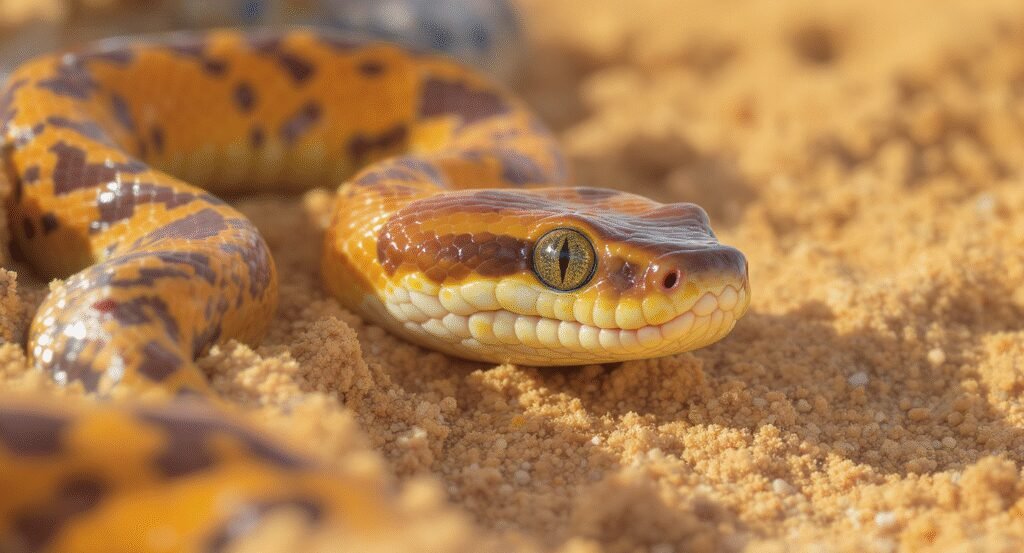
Kenyan sand boas (Eryx colubrinus loveridgei) are compact, docile, and endlessly fascinating. Rarely exceeding 24–30 inches, these small constrictors are ideal for first-time snake keepers and experienced hobbyists alike. Their unique burrowing behavior and wide variety of color morphs make them one of the most popular snakes in the hobby.
Enclosure Setup
Sand boas are small and don’t need much space. A 10-gallon tank works for juveniles; adults thrive in a 20-gallon long. A secure lid is essential — even small snakes are escape artists.
The most important element is deep, loose substrate. True to their name, sand boas love to burrow. Use 4–6 inches of a 50/50 mix of play sand and coconut coir, or commercial “sand boa mix.” Avoid calcium sand, which can cause impaction if ingested. Aspen shavings work as an alternative substrate for keepers who prefer it.
Temperature Requirements
Sand boas are from arid East African environments. Provide a warm side of 88–92°F and a cool side of 72–78°F. A simple undertank heater (UTH) on one side works well, connected to a thermostat to prevent overheating.
Worried About Your Reptile's Health?
Upload a photo and get instant AI health analysis. Catch problems before they become expensive vet bills.
Get Free Health Check →Unlike many reptiles, sand boas do not require UVB lighting — though low-level UVB exposure is still beneficial. A standard 12-hour light/dark cycle using a simple bulb or room lighting is sufficient. Avoid hot rock accessories, which can cause burns.
Humidity
Sand boas prefer low humidity — 30–40% is ideal. High humidity can lead to respiratory infections and scale rot. Ensure good ventilation. Provide a small humid hide with slightly moist substrate to assist during shedding. Outside the shed cycle, keep the enclosure dry.
Feeding
Sand boas are ambush predators. In the wild, they bury themselves and strike at passing prey from below. In captivity, they eat pre-killed or frozen/thawed mice:
- Juveniles — pinkie or fuzzy mice every 5–7 days
- Sub-adults — hopper mice every 7 days
- Adults — adult mice every 10–14 days
Offer food with feeding tongs, not by hand. Some sand boas are enthusiastic feeders; others are shy and prefer to eat in a separate container or after lights-out when they feel secure. Persistent refusal to eat is common after moving to a new home — give them 2 weeks to settle before worrying.
Never Miss Early Warning Signs
AI photo analysis catches subtle health issues humans miss 80% of the time. Early detection = healthier reptile + lower vet bills.
Start Free Trial →Handling
Sand boas are generally calm and tolerate handling well. They are strong for their size and like to burrow through your hands — a charming quirk of the species. Handle for 10–15 minutes at a time, 2–3 times per week. Avoid handling within 48 hours of feeding to prevent regurgitation.
Juveniles may musk or bite defensively, but this behavior typically fades with regular gentle handling. Adults rarely bite.
Color Morphs
Sand boas come in dozens of striking morphs. Some popular varieties include:
- Normal — classic orange and brown pattern
- Albino — yellow and white with red eyes
- Anerythristic (Anery) — black, white, and grey tones
- Snow — pale white with minimal pattern (albino + anery)
- Paradox — stunning random splotches of contrasting color
Morph pricing varies widely. Normal sand boas cost $50–$100; rare designer morphs can exceed $500.
Join thousands of successful reptile owners
Try ReptileCoach Free →Common Health Issues
- Retained sheds — caused by low humidity. Provide a humid hide during shed cycles and soak if needed.
- Respiratory infection — from excessive humidity or cold temperatures. Maintain proper gradients and ventilation.
- Mites — tiny parasites visible as moving dots. Treat with reptile-safe mite spray and thorough enclosure cleaning.
- Scale rot — from wet, unsanitary substrate. Keep substrate clean and dry.
Why Sand Boas Make Great Pets
Sand boas check every box for a beginner snake: small size, hardy constitution, calm temperament, easy feeding, and no UVB requirements. They’re also long-lived — well-cared-for sand boas regularly reach 15–20 years. If you’re looking for your first snake or a low-maintenance addition to your collection, the Kenyan sand boa is hard to beat.
Ready to track your sand boa’s feeding schedule, shed cycles, and health records in one place? Try ReptileCoach free — the all-in-one app built for reptile owners who care.
Ready to Give Your Reptile the Best Care?
Stop guessing and start knowing. Get personalized AI-powered care guidance, photo health analysis, and 24/7 expert advice for YOUR specific reptile.
Get Personalized Care Guidance
AI-powered photo analysis and daily care tracking for YOUR reptile
Try Free for 7 Days →