
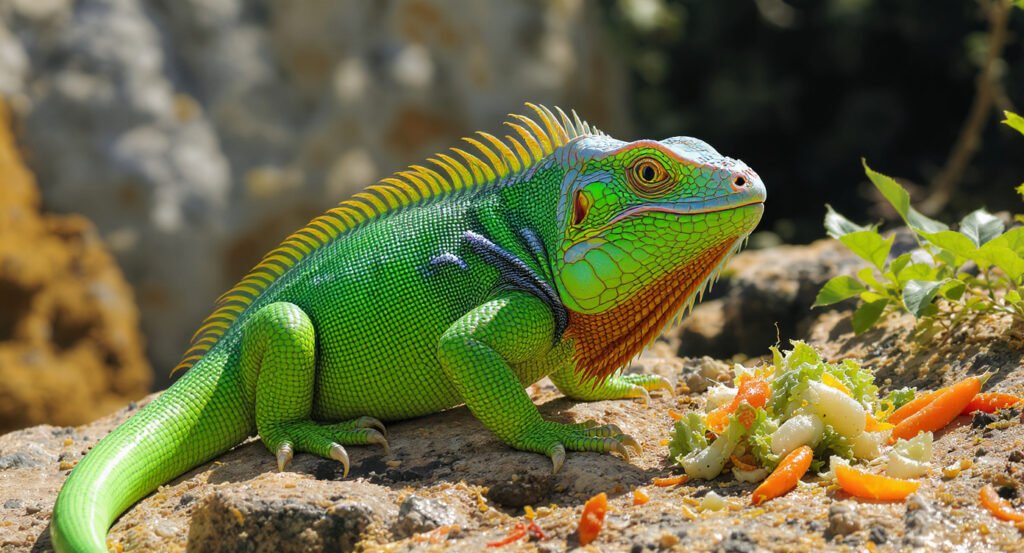
Green iguanas are herbivorous reptiles that require a carefully balanced diet to thrive in captivity. Understanding their nutritional needs is essential for keeping your iguana healthy, vibrant, and living a long life. This comprehensive guide covers everything you need to know about feeding your green iguana properly.
Understanding Green Iguana Nutritional Needs
Green iguanas are strict herbivores, meaning they eat only plant matter. In the wild, they consume leaves, flowers, and fruits from various tropical plants. Their digestive system is specifically designed to break down fibrous plant material, and they require a diet high in calcium and low in phosphorus to maintain strong bones and prevent metabolic bone disease.
The ideal calcium to phosphorus ratio for iguanas is 2:1. They also need adequate vitamin D3 for calcium absorption, which they naturally produce through UVB exposure. A proper diet combined with appropriate lighting is crucial for their overall health.
Best Vegetables for Green Iguanas
Vegetables should make up approximately 80-90% of your iguana’s diet. Focus on dark, leafy greens that are high in calcium and nutrients:
Worried About Your Reptile's Health?
Upload a photo and get instant AI health analysis. Catch problems before they become expensive vet bills.
Get Free Health Check →- Collard greens – Excellent calcium source and should be a staple
- Mustard greens – High in vitamins A and C
- Turnip greens – Great calcium-to-phosphorus ratio
- Dandelion greens – Nutrient-dense and readily available
- Escarole – Good variety option
- Butternut squash – Rich in vitamin A
- Green beans – Good fiber source
- Bell peppers – High in vitamin C
Rotate these vegetables regularly to provide nutritional variety and prevent boredom. Chop them into bite-sized pieces appropriate for your iguana’s size.
Safe Fruits for Your Iguana
Fruits should comprise only 10-20% of your iguana’s diet due to their sugar content. Offer fruits as occasional treats:
- Papaya – Excellent digestive aid
- Mango – High in vitamins but feed sparingly
- Strawberries – Good vitamin C source
- Blueberries – Antioxidant-rich
- Figs – High calcium content
- Raspberries – Fiber and nutrients
Always remove seeds and pits, and cut fruits into manageable pieces.
Foods to Avoid
Certain foods are toxic or harmful to green iguanas and must be avoided completely:
Never Miss Early Warning Signs
AI photo analysis catches subtle health issues humans miss 80% of the time. Early detection = healthier reptile + lower vet bills.
Start Free Trial →- Spinach and chard – Contain oxalates that bind calcium
- Lettuce (iceberg) – No nutritional value
- Cabbage and broccoli – Goitrogens that interfere with thyroid function
- Animal protein – Can cause kidney damage
- Avocado – Toxic to reptiles
- Rhubarb – Contains toxic compounds
- Onions and garlic – Toxic to iguanas
Never feed your iguana processed human foods, dairy products, or anything containing preservatives or artificial ingredients.
Feeding Schedule and Portions
Young iguanas (under 2 years) should be fed daily, while adults can be fed every other day. However, many owners prefer daily feeding with smaller portions for adults to maintain routine and monitor health.
Offer food in the morning after your iguana has had time to bask and raise its body temperature, as this aids digestion. Remove uneaten food after a few hours to prevent spoilage.
Portion sizes depend on your iguana’s size and age. A good rule of thumb is to offer a salad bowl that’s roughly the size of your iguana’s body (excluding the tail). Juveniles may eat more frequently as they’re growing rapidly.
Join thousands of successful reptile owners
Try ReptileCoach Free →Track your iguana’s diet with ReptileCoach to ensure you’re providing balanced nutrition and maintaining a consistent feeding schedule.
Essential Supplements
Even with a perfect diet, captive iguanas often need supplementation:
Calcium Powder
Dust vegetables with calcium powder (without vitamin D3 if you provide adequate UVB lighting) 2-3 times per week for juveniles and once or twice weekly for adults. This helps prevent metabolic bone disease.
Multivitamin Supplement
Provide a reptile-specific multivitamin once or twice weekly. Avoid over-supplementation, which can be as harmful as deficiency.
"This app saved my bearded dragon's life. The AI caught early MBD in photos I thought looked completely normal. Worth every penny!"
— Sarah K., ReptileCoach User
Get Your Free 7-Day Trial →UVB Lighting
While not a dietary supplement, proper UVB lighting (10-12 hours daily) is essential for vitamin D3 synthesis and calcium metabolism. Replace UVB bulbs every 6-12 months even if they still produce visible light.
Hydration Matters
Green iguanas get most of their water from fresh vegetables, but always provide a large water bowl for drinking and soaking. Mist your iguana and its enclosure daily to maintain humidity and encourage drinking. Some iguanas prefer to drink water droplets from leaves.
Signs of Proper Nutrition
A well-fed iguana displays bright coloration, clear eyes, healthy skin, strong bones, regular bowel movements, and active behavior. Monitor your iguana’s weight and body condition regularly. Visible ribs or hip bones indicate underfeeding, while obesity can lead to health problems.
Final Thoughts
Feeding your green iguana properly requires commitment and attention to detail, but the reward is a healthy, thriving companion. Focus on variety, proper calcium ratios, and consistent feeding schedules. When in doubt, consult with a reptile veterinarian who can provide personalized dietary recommendations based on your iguana’s specific needs.
Worried About Your Reptile's Health?
Upload a photo and get instant AI health analysis. Catch problems before they become expensive vet bills.
Get Free Health Check →Remember that every iguana is an individual with unique preferences. Pay attention to what your iguana enjoys while ensuring nutritional requirements are met. With proper care and nutrition, your green iguana can live 15-20 years or more in captivity.
Ready to Give Your Reptile the Best Care?
Stop guessing and start knowing. Get personalized AI-powered care guidance, photo health analysis, and 24/7 expert advice for YOUR specific reptile.
Get Personalized Care Guidance
AI-powered photo analysis and daily care tracking for YOUR reptile
Try Free for 7 Days →