
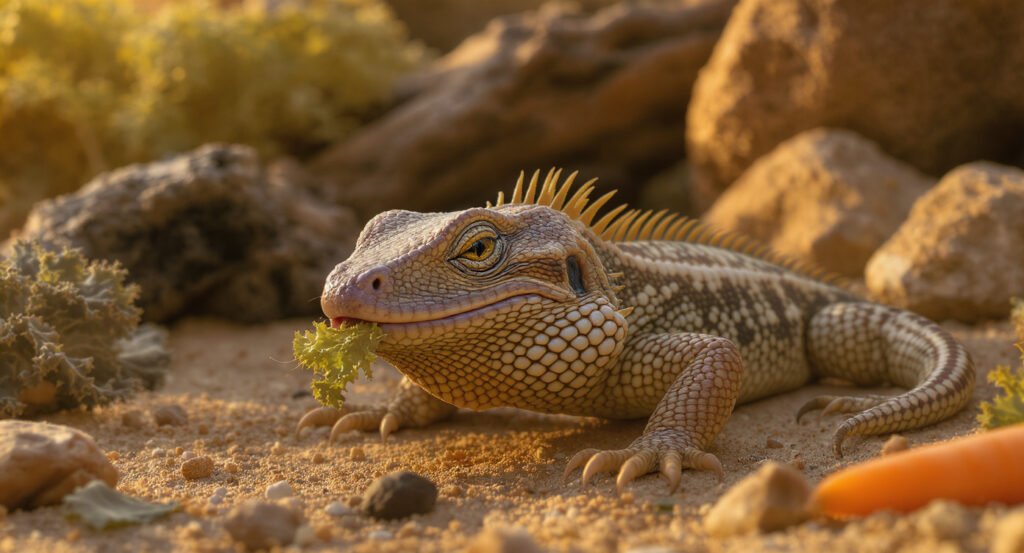
Introduction to Uromastyx Diet: Understanding What These Desert Lizards Need
If you’re a proud uromastyx owner — or thinking about becoming one — understanding the uromastyx diet is one of the most important steps toward keeping your lizard healthy and thriving. Uromastyx lizards, also known as spiny-tailed lizards or “uros,” are fascinating reptiles native to the arid regions of Africa, the Middle East, and parts of Asia. In the wild, they survive on a diet that is almost entirely plant-based, foraging for seeds, leaves, flowers, and vegetation in harsh desert environments.
In captivity, replicating this natural uromastyx diet is key. Unlike many other popular reptiles, uromastyx are primarily herbivores, which makes their feeding requirements unique and, in many ways, more straightforward than carnivorous species. However, getting their nutrition right still requires careful planning. A poor diet can lead to metabolic bone disease, obesity, organ failure, and a significantly shortened lifespan. This comprehensive guide will walk you through exactly what to feed, what to avoid, and how to build a sustainable feeding routine for your uromastyx.
What to Feed Your Uromastyx: The Best Foods for Optimal Health
The foundation of a healthy uromastyx diet consists of leafy greens, seeds, and occasional vegetables. Here’s a breakdown of the best food options:
Leafy Greens (The Staple)
Leafy greens should make up the bulk — roughly 60–70% — of your uromastyx’s daily diet. Excellent choices include:
Worried About Your Reptile's Health?
Upload a photo and get instant AI health analysis. Catch problems before they become expensive vet bills.
Get Free Health Check →- Collard greens – High in calcium and highly recommended
- Dandelion greens – Nutritionally dense and usually well-loved by uros
- Mustard greens – Great source of vitamins A, C, and K
- Turnip greens – An excellent calcium source
- Endive and escarole – Low in oxalates and easy to digest
- Spring mix – A convenient option when rotated with other greens
Seeds (A Favorite Treat)
Seeds are a natural and beloved part of the uromastyx diet in the wild. They provide essential fats and proteins. Offer seeds in moderation — around 10–20% of the overall diet:
- Millet (one of the most popular and nutritious choices)
- Lentils (can be offered dry or slightly sprouted)
- Split peas
- Dried hibiscus flowers
- Sesame seeds (sparingly)
Vegetables and Extras
You can round out the uromastyx diet with small amounts of vegetables and edible flowers:
- Butternut squash and acorn squash
- Bell peppers (especially red and yellow)
- Shredded carrots (as an occasional treat)
- Edible flowers like hibiscus and rose petals
- Peas and green beans (in moderation)
What to Avoid Feeding Your Uromastyx
Just as important as knowing what to feed is knowing what to never offer your uromastyx. Some foods can be outright toxic, while others disrupt nutrient absorption and lead to long-term health problems.
High-Oxalate Foods
Oxalates bind to calcium and prevent proper absorption, contributing to metabolic bone disease. Avoid or strictly limit:
Never Miss Early Warning Signs
AI photo analysis catches subtle health issues humans miss 80% of the time. Early detection = healthier reptile + lower vet bills.
Start Free Trial →- Spinach
- Beet greens
- Swiss chard
- Rhubarb
High-Goitrogenic Foods
Goitrogens interfere with thyroid function. Limit offerings of:
- Cabbage
- Kale (can be offered occasionally, not as a staple)
- Broccoli
- Brussels sprouts
Animal Proteins
Unlike many other lizards, uromastyx should never be fed insects, meat, or animal proteins on a regular basis. Their digestive systems are not built to process large amounts of protein, and doing so can cause kidney damage and gout over time.
Fruits
While not toxic, fruits are high in sugar and water content — both of which can disrupt your uromastyx’s digestive system. Avoid offering fruits as part of the regular uromastyx diet.
Uromastyx Feeding Schedule: How Often Should You Feed?
Consistency is critical when it comes to the uromastyx diet feeding schedule. Here are the general guidelines based on age:
Join thousands of successful reptile owners
Try ReptileCoach Free →Juveniles (Under 12 Months)
Young uromastyx are growing rapidly and need to eat every day. Offer a fresh salad mix of leafy greens and a small sprinkle of seeds daily. Juveniles may also benefit from slightly higher seed ratios to support growth.
Adults (12 Months and Older)
Adult uromastyx can be fed 5–6 days per week, with one or two fasting days to mimic their natural foraging patterns. Always remove uneaten food within 24 hours to prevent bacterial growth in the enclosure.
Pro tip: Feed your uromastyx during the day when their basking lights are on and their digestion is most active. Morning or mid-day feedings are ideal.
Supplements & Vitamins for Uromastyx
Even the most carefully planned uromastyx diet may fall short of essential nutrients without proper supplementation. Here’s what you need:
"This app saved my bearded dragon's life. The AI caught early MBD in photos I thought looked completely normal. Worth every penny!"
— Sarah K., ReptileCoach User
Get Your Free 7-Day Trial →Calcium Supplementation
Dust your uromastyx’s food with a calcium supplement (without D3) 3–4 times per week. Calcium is vital for bone health and muscle function. Look for a calcium carbonate powder that’s phosphorus-free.
Vitamin D3
Uromastyx need vitamin D3 to properly absorb calcium. If your lizard has access to a quality UVB lamp, their body can synthesize D3 naturally. In this case, only supplement with D3 1–2 times per month to avoid toxicity. Without UVB, D3 supplementation becomes more critical.
Multivitamins
A reptile-specific multivitamin supplement can be offered once every 1–2 weeks to fill any nutritional gaps. Avoid over-supplementing, as excessive vitamins A and D can be toxic.
Hydration Needs: Do Uromastyx Need Water?
This is one of the most commonly misunderstood aspects of the uromastyx diet. In the wild, uromastyx obtain almost all of their moisture from the food they eat. They are highly adapted to arid conditions and actually do not require a standing water bowl in their enclosure — and providing one can raise humidity levels to dangerous ranges.
Worried About Your Reptile's Health?
Upload a photo and get instant AI health analysis. Catch problems before they become expensive vet bills.
Get Free Health Check →Instead, ensure hydration through:
- Fresh leafy greens offered daily, which contain natural moisture
- Occasional misting of food (not the enclosure) if your lizard appears dehydrated
- Offering a shallow water dish temporarily during shedding periods if needed
Signs of dehydration in uromastyx include sunken eyes, wrinkled or loose skin, and lethargy. If you notice these signs, consult a reptile veterinarian promptly.
Track Your Uromastyx’s Health and Diet with Expert Help
Managing the perfect uromastyx diet takes time, knowledge, and the right resources. Whether you’re a new owner or an experienced reptile keeper, having expert guidance can make all the difference in your lizard’s health and longevity.
🦎 Ready to take your uromastyx care to the next level? Get personalized reptile care guidance, diet tracking tools, and expert advice by visiting the Reptile Coach App. It’s your all-in-one resource for raising a happy, healthy uromastyx.
Never Miss Early Warning Signs
AI photo analysis catches subtle health issues humans miss 80% of the time. Early detection = healthier reptile + lower vet bills.
Start Free Trial →Final Thoughts on the Uromastyx Diet
The uromastyx diet may seem simple on the surface — after all, they’re herbivores — but the details matter enormously. From choosing the right leafy greens and seeds, to avoiding oxalate-rich foods, to getting supplementation and hydration just right, every element plays a role in your lizard’s overall health. By following the guidelines in this feeding guide and staying consistent with your routine, you’ll be giving your uromastyx the best possible foundation for a long, vibrant life. Remember: a well-fed uromastyx is an active, colorful, and happy companion for years to come.
Ready to Give Your Reptile the Best Care?
Stop guessing and start knowing. Get personalized AI-powered care guidance, photo health analysis, and 24/7 expert advice for YOUR specific reptile.
Get Personalized Care Guidance
AI-powered photo analysis and daily care tracking for YOUR reptile
Try Free for 7 Days →