
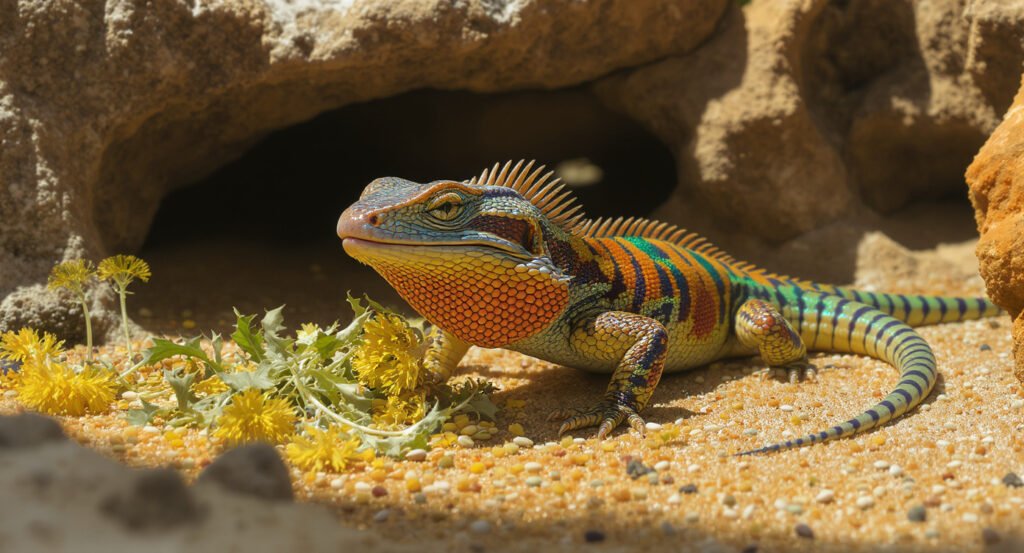
Uromastyx lizards, often called spiny-tailed lizards or “uro” lizards, are fascinating herbivorous reptiles that have become increasingly popular in the reptile hobby. Native to arid regions of North Africa, the Middle East, and South Asia, these colorful lizards thrive on a plant-based diet that closely mirrors what they find in the wild. Getting your uromastyx’s diet right is one of the most critical factors in keeping them healthy, vibrant, and living a long life. This comprehensive uromastyx feeding guide covers everything you need to know about what to feed your uromastyx, how often to feed them, and how to optimize their nutrition.
Understanding the Uromastyx Diet in the Wild
In their natural desert habitat, uromastyx are primarily herbivores, feeding on a wide variety of plant matter including grasses, wildflowers, seeds, leaves, and occasional fruits. Their digestive systems are highly adapted to extract moisture and nutrients from dry, fibrous plant material. This means that in captivity, replicating a diverse, plant-rich diet is essential for their overall well-being.
Unlike many other popular reptiles, uromastyx do not require live insects as a staple of their diet. In fact, feeding too much protein from animal sources can lead to serious health complications, including kidney disease and gout. A well-balanced plant-based diet is the foundation of uromastyx care.
Best Vegetables for Uromastyx
Leafy greens and vegetables should make up the bulk of your uromastyx’s diet — roughly 70 to 80 percent of their daily food intake. Here are the top vegetables to offer regularly:
Worried About Your Reptile's Health?
Upload a photo and get instant AI health analysis. Catch problems before they become expensive vet bills.
Get Free Health Check →Staple Leafy Greens
- Collard greens – High in calcium and fiber, collard greens are one of the best staple foods for uromastyx.
- Mustard greens – Nutritionally dense and widely accepted by most uromastyx.
- Dandelion greens – An excellent source of vitamins A and C, and most lizards love them.
- Turnip greens – Another calcium-rich option that pairs well with other greens.
- Endive and escarole – Lower in oxalates, making them a safe everyday green.
Supplemental Vegetables
- Butternut squash – Soft, easy to eat, and rich in beta-carotene.
- Bell peppers – A great source of vitamin C; offer in moderation.
- Snap peas and green beans – Provide variety and additional nutrients.
- Shredded carrots – Offer occasionally as a treat due to higher sugar content.
- Zucchini and yellow squash – Hydrating and easy to digest.
Avoid these vegetables: Spinach, kale, beet greens, and Swiss chard should be limited or avoided because they are high in oxalates and goitrogens, which can interfere with calcium absorption and thyroid function.
Seeds and Legumes: The Uromastyx Superfood
One of the most unique aspects of uromastyx nutrition is their love for seeds and legumes. In the wild, seeds are a critical energy source, and captive uromastyx readily accept them. Seeds and legumes should make up approximately 10 to 20 percent of their overall diet.
Best Seeds for Uromastyx
- Millet – A top choice; both white and red millet are excellent and highly palatable.
- Lentils (dry or slightly sprouted) – A protein and fiber powerhouse that uros tend to love.
- Dried or fresh peas – Split peas are particularly popular among uromastyx keepers.
- Quinoa – A nutrient-dense seed grain that provides a complete amino acid profile.
- Flaxseeds – Offer occasionally in small amounts for healthy fats.
- Sesame seeds – A good calcium source when offered as a supplement.
Many keepers sprinkle a small handful of dry lentils or millet directly onto the salad mix to encourage eating. Uromastyx will often pick through their food to find the seeds first — which is perfectly normal behavior.
Fruits: A Rare Treat
Fruits can be offered very occasionally — no more than once or twice a month — as a special treat. Good options include small pieces of mango, papaya, strawberries, or blueberries. Fruits are high in sugar and should never make up a significant portion of the diet, as excess sugar can lead to digestive issues and obesity.
Never Miss Early Warning Signs
AI photo analysis catches subtle health issues humans miss 80% of the time. Early detection = healthier reptile + lower vet bills.
Start Free Trial →Uromastyx Feeding Schedule
Establishing a consistent feeding schedule is important for maintaining your uromastyx’s health and appetite. Here is a recommended feeding routine based on age:
Juvenile Uromastyx (Under 12 Months)
Juveniles are growing rapidly and should be fed every day. Offer a fresh salad mix of leafy greens and vegetables, with a small sprinkle of seeds or legumes. Remove uneaten food after 24 hours to prevent spoilage.
Adult Uromastyx (12 Months and Older)
Adult uromastyx do well with feeding 5 to 6 days per week, with one or two days off to allow their digestive systems to process food fully. This also mirrors natural feeding patterns where food may not always be available in the wild.
Water and Hydration
This is a common point of confusion for new uromastyx keepers. Unlike most reptiles, uromastyx are adapted to extremely arid environments and derive most of their hydration from the food they eat. A standing water dish is generally not recommended in the enclosure, as excess moisture can raise humidity levels and promote bacterial growth — both of which are dangerous for these desert lizards.
Join thousands of successful reptile owners
Try ReptileCoach Free →Instead, ensure that fresh leafy greens are offered daily to provide adequate hydration. You can also lightly mist the greens before serving.
Nutritional Supplementation Tips
Even with a varied and well-planned diet, uromastyx may benefit from occasional supplementation to prevent nutritional deficiencies.
Calcium Supplementation
Dust food with a phosphorus-free calcium supplement 2 to 3 times per week. This is especially important for juvenile uromastyx who are building bone density rapidly.
Multivitamins
A reptile-specific multivitamin can be offered once every 1 to 2 weeks. Be careful not to over-supplement with fat-soluble vitamins like vitamin A and D3, as these can accumulate to toxic levels.
"This app saved my bearded dragon's life. The AI caught early MBD in photos I thought looked completely normal. Worth every penny!"
— Sarah K., ReptileCoach User
Get Your Free 7-Day Trial →Signs of a Healthy Uromastyx Diet
A well-fed uromastyx will display vibrant coloration, be alert and active during basking hours, maintain a healthy body weight, and shed cleanly. Pale or dull colors, lethargy, weight loss, or refusal to eat are signals that something may be off with their diet or husbandry.
Get Personalized Uromastyx Diet Advice
Every uromastyx is different, and dietary needs can vary by species, age, and individual preferences. If you’re unsure whether your uro is getting the right nutrition, get personalized uromastyx diet advice from ReptileCoach — your AI reptile care expert available anytime, day or night.
Ready to Give Your Reptile the Best Care?
Stop guessing and start knowing. Get personalized AI-powered care guidance, photo health analysis, and 24/7 expert advice for YOUR specific reptile.
Get Personalized Care Guidance
AI-powered photo analysis and daily care tracking for YOUR reptile
Try Free for 7 Days →