
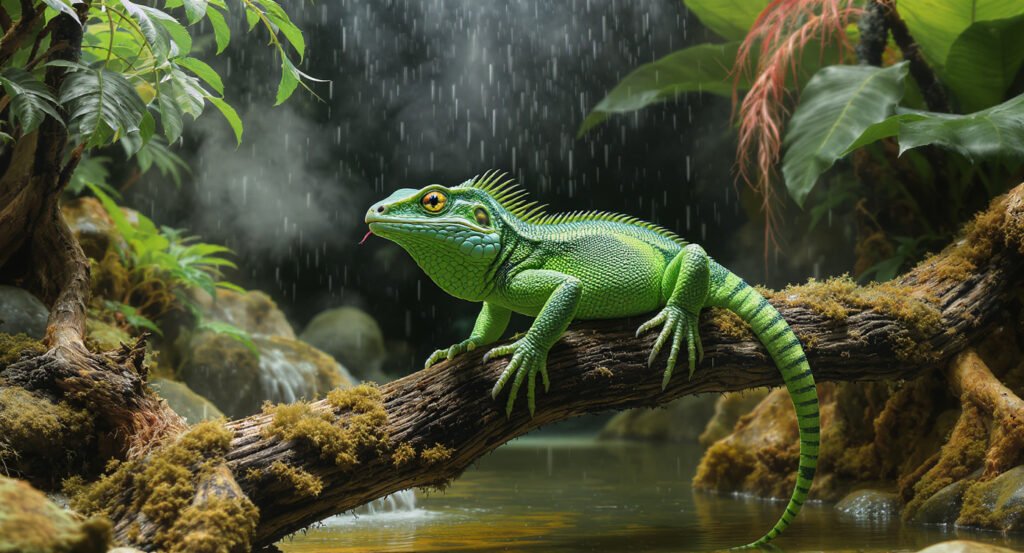
Water dragons are among the most stunning and rewarding reptiles you can keep as pets. With their vibrant green coloring, inquisitive personalities, and active nature, it’s no wonder they’re gaining popularity among reptile enthusiasts. However, like all reptiles, water dragons have very specific care requirements. This beginner’s water dragon care guide covers everything you need to know — from setting up the perfect enclosure to feeding, health concerns, and handling tips — so your new companion can thrive for years to come.
What Is a Water Dragon?
The two most commonly kept species are the Chinese Water Dragon (Physignathus cocincinus) and the Australian Water Dragon (Intellagama lesueurii). Chinese Water Dragons are more widely available in the pet trade and are the focus of most care guides. These lizards can live 10 to 15 years with proper care, grow up to 3 feet in length, and are known for their bright emerald-green scales and long, slender tails.
Setting Up the Perfect Enclosure
One of the most important aspects of water dragon care is creating a proper habitat. These lizards are arboreal, meaning they love to climb, and they require both space and specific environmental conditions to stay healthy.
Worried About Your Reptile's Health?
Upload a photo and get instant AI health analysis. Catch problems before they become expensive vet bills.
Get Free Health Check →Enclosure Size
- Juveniles can start in a 40–55 gallon tank, but adults need much more room.
- Adult water dragons require a minimum enclosure of 4 feet wide x 2 feet deep x 6 feet tall.
- Taller enclosures are preferred since water dragons are climbers by nature.
- Screen or mesh enclosures help with ventilation, while glass or PVC enclosures retain humidity better.
Temperature and Lighting
Water dragons are ectotherms, meaning they rely on external heat sources to regulate their body temperature. A proper thermal gradient is essential.
- Basking spot: 90–95°F (32–35°C)
- Cool side: 75–80°F (24–27°C)
- Nighttime temperature: No lower than 65°F (18°C)
- Use a UVB light (T5 HO, 10.0 bulb) for at least 10–12 hours per day — this is non-negotiable for calcium metabolism and overall health.
- Replace UVB bulbs every 6 months, even if they still emit visible light.
Humidity
- Water dragons require 70–80% humidity to support healthy shedding and respiratory function.
- Use a digital hygrometer to monitor humidity levels daily.
- Mist the enclosure 2–3 times a day or use an automatic misting system.
- A large water feature or pool inside the enclosure significantly helps maintain humidity — and your dragon will love swimming in it.
Substrate and Decor
- Use a moisture-retaining substrate such as coconut fiber, bioactive soil mixes, or cypress mulch.
- Add plenty of branches and climbing structures at different heights.
- Live or artificial plants add enrichment and help maintain humidity.
- Include a shallow pool or water dish large enough for the dragon to soak and swim.
Feeding Your Water Dragon
Water dragons are omnivores, meaning they eat both insects and plant matter. A balanced, varied diet is key to preventing nutritional deficiencies.
What to Feed
- Insects: Crickets, dubia roaches, superworms, hornworms, and black soldier fly larvae are excellent staples.
- Leafy greens: Collard greens, mustard greens, dandelion greens, and endive are nutritious options.
- Vegetables: Squash, bell peppers, carrots, and snap peas can be offered in moderation.
- Occasional treats: Small amounts of fruit like blueberries or mango make great enrichment treats.
- Pinky mice: Adult dragons can occasionally eat pinky mice, but don’t overdo it.
Feeding Schedule
- Juveniles (under 12 months): Feed daily with a focus on protein-rich insects.
- Sub-adults and adults: Feed insects every other day, with greens offered daily.
- Dust all insects with calcium powder (with D3) 3–4 times per week and a multivitamin supplement once per week.
Handling and Socialization
Water dragons can become remarkably tame and enjoy interaction with their owners — but it takes patience. When you first bring your dragon home, give them 1–2 weeks to acclimate before attempting handling.
- Start with short, gentle handling sessions of 5–10 minutes.
- Never grab them from above — this mimics a predator attack and causes stress.
- Approach slowly and scoop from the sides and underneath.
- Gradually increase handling time as your dragon becomes more comfortable.
- Watch for signs of stress, such as color darkening, gaping, or tail whipping.
Common Health Issues to Watch For
Even with the best care, water dragons can develop health issues. Knowing the warning signs early can make all the difference.
Never Miss Early Warning Signs
AI photo analysis catches subtle health issues humans miss 80% of the time. Early detection = healthier reptile + lower vet bills.
Start Free Trial →- Metabolic Bone Disease (MBD): Caused by insufficient UVB or calcium. Signs include soft bones, tremors, and inability to walk properly.
- Respiratory Infections: Often caused by low temperatures or inadequate ventilation. Watch for wheezing, mucus, or open-mouth breathing.
- Parasites: Internal and external parasites are common in wild-caught dragons. A fecal exam from a reptile vet is recommended when you first bring your dragon home.
- Rostrum Abrasions: Water dragons often rub their noses on glass. Use opaque backgrounds or visual barriers to reduce this behavior.
- Incomplete Shedding: Low humidity is the most common culprit. Soaking your dragon in warm water can help loosen stuck shed.
Finding a Reptile Veterinarian
Before you even
Ready to Give Your Reptile the Best Care?
Stop guessing and start knowing. Get personalized AI-powered care guidance, photo health analysis, and 24/7 expert advice for YOUR specific reptile.
Get Personalized Care Guidance
AI-powered photo analysis and daily care tracking for YOUR reptile
Try Free for 7 Days →