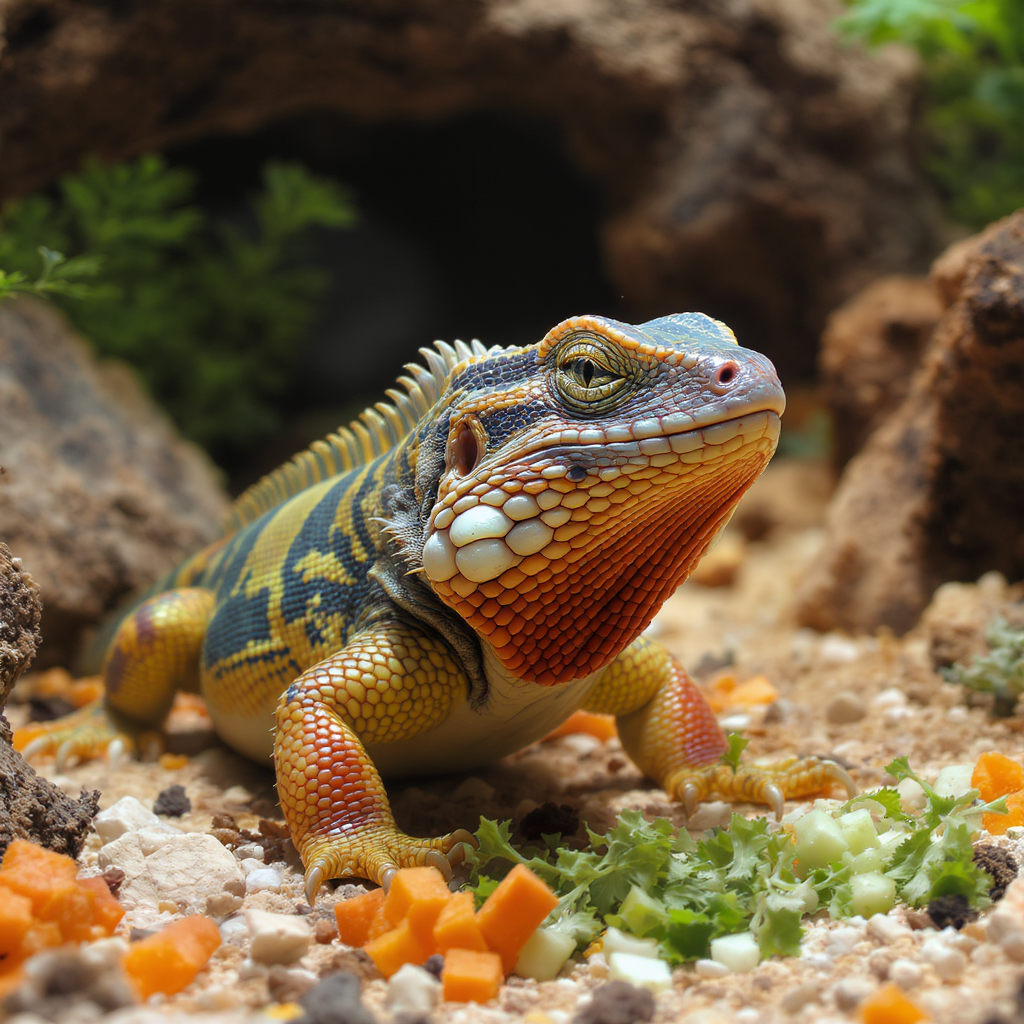
Uromastyx lizards, also known as spiny-tailed lizards, are herbivorous reptiles that require a specialized diet to thrive in captivity. Understanding their nutritional needs is essential for keeping these fascinating desert dwellers healthy and active. This comprehensive feeding guide will help you provide the best possible diet for your uromastyx.
What Do Uromastyx Eat in the Wild?
In their natural habitat across North Africa and the Middle East, uromastyx are opportunistic herbivores that have adapted to harsh desert conditions. Their wild diet consists primarily of:
- Desert grasses and dried vegetation
- Flowers and seed pods from desert plants
- Seeds from various grasses and shrubs
- Leaves from drought-resistant plants
- Occasional insects (though this is rare and not necessary in captivity)
These lizards have evolved to extract maximum nutrition and moisture from fibrous, low-water plants. This adaptation is crucial to understand when planning their captive diet.
Best Vegetables for Uromastyx
The foundation of a healthy uromastyx diet should be dark leafy greens and vegetables high in fiber and calcium. Offer a variety of these staple foods daily:
Worried About Your Reptile's Health?
Upload a photo and get instant AI health analysis. Catch problems before they become expensive vet bills.
Get Free Health Check →Excellent Daily Greens
- Collard greens
- Dandelion greens
- Turnip greens
- Mustard greens
- Endive and escarole
- Arugula
- Chicory
Good Supplementary Vegetables
- Butternut squash (shredded)
- Yellow squash
- Bell peppers (red and yellow)
- Green beans
- Okra
- Lentils (cooked and cooled)
Chop vegetables into small, bite-sized pieces appropriate for your uromastyx’s size. Mix different greens together to provide nutritional variety and prevent boredom.
Seeds and Grains for Uromastyx
Seeds should comprise about 10-15% of an adult uromastyx diet. They provide essential fats and mimic the natural seed-eating behavior of wild populations. Offer a seed mix containing:
- Millet
- Grass seeds
- Lentils (dry or sprouted)
- Split peas
- Birdseed mix (without sunflower seeds)
You can sprinkle seeds over their salad or offer them separately. Avoid high-fat seeds like sunflower seeds, which can lead to obesity.
Foods to Avoid
Certain foods are harmful to uromastyx and should never be offered:
Never Miss Early Warning Signs
AI photo analysis catches subtle health issues humans miss 80% of the time. Early detection = healthier reptile + lower vet bills.
Start Free Trial →- Spinach and kale: High in oxalates that bind calcium
- Iceberg lettuce: No nutritional value
- Avocado: Toxic to reptiles
- Rhubarb: Contains toxic compounds
- Insects and animal protein: Can cause kidney and liver damage
- Citrus fruits: Too acidic for their digestive system
- High-water fruits: Can cause diarrhea (watermelon, grapes)
While some keepers occasionally offer small amounts of fruit, it’s best avoided as uromastyx digestive systems aren’t designed for high sugar content.
Feeding Frequency by Age
Feeding schedules vary based on your uromastyx’s life stage:
Hatchlings and Juveniles (0-18 months)
Young uromastyx are growing rapidly and need daily feeding. Offer fresh greens every morning, removing uneaten food after 12 hours. At this age, they may eat smaller portions but require consistent access to food.
Sub-Adults (18 months – 3 years)
Continue daily feeding but monitor portion sizes. As they approach adult size, you may notice decreased appetite, which is normal. Adjust portions to prevent obesity while ensuring adequate nutrition.
Join thousands of successful reptile owners
Try ReptileCoach Free →Adults (3+ years)
Adult uromastyx can be fed 5-6 times per week. Some keepers feed daily with smaller portions, while others offer larger meals every other day. Observe your individual lizard’s appetite and body condition to determine the best schedule.
Hydration Tips for Uromastyx
Uromastyx obtain most of their water from food, but proper hydration is still important:
- Lightly mist vegetables before serving to add moisture
- Provide a shallow water dish, though many uromastyx won’t drink from it
- Offer a warm soak once weekly for 15-20 minutes in shallow water
- Ensure proper humidity levels (20-30%) in their enclosure
- Never force-feed water or spray directly on the lizard
Signs of dehydration include sunken eyes, wrinkled skin, and lethargy. If you notice these symptoms, increase soaking frequency and consult a reptile veterinarian.
Supplementation Guide
Even with a varied diet, uromastyx benefit from calcium and vitamin supplementation:
"This app saved my bearded dragon's life. The AI caught early MBD in photos I thought looked completely normal. Worth every penny!"
— Sarah K., ReptileCoach User
Get Your Free 7-Day Trial →Calcium Powder
Dust vegetables with calcium powder (without D3) 3-4 times per week for juveniles, 2-3 times per week for adults. If your UVB lighting is inadequate, use calcium with D3 instead.
Multivitamin
Provide a reptile multivitamin once weekly. Over-supplementation can be harmful, so follow product instructions carefully.
UVB Lighting
While not a dietary supplement, proper UVB lighting (10-12% UVB bulb) is essential for calcium metabolism and vitamin D3 synthesis. Replace bulbs every 6-12 months even if they still produce visible light.
Track Your Uromastyx’s Health and Diet
Maintaining consistent feeding records helps you identify patterns and potential health issues early. Consider using a dedicated reptile care app to log meals, supplements, weight changes, and behavioral observations.
Worried About Your Reptile's Health?
Upload a photo and get instant AI health analysis. Catch problems before they become expensive vet bills.
Get Free Health Check →For an easy way to track your uromastyx’s feeding schedule, health metrics, and care routines, check out the Reptile Coach app. It’s designed specifically for reptile keepers who want to provide the best possible care for their pets.
Final Thoughts
A proper diet is the cornerstone of uromastyx health. By focusing on high-fiber greens, appropriate seeds, and avoiding harmful foods, you’ll help your spiny-tailed lizard thrive for its 15-20 year lifespan. Remember that individual uromastyx may have preferences, so observe your pet’s eating habits and adjust accordingly. When in doubt, consult with a reptile veterinarian who can provide personalized dietary recommendations based on your lizard’s specific needs.
Ready to Give Your Reptile the Best Care?
Stop guessing and start knowing. Get personalized AI-powered care guidance, photo health analysis, and 24/7 expert advice for YOUR specific reptile.
Get Personalized Care Guidance
AI-powered photo analysis and daily care tracking for YOUR reptile
Try Free for 7 Days →