
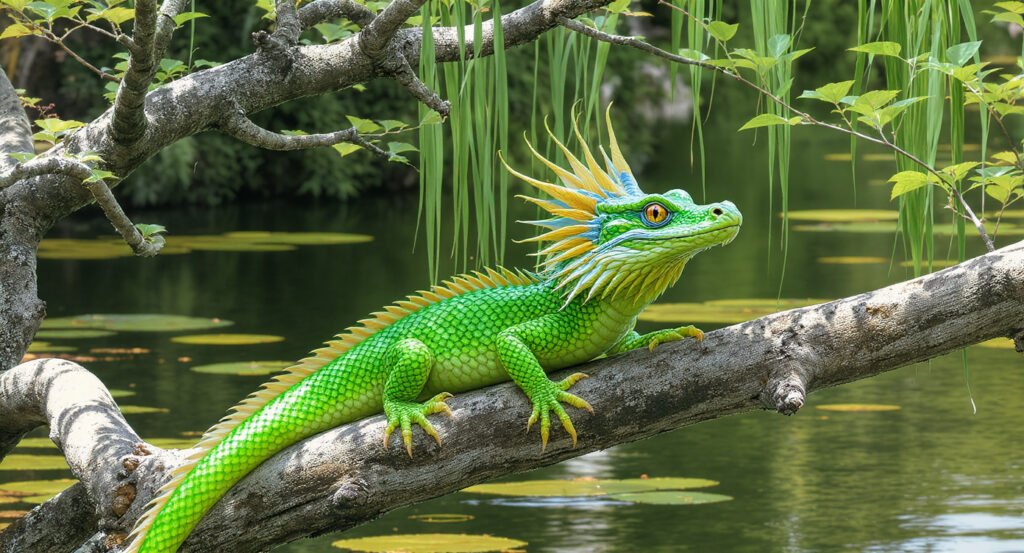
Water dragons are stunning reptiles that make captivating pets for experienced reptile keepers. These semi-aquatic lizards, native to Asia and Australia, require specialized care to thrive in captivity. This comprehensive guide covers everything you need to know about water dragon care, from habitat setup to diet and health maintenance.
Understanding Water Dragons
Chinese water dragons (Physignathus cocincinus) and Australian water dragons (Intellagama lesueurii) are the two most common species kept as pets. These arboreal lizards can grow up to 3 feet in length, with their tails accounting for nearly two-thirds of their total body length. In the wild, they spend much of their time in trees near water sources, diving in when threatened.
Setting Up the Perfect Water Dragon Habitat
Creating an appropriate environment is crucial for water dragon care. These reptiles need spacious enclosures that accommodate both their terrestrial and aquatic needs.
Enclosure Size and Type
Adult water dragons require large enclosures, with minimum dimensions of 6 feet long, 3 feet wide, and 6 feet tall. Vertical space is essential since these lizards are natural climbers. Glass terrariums or custom-built enclosures work well, provided they maintain proper humidity levels.
Worried About Your Reptile's Health?
Upload a photo and get instant AI health analysis. Catch problems before they become expensive vet bills.
Get Free Health Check →Temperature and Lighting Requirements
Proper temperature gradients are vital for water dragon health:
- Basking spot: 90-95°F (32-35°C)
- Cool side: 75-80°F (24-27°C)
- Nighttime temperature: 70-75°F (21-24°C)
- Water temperature: 80-85°F (27-29°C)
UVB lighting is non-negotiable for water dragons. Provide a 10-12% UVB bulb running 10-12 hours daily to support calcium metabolism and prevent metabolic bone disease. Replace UVB bulbs every 6-12 months, as their effectiveness diminishes over time.
Humidity and Water Features
Water dragons thrive in humid environments with 70-80% humidity levels. Achieve this through:
- Large water features or pools for swimming and soaking
- Regular misting 2-3 times daily
- Live plants that increase ambient humidity
- Substrate that retains moisture, such as cypress mulch or coconut fiber
The water area should be large enough for your dragon to fully submerge and should be cleaned regularly to prevent bacterial growth.
Never Miss Early Warning Signs
AI photo analysis catches subtle health issues humans miss 80% of the time. Early detection = healthier reptile + lower vet bills.
Start Free Trial →Water Dragon Diet and Nutrition
Water dragons are omnivores with dietary needs that change as they mature. Juveniles require more protein, while adults benefit from increased vegetation.
Feeding Juvenile Water Dragons
Young water dragons (under 1 year) should eat daily, with a diet consisting of:
- Appropriately-sized crickets, dubia roaches, and other insects
- Small amounts of leafy greens and vegetables
- Occasional pinkie mice for growing dragons
Adult Water Dragon Diet
Adult water dragons can be fed 4-5 times per week with a varied diet:
- Insects: crickets, roaches, hornworms, silkworms (60-70% of diet)
- Vegetables and greens: collard greens, mustard greens, butternut squash, green beans (30-40% of diet)
- Occasional treats: fruits like berries, mango, or papaya
Always dust insects with calcium powder (with D3 if UVB is insufficient) at every feeding, and use a multivitamin supplement 2-3 times weekly.
Join thousands of successful reptile owners
Try ReptileCoach Free →Health and Wellness
Monitoring your water dragon’s health is essential for catching problems early.
Common Health Issues
Water dragons are susceptible to several health conditions:
- Metabolic bone disease: Caused by calcium deficiency or inadequate UVB exposure
- Respiratory infections: Often result from improper temperature or humidity
- Parasites: Both internal and external parasites can affect water dragons
- Mouth rot: Bacterial infection requiring veterinary treatment
- Tail and toe necrosis: Can occur from injury or poor circulation
Signs of a Healthy Water Dragon
A healthy water dragon displays:
- Bright, alert eyes
- Active behavior and good appetite
- Smooth, vibrant skin without lesions
- Regular bowel movements
- Proper shedding without retained skin
Handling and Temperament
Water dragons can become docile with regular, gentle handling, though they’re naturally skittish. Start handling sessions short and gradually increase duration as your dragon becomes comfortable. Always support their entire body and avoid grabbing the tail, which can detach as a defense mechanism.
"This app saved my bearded dragon's life. The AI caught early MBD in photos I thought looked completely normal. Worth every penny!"
— Sarah K., ReptileCoach User
Get Your Free 7-Day Trial →Some water dragons may never enjoy handling, and that’s perfectly normal. Respect your pet’s boundaries and watch for stress signals like gaping, tail whipping, or attempting to flee.
Breeding Considerations
Breeding water dragons requires experience and preparation. Females need proper calcium supplementation before breeding to prevent egg-binding. They typically lay 10-15 eggs per clutch, which require specific incubation conditions at 82-86°F for 60-75 days.
Track Your Water Dragon’s Health with Technology
Maintaining detailed records of your water dragon’s feeding schedule, weight, shedding cycles, and health observations is crucial for long-term care success. The ReptileCoach App makes it easy to track all aspects of your water dragon’s care in one convenient place. Monitor feeding patterns, set reminders for supplementation, log temperature and humidity readings, and keep veterinary records organized. With comprehensive tracking features designed specifically for reptile owners, you’ll have everything you need to ensure your water dragon thrives for years to come.
Ready to Give Your Reptile the Best Care?
Stop guessing and start knowing. Get personalized AI-powered care guidance, photo health analysis, and 24/7 expert advice for YOUR specific reptile.
Get Personalized Care Guidance
AI-powered photo analysis and daily care tracking for YOUR reptile
Try Free for 7 Days →