
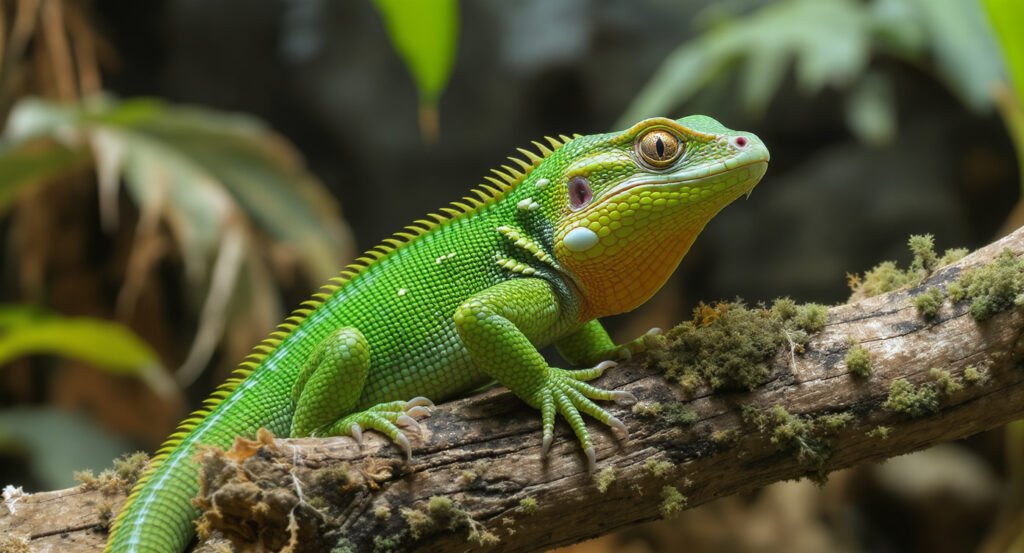
Water dragons are among the most rewarding reptiles you can keep. With their vivid green scales, alert eyes, and active personalities, Chinese water dragons (Physignathus cocincinus) and Australian water dragons (Intellagama lesueurii) have earned a devoted following in the reptile hobby. But they do have specific needs — get those right, and you will have a thriving, personable lizard for 10 to 15 years.
This guide covers everything from enclosure setup to feeding schedules, so you can give your water dragon the best possible life.
Choosing the Right Enclosure
Water dragons are active, arboreal lizards that need vertical space to climb and horizontal space to roam. A cramped enclosure is one of the most common mistakes new keepers make.
Enclosure Size
- Juvenile (under 12 inches): A 40-gallon breeder tank works as a temporary setup, but you will need to upgrade quickly.
- Sub-adult to adult: Minimum 4 feet wide × 2 feet deep × 5 feet tall. Bigger is always better.
- Pairs or groups: Add at least 50% more floor space per additional animal, and monitor for aggression.
Screen enclosures allow excellent airflow but can make humidity control difficult. Many keepers prefer custom PVC or wood enclosures with screen panels on the top and upper sides. Glass terrariums work too, but ventilation must be adequate to prevent respiratory issues.
Worried About Your Reptile's Health?
Upload a photo and get instant AI health analysis. Catch problems before they become expensive vet bills.
Get Free Health Check →Substrate
A bioactive substrate — a mix of coconut fiber, organic topsoil, and sphagnum moss — holds humidity well and supports beneficial microfauna that break down waste. Alternatively, a simple mix of coconut fiber and play sand works fine. Avoid gravel, reptile carpet, and paper towels for long-term setups, as they either retain bacteria or fail to hold moisture.
Temperature and Lighting
Getting the thermal gradient right is non-negotiable. Water dragons are ectotherms, meaning they regulate body temperature by moving between warm and cool zones.
Temperature Zones
- Basking spot: 90–95°F (32–35°C)
- Warm side ambient: 80–85°F (27–29°C)
- Cool side ambient: 75–80°F (24–27°C)
- Nighttime low: No lower than 65°F (18°C)
Use a quality digital thermometer with a probe — not the stick-on dial type — to verify temperatures at basking height and at ground level on both sides of the enclosure.
UVB Lighting
UVB is essential. Without it, water dragons cannot synthesize vitamin D3, which leads to metabolic bone disease — a painful and often fatal condition. Use a T5 HO UVB bulb rated for the enclosure size. A 10.0 or 12% UVB output bulb is appropriate for most setups. Replace bulbs every 6 to 12 months even if they still emit visible light, because UVB output degrades before the bulb burns out.
Never Miss Early Warning Signs
AI photo analysis catches subtle health issues humans miss 80% of the time. Early detection = healthier reptile + lower vet bills.
Start Free Trial →Provide a 12-hour light cycle year-round, or adjust slightly with the seasons if you want to encourage natural behaviors.
Humidity and Water
This is where water dragons differ most from desert species. They need high humidity — 70 to 80% — to stay healthy and shed properly. Low humidity causes retained shed, dehydration, and respiratory infections over time.
Mist the enclosure two to three times daily, or use an automatic misting system on a timer. A large water feature — a pool, waterfall, or deep water dish — is strongly recommended. Water dragons love to soak, and many will defecate in the water, so clean it frequently. A small submersible pump and filter can help keep standing water clean between changes.
Feeding Your Water Dragon
Water dragons are omnivores, though insects make up the bulk of their diet. Variety is key to long-term health.
Join thousands of successful reptile owners
Try ReptileCoach Free →Protein Sources
- Crickets (gut-loaded and dusted)
- Dubia roaches
- Black soldier fly larvae
- Mealworms and superworms (as occasional treats)
- Earthworms
- Pinky mice (adults only, sparingly)
Plant Matter
Offer leafy greens like collard greens, mustard greens, dandelion greens, and turnip greens. Avoid spinach and kale as staples — they contain oxalates and goitrogens that interfere with nutrient absorption in large quantities. Fruits like blueberries, mango, and papaya can be offered as occasional treats.
Feeding Schedule
Juveniles should eat daily. Sub-adults and adults do well on feedings every other day. Always dust insects with a calcium supplement at most feedings, and use a multivitamin supplement once or twice a week. Gut-loading feeder insects with nutritious foods — leafy greens, squash, commercial gut-load — for 24 to 48 hours before feeding significantly improves the nutritional value of each meal.
Handling and Socialization
Water dragons can become quite tame with consistent, gentle handling. Start with short sessions of 5 to 10 minutes and gradually increase duration as your dragon becomes comfortable. Never grab from above — this triggers a predator response. Instead, scoop from below and support the body fully.
Signs of stress include a darkened coloration, gaping mouth, whipping the tail, and attempting to flee. If you see these, end the session and try again another day. Patience pays off — a well-socialized water dragon will often seek out interaction and perch on your shoulder without any fuss.
"This app saved my bearded dragon's life. The AI caught early MBD in photos I thought looked completely normal. Worth every penny!"
— Sarah K., ReptileCoach User
Get Your Free 7-Day Trial →Common Health Issues to Watch For
Even with excellent husbandry, health issues can arise. Knowing the warning signs early makes a real difference in outcomes.
- Metabolic bone disease: Caused by insufficient UVB or calcium. Signs include soft jaw, limb deformities, and lethargy.
- Respiratory infection: Often linked to low temperatures or poor ventilation. Watch for wheezing, mucus around the mouth, and labored breathing.
- Rostral abrasions: Water dragons frequently rub their snouts on enclosure walls. Opaque barriers on lower panels can reduce this behavior.
- Parasites: Internal parasites are common in wild-caught animals. A fecal exam by a reptile vet is a good idea when you first bring a new dragon home.
Find a reptile-experienced veterinarian before you need one. Annual wellness exams are worth the investment.
Final Thoughts
Water dragons reward attentive keepers with years of fascinating behavior and genuine personality. The learning curve is real, but once your setup is dialed in, day-to-day care becomes a satisfying routine rather than a chore. Consistency is everything — stable temperatures, regular feeding, and daily misting add up to a healthy, thriving animal.
Ready to level up your husbandry? Track your water dragon care routine with a tool built specifically for reptile keepers — log feedings, sheds, vet visits, and enclosure readings all in one place so nothing slips through the cracks.
Worried About Your Reptile's Health?
Upload a photo and get instant AI health analysis. Catch problems before they become expensive vet bills.
Get Free Health Check →Ready to Give Your Reptile the Best Care?
Stop guessing and start knowing. Get personalized AI-powered care guidance, photo health analysis, and 24/7 expert advice for YOUR specific reptile.
Get Personalized Care Guidance
AI-powered photo analysis and daily care tracking for YOUR reptile
Try Free for 7 Days →