
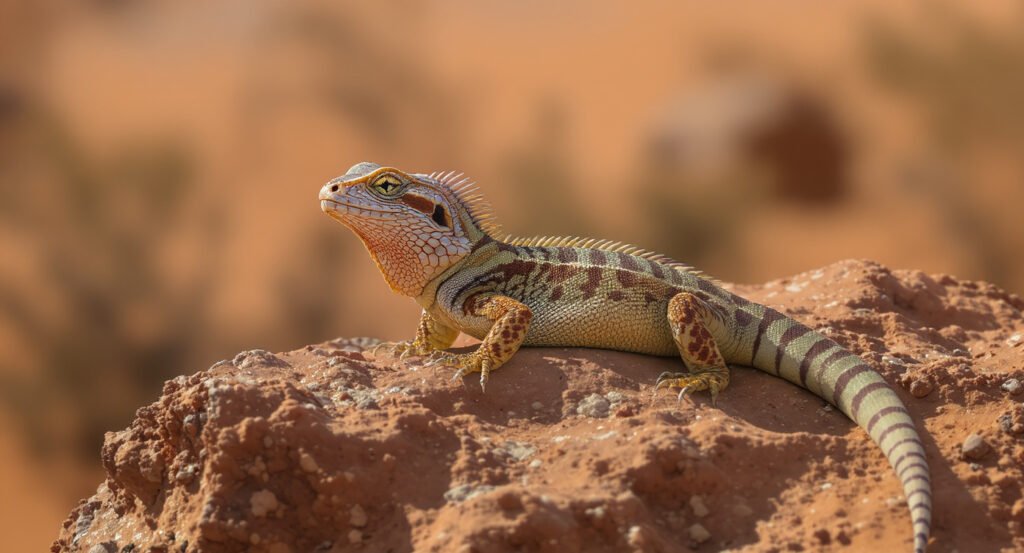
Uromastyx lizards are some of the most rewarding reptiles you can keep, but their dietary needs are often misunderstood. Unlike many popular lizards, uromastyx are primarily herbivores — and getting their diet right is the single biggest factor in their long-term health. Whether you’re a new owner or looking to refine your feeding routine, this guide covers everything you need to know about feeding a uromastyx properly.
Understanding the Uromastyx Natural Diet
In the wild, uromastyx live in arid regions across North Africa and the Middle East, where they forage on seeds, grasses, flowers, and leafy vegetation. Their digestive systems are built for high-fiber, low-moisture plant matter. This is a critical point: uromastyx get most of their hydration from food, not from a water dish. Replicating this natural diet in captivity is the foundation of good husbandry.
Because they evolved in nutrient-sparse environments, uromastyx are efficient processors of plant material. They thrive on variety, and a monotonous diet — even one made up of otherwise healthy foods — can lead to nutritional deficiencies over time.
Core Staple Foods for Uromastyx
Staple foods should make up the bulk of your uromastyx’s diet. These are items you can offer daily or several times per week without concern for overfeeding or nutritional imbalance.
Worried About Your Reptile's Health?
Upload a photo and get instant AI health analysis. Catch problems before they become expensive vet bills.
Get Free Health Check →Leafy Greens
Dark, leafy greens are the cornerstone of a healthy uromastyx diet. The best options include:
- Collard greens — high in calcium and widely available
- Dandelion greens — excellent nutritional profile and usually well-accepted
- Mustard greens — good variety option with solid calcium content
- Turnip greens — another calcium-rich choice
- Endive and escarole — lower in oxalates, great for rotation
Avoid iceberg lettuce entirely — it offers almost no nutritional value and contributes excess moisture. Spinach and beet greens should be limited due to their high oxalate content, which can bind calcium and contribute to metabolic bone disease over time.
Seeds and Legumes
Seeds are a natural and important part of the uromastyx diet. They provide protein, healthy fats, and enrichment. Good options include millet, lentils (dry or slightly sprouted), split peas, and quinoa. Offer seeds a few times per week rather than daily, as they are calorie-dense. Many uromastyx go absolutely wild for millet, which makes it a useful tool for encouraging reluctant eaters.
Vegetables and Flowers to Rotate In
Beyond staple greens, a wide variety of vegetables and edible flowers can be rotated into the diet to keep things interesting and nutritionally complete.
Never Miss Early Warning Signs
AI photo analysis catches subtle health issues humans miss 80% of the time. Early detection = healthier reptile + lower vet bills.
Start Free Trial →Vegetables
- Butternut squash — rich in beta-carotene, offer raw and grated
- Bell peppers — good source of vitamin C, most colors are fine
- Snap peas and green beans — good fiber, well-tolerated
- Shredded carrots — use sparingly due to higher sugar content
- Acorn squash and pumpkin — seasonal options that most uromastyx enjoy
Edible Flowers
Edible flowers are an often-overlooked part of the uromastyx diet, but they closely mirror what these lizards eat in the wild. Hibiscus flowers, dandelion flowers, rose petals (pesticide-free), and nasturtiums are all excellent choices. They add color, variety, and genuine nutritional value. If you have outdoor space, growing a small pesticide-free flower patch is one of the best things you can do for your uromastyx’s enrichment and diet quality.
Foods to Avoid
Some foods that seem harmless — or are even healthy for other reptiles — can be problematic for uromastyx. Keep these off the menu:
- Animal protein — uromastyx are not equipped to process insects or meat regularly; excess protein stresses their kidneys
- Avocado — toxic to many reptiles
- Rhubarb — high in oxalic acid
- Wild-caught insects — risk of pesticide exposure and parasites
- Fruit — too high in sugar; occasional tiny amounts are fine but fruit should not be a regular offering
- Cabbage and kale — goitrogenic when fed in large amounts; fine occasionally but not as staples
Supplementation
Even a well-varied diet benefits from supplementation. Dust food with a calcium supplement (without D3) two to three times per week. A multivitamin supplement with D3 can be added once a week. If your uromastyx has strong UVB lighting — which they absolutely need — they will synthesize D3 naturally, so you don’t need to over-supplement it through food.
Calcium-to-phosphorus ratio matters. Aim for foods that are calcium-rich and phosphorus-moderate. This is another reason collard greens and dandelion greens are so highly recommended — their Ca:P ratio is favorable for long-term bone health.
Join thousands of successful reptile owners
Try ReptileCoach Free →Feeding Frequency and Portion Size
Adult uromastyx should be fed daily or every other day. Juveniles under 12 months benefit from daily feeding to support their rapid growth. A good rule of thumb for portion size is to offer a salad roughly the size of the lizard’s head — they’ll eat what they need and leave the rest. Remove uneaten food after a few hours to prevent spoilage, especially in a warm enclosure.
Fresh food should always be offered at room temperature or slightly warm. Cold food straight from the refrigerator is less appealing and harder to digest. Let greens sit out for 20 to 30 minutes before offering them.
Hydration
This is where uromastyx differ significantly from most other pet lizards. They do not typically drink from standing water and are adapted to extract moisture from their food. A water dish is not necessary and can actually raise enclosure humidity to uncomfortable levels. The moisture content in fresh greens is usually sufficient. If you’re concerned about hydration — for instance, during a shed or illness — a light misting of the food (not the enclosure) can help.
Putting It All Together
A healthy uromastyx diet is built on variety, rotation, and consistency. No single food covers all nutritional bases, which is why mixing greens, rotating vegetables, offering seeds a few times a week, and supplementing appropriately gives your lizard the best shot at a long, healthy life. Pay attention to how your individual animal responds — some uromastyx are adventurous eaters, others are picky, and learning their preferences helps you build a diet they’ll actually consume.
"This app saved my bearded dragon's life. The AI caught early MBD in photos I thought looked completely normal. Worth every penny!"
— Sarah K., ReptileCoach User
Get Your Free 7-Day Trial →Keeping track of what you’re feeding, how much, and how your uromastyx is responding over time makes a real difference. If you want to stay organized and make sure your lizard is getting the variety they need, track your uromastyx feeding schedule with a dedicated reptile care app that helps you log meals, monitor nutrition variety, and stay on top of supplementation days.
Ready to Give Your Reptile the Best Care?
Stop guessing and start knowing. Get personalized AI-powered care guidance, photo health analysis, and 24/7 expert advice for YOUR specific reptile.
Get Personalized Care Guidance
AI-powered photo analysis and daily care tracking for YOUR reptile
Try Free for 7 Days →