
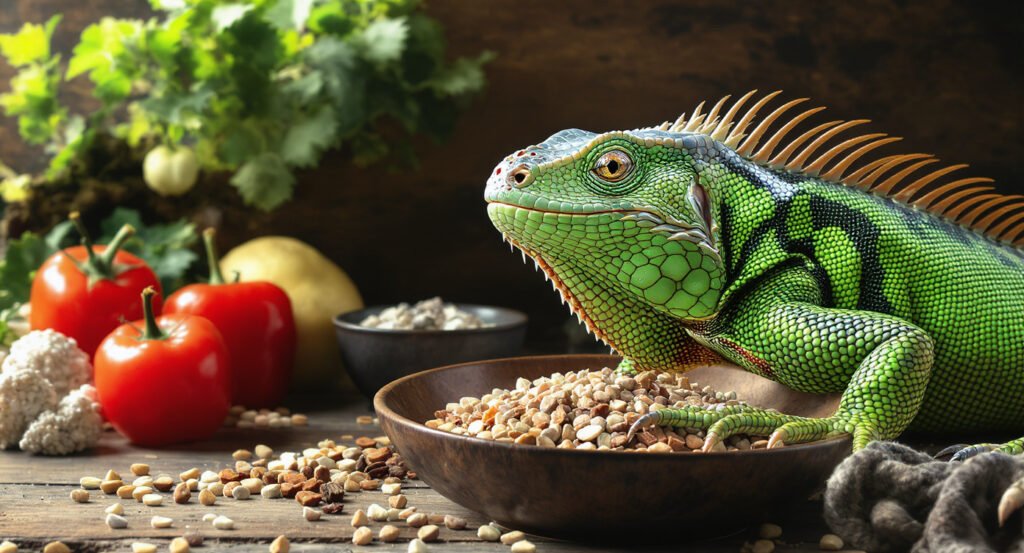
Feeding your green iguana properly is one of the most important aspects of iguana care. Despite their intimidating appearance and sharp teeth, green iguanas are strict herbivores that require a carefully balanced diet to thrive in captivity. Understanding what to feed your iguana and how to prepare their meals can mean the difference between a healthy, vibrant pet and one plagued by metabolic bone disease and other nutritional deficiencies.
What Do Green Iguanas Eat in the Wild?
In their native habitats throughout Central and South America, green iguanas are folivores, meaning they primarily eat leaves, flowers, and fruits. Young iguanas in the wild consume mostly leaves from various trees and shrubs, while adults have a more diverse diet that includes flowers, fruits, and tender shoots. Understanding this natural diet helps us replicate appropriate nutrition in captivity.
Wild iguanas spend much of their day foraging and eating a variety of plant materials, which provides them with essential nutrients, fiber, and hydration. This constant grazing behavior should inform how we feed captive iguanas.
The Foundation: Dark Leafy Greens
The cornerstone of any green iguana’s diet should be dark, leafy greens. These should make up approximately 80-90% of their daily food intake. The best options include:
Worried About Your Reptile's Health?
Upload a photo and get instant AI health analysis. Catch problems before they become expensive vet bills.
Get Free Health Check →- Collard greens
- Mustard greens
- Turnip greens
- Dandelion greens
- Escarole
- Endive
- Arugula
- Bok choy
These greens are rich in calcium and other essential nutrients while being low in oxalates and goitrogens, which can interfere with calcium absorption and thyroid function when consumed in excess. Variety is crucial, so rotate between different greens rather than feeding the same type every day.
Vegetables to Include
About 10-20% of your iguana’s diet can consist of other vegetables. Good choices include:
- Butternut squash
- Acorn squash
- Green beans
- Bell peppers (especially red and yellow)
- Snap peas
- Okra
- Shredded carrots (occasionally)
These vegetables add nutritional diversity and different textures to keep your iguana interested in their food. Always chop vegetables into appropriately sized pieces for your iguana’s size to prevent choking.
Fruits: A Treat, Not a Staple
While iguanas enjoy fruits, they should only make up about 5-10% of the diet. Fruits are high in sugar and can lead to obesity and digestive issues if overfed. Safe fruits include:
Never Miss Early Warning Signs
AI photo analysis catches subtle health issues humans miss 80% of the time. Early detection = healthier reptile + lower vet bills.
Start Free Trial →- Papaya
- Mango
- Strawberries
- Blueberries
- Figs
- Melon
Use fruits as occasional treats or as a way to entice a reluctant eater. Remove any uneaten fruit after a few hours to prevent spoilage and bacterial growth.
Foods to Avoid
Several foods are harmful or inappropriate for green iguanas and should never be offered:
- Animal protein (insects, eggs, meat, fish)
- Dairy products
- Iceberg lettuce (no nutritional value)
- Spinach and beet greens (high oxalates)
- Cabbage and broccoli (goitrogens, feed sparingly)
- Avocado (toxic)
- Rhubarb (toxic)
Despite outdated care information suggesting iguanas need protein, feeding animal-based foods can cause kidney disease and gout in iguanas. They are obligate herbivores and cannot properly process animal proteins.
Calcium and Vitamin Supplementation
Even with a perfect diet, captive iguanas benefit from calcium supplementation. Dust greens with calcium powder (without vitamin D3 for iguanas with UVB access) several times per week. Young, growing iguanas may need daily supplementation.
Join thousands of successful reptile owners
Try ReptileCoach Free →A multivitamin supplement can be offered once or twice weekly, but avoid over-supplementation, which can be as harmful as deficiency. Proper UVB lighting is essential for vitamin D3 synthesis, which enables calcium absorption.
Feeding Schedule and Portion Sizes
Adult iguanas should be offered fresh food daily, preferably in the morning after they’ve had time to bask and raise their body temperature. Remove uneaten food after several hours to maintain hygiene.
Portion sizes vary based on the iguana’s size, age, and activity level. As a general rule, offer a salad roughly the size of the iguana’s body (excluding tail) for adults. Growing juveniles may eat more relative to their size.
Hydration Matters
While iguanas get much of their water from fresh greens and vegetables, always provide a large water dish for drinking and soaking. Many iguanas enjoy bathing, which aids in hydration and shedding. Mist the enclosure daily to maintain humidity and encourage drinking.
"This app saved my bearded dragon's life. The AI caught early MBD in photos I thought looked completely normal. Worth every penny!"
— Sarah K., ReptileCoach User
Get Your Free 7-Day Trial →Preparing Iguana Salads
To make feeding easier and ensure proper nutrition, prepare salads by thoroughly washing all produce, chopping greens and vegetables into bite-sized pieces, mixing ingredients together, and lightly dusting with calcium powder. Creating several days’ worth of salad at once and storing it in the refrigerator can save time, though always add fresh items daily for optimal nutrition.
Track Your Iguana’s Health
Proper nutrition is essential, but tracking your pet’s diet, weight, and overall health makes a significant difference in long-term care. Try ReptileCoach App Free to log feedings, monitor growth patterns, and receive personalized care reminders for your green iguana.
Signs of Nutritional Problems
Watch for these warning signs that may indicate dietary deficiencies:
- Swollen or misshapen jaw
- Lethargy or weakness
- Tremors or difficulty moving
- Soft or curved bones
- Loss of appetite
- Constipation or diarrhea
If you notice any of these symptoms, consult a reptile veterinarian immediately. Metabolic bone disease and other nutritional disorders can progress rapidly but are often reversible with proper intervention.
Worried About Your Reptile's Health?
Upload a photo and get instant AI health analysis. Catch problems before they become expensive vet bills.
Get Free Health Check →Conclusion
Feeding a green iguana properly requires commitment and knowledge, but the reward is a healthy, active pet that can live 15-20 years or more. Focus on dark leafy greens, offer variety, supplement appropriately, and avoid animal proteins. By understanding your iguana’s nutritional needs and providing a balanced herbivorous diet, you’ll ensure your scaly companion thrives for years to come.
Ready to Give Your Reptile the Best Care?
Stop guessing and start knowing. Get personalized AI-powered care guidance, photo health analysis, and 24/7 expert advice for YOUR specific reptile.
Get Personalized Care Guidance
AI-powered photo analysis and daily care tracking for YOUR reptile
Try Free for 7 Days →