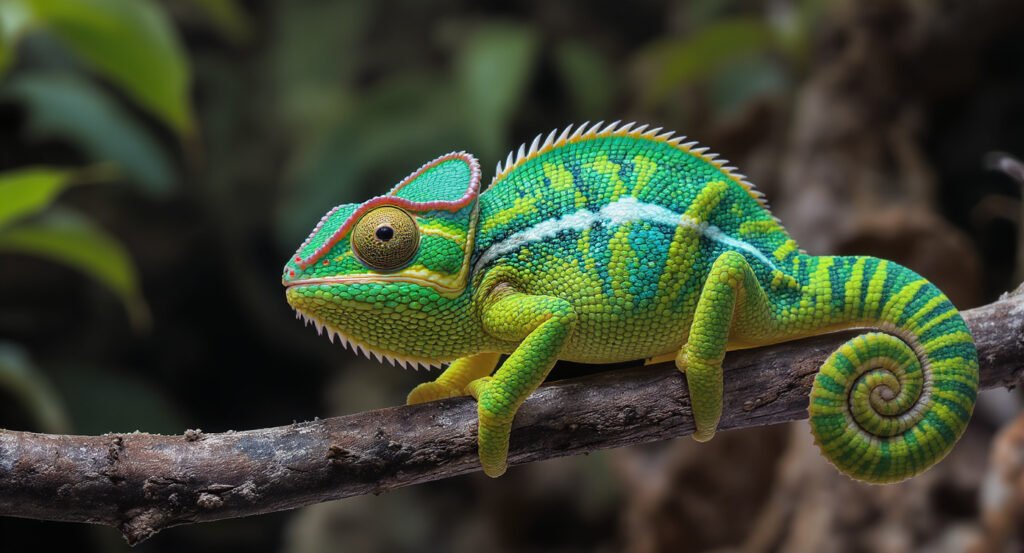
Providing proper UVB lighting is one of the most critical aspects of chameleon care. Without adequate ultraviolet B radiation, chameleons cannot synthesize vitamin D3, leading to metabolic bone disease and other serious health issues. This comprehensive guide covers everything you need to know about chameleon UVB lighting to keep your pet thriving.
Why UVB Lighting is Essential for Chameleons
In their natural habitats, chameleons receive direct sunlight that contains UVB wavelengths. These wavelengths enable their bodies to produce vitamin D3, which is necessary for calcium absorption. Without proper UVB exposure, chameleons develop calcium deficiency regardless of dietary supplementation.
Metabolic bone disease (MBD) is the most common consequence of inadequate UVB lighting. Symptoms include lethargy, tremors, soft or swollen jaw, curved spine, and difficulty climbing. Advanced cases can be fatal, making proper UVB lighting a non-negotiable requirement for chameleon keeping.
Types of UVB Bulbs for Chameleons
Not all UVB bulbs are suitable for chameleons. Understanding the differences helps you make the right choice for your setup.
Worried About Your Reptile's Health?
Upload a photo and get instant AI health analysis. Catch problems before they become expensive vet bills.
Get Free Health Check →Linear Fluorescent Tubes
Linear fluorescent UVB tubes are the gold standard for chameleon enclosures. They provide even distribution of UVB across a larger area, allowing your chameleon to move throughout the enclosure while maintaining exposure. The most recommended options are:
- 5.0 UVB bulbs: Suitable for screen-topped enclosures where UVB penetration is reduced
- 10.0 UVB bulbs: Better for glass enclosures or larger setups where stronger output is needed
Quality brands include ReptiSun, Arcadia, and Zoo Med. Linear tubes typically need replacement every 6-12 months as UVB output degrades even when visible light remains.
Compact Fluorescent Bulbs
Compact or coiled UVB bulbs are less ideal for chameleons. They provide concentrated UVB in a small area rather than even distribution, potentially causing eye damage if the chameleon basks too close. If you must use compact bulbs, ensure proper distance and never as the sole UVB source for larger species.
Mercury Vapor Bulbs
Mercury vapor bulbs combine heat and UVB output. While effective, they produce intense heat and UVB in concentrated areas. They work best for larger enclosures where you can maintain proper distance, but require careful placement and monitoring.
Never Miss Early Warning Signs
AI photo analysis catches subtle health issues humans miss 80% of the time. Early detection = healthier reptile + lower vet bills.
Start Free Trial →Proper UVB Lighting Setup
Bulb Placement and Distance
Position your UVB bulb inside the enclosure or directly on top of a screen lid. Glass and plastic filter out UVB, so avoid placing bulbs outside glass enclosures. The basking spot should be 6-12 inches from the UVB source for most chameleon species, though this varies by bulb strength and species size.
Create a UVB gradient by placing the bulb at one end of the enclosure. This allows your chameleon to self-regulate exposure by moving closer or farther from the source.
Duration and Schedule
Chameleons need 10-12 hours of UVB exposure daily to mimic natural day-night cycles. Use a timer to maintain consistency, as irregular lighting schedules can stress your pet and disrupt natural behaviors.
Turn UVB lights off at night. Chameleons require complete darkness for proper rest, and 24-hour lighting disrupts their circadian rhythm.
Join thousands of successful reptile owners
Try ReptileCoach Free →Species-Specific UVB Requirements
Different chameleon species have varying UVB needs based on their natural habitats.
Veiled Chameleons
Veiled chameleons originate from sunny, arid regions of Yemen and Saudi Arabia. They require moderate to high UVB levels. A ReptiSun 5.0 or Arcadia 6% bulb works well for standard enclosures with screen tops.
Panther Chameleons
Panther chameleons from Madagascar’s forests need moderate UVB exposure. A ReptiSun 5.0 provides adequate levels for most setups. These chameleons naturally experience filtered sunlight through forest canopy.
Jackson’s Chameleons
Jackson’s chameleons come from higher-elevation East African forests with less intense sunlight. They require lower UVB levels than desert species. A ReptiSun 5.0 at appropriate distance prevents over-exposure.
"This app saved my bearded dragon's life. The AI caught early MBD in photos I thought looked completely normal. Worth every penny!"
— Sarah K., ReptileCoach User
Get Your Free 7-Day Trial →Measuring and Monitoring UVB Output
Investing in a UVB meter (Solarmeter 6.5) allows you to measure actual UVB reaching your chameleon’s basking area. Target UVI readings of 3.0-6.0 for most species, though requirements vary. Regular monitoring ensures your bulb hasn’t degraded below effective levels.
Replace bulbs according to manufacturer recommendations, typically every 6-12 months. Mark installation dates on your calendar, as UVB output diminishes long before visible light fades.
Common UVB Lighting Mistakes
Avoid these frequent errors that compromise chameleon health:
- Using the wrong bulb type: Household or plant grow lights don’t provide appropriate UVB wavelengths
- Placing bulbs outside glass: Glass blocks UVB transmission
- Keeping bulbs too long: Replace on schedule even if they still produce visible light
- No UVB gradient: Chameleons need areas with varying UVB intensity
- Inadequate fixture length: Use bulbs spanning at least half the enclosure length
Supplementing with Natural Sunlight
When weather permits, supervised outdoor time in natural, unfiltered sunlight provides optimal UVB exposure. Even 15-30 minutes weekly offers significant benefits. Ensure your chameleon has access to shade, stays within safe temperature ranges, and remains secured in an escape-proof enclosure.
Worried About Your Reptile's Health?
Upload a photo and get instant AI health analysis. Catch problems before they become expensive vet bills.
Get Free Health Check →Never place an enclosure in direct sunlight indoors through window glass, as this creates dangerous overheating without providing UVB benefits.
Take Control of Your Chameleon’s Health
Proper UVB lighting is fundamental to chameleon husbandry, but it’s just one piece of comprehensive care. Temperature gradients, humidity levels, feeding schedules, and health monitoring all work together to keep your chameleon healthy.
Track all aspects of your chameleon care easily with Try ReptileCoach App Free. Get reminders for bulb replacements, log health observations, and access expert care guidelines tailored to your specific chameleon species—all in one convenient platform.
Final Thoughts
Chameleon UVB lighting doesn’t need to be complicated, but it does require attention to detail and quality equipment. Invest in reputable linear fluorescent bulbs, position them correctly, maintain replacement schedules, and monitor output regularly. Your chameleon’s bone health, immune function, and overall vitality depend on these invisible but essential wavelengths. With proper UVB lighting as part of a complete care regimen, your chameleon can thrive for years to come.
Never Miss Early Warning Signs
AI photo analysis catches subtle health issues humans miss 80% of the time. Early detection = healthier reptile + lower vet bills.
Start Free Trial →Ready to Give Your Reptile the Best Care?
Stop guessing and start knowing. Get personalized AI-powered care guidance, photo health analysis, and 24/7 expert advice for YOUR specific reptile.
Get Personalized Care Guidance
AI-powered photo analysis and daily care tracking for YOUR reptile
Try Free for 7 Days →