Why UVB Lighting Is Non-Negotiable for Chameleon Health
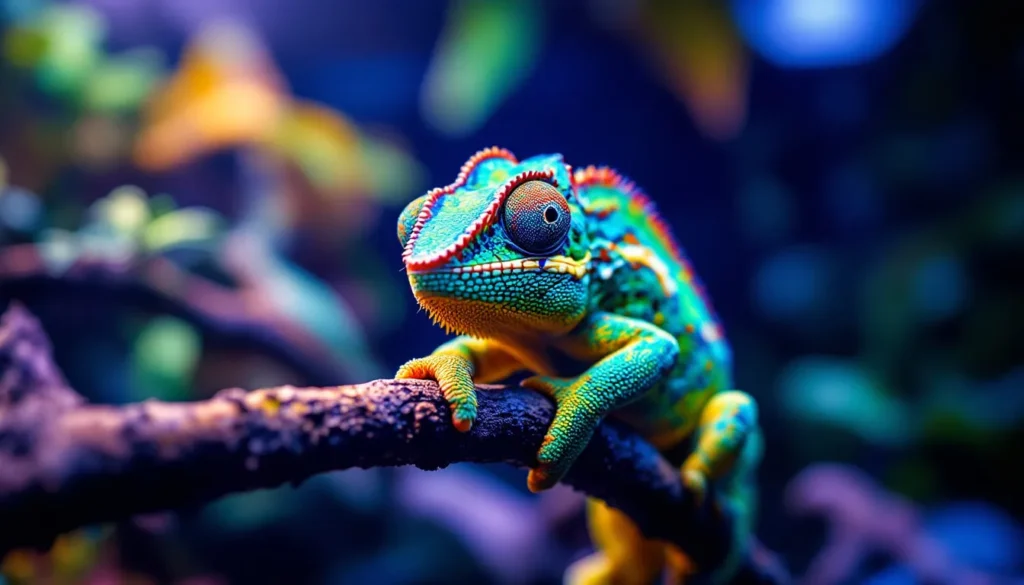
Chameleons are specialized arboreal reptiles that have evolved under the canopy of forests where natural sunlight filters through leaves. In captivity, replicating this UV exposure isn’t optional—it’s essential for survival. UVB radiation enables chameleons to synthesize vitamin D3, which is critical for calcium metabolism. Without adequate UVB exposure, chameleons cannot properly absorb dietary calcium, leading to metabolic bone disease (MBD), a progressive and potentially fatal condition that causes weakened bones, tremors, and skeletal deformities.
Unlike some reptiles that can survive on dietary vitamin D3 supplementation alone, chameleons require direct UVB exposure to thrive. Their complex physiology depends on the natural photochemical process that occurs when UVB rays penetrate their skin. This makes proper lighting one of the most important aspects of chameleon husbandry, directly impacting bone health, immune function, behavior, and overall longevity.
Best UVB Bulb Types for Chameleon Enclosures
Choosing the right UVB bulb can feel overwhelming given the variety of options available. For chameleons, linear fluorescent tubes and high-output T5 fixtures provide the most reliable and evenly distributed UV radiation across the enclosure.
Linear Fluorescent Tubes (T5 HO and T8)
T5 High Output (HO) fixtures are the gold standard for chameleon keepers. These bulbs produce strong, consistent UVB output and penetrate deeper into the enclosure than older T8 technology. The Arcadia ProT5 Kit and Zoo Med ReptiSun T5 HO are both excellent choices. T5 HO bulbs should be positioned 8-12 inches from basking branches for most chameleon species, though exact distances depend on the bulb’s strength and your target UVI levels.
Worried About Your Reptile's Health?
Upload a photo and get instant AI health analysis. Catch problems before they become expensive vet bills.
Get Free Health Check →T8 bulbs are an older technology that still works but requires closer positioning (6-8 inches) due to lower output. They’re more affordable initially but need more frequent replacement, making T5 HO the better long-term investment.
Recommended Bulb Brands and Strengths
- Arcadia ProT5 6% or 12%: The 6% (Forest) is ideal for screen-top enclosures, while the 12% (Desert) works well for glass terrariums or when greater distance is needed
- Zoo Med ReptiSun 5.0 or 10.0 T5 HO: The 5.0 suits most chameleon setups, while the 10.0 is better for larger enclosures or when mounted at greater distances
- Arcadia D3 Dragon Lamp: A mercury vapor bulb option that provides both heat and UVB, though less commonly used for chameleons due to intensity
Compact UVB Bulbs: Generally Not Recommended
Compact or coil UVB bulbs produce inconsistent UV distribution and have been associated with eye problems in chameleons. Stick with linear tubes for reliable, safe coverage.
Understanding UVI Levels: What Your Chameleon Actually Needs
UV Index (UVI) measures the intensity of UV radiation at a specific point. For chameleons, appropriate basking zone UVI levels vary by species but generally fall between 3.0 and 6.0 UVI.
Species like veiled chameleons and panther chameleons typically do well with basking zones around 3.0-4.0 UVI, while some montane species may prefer slightly lower levels (2.5-3.5 UVI). It’s crucial to create a gradient within the enclosure, with higher UVI at basking spots and lower levels in shaded retreat areas, allowing your chameleon to self-regulate exposure.
Never Miss Early Warning Signs
AI photo analysis catches subtle health issues humans miss 80% of the time. Early detection = healthier reptile + lower vet bills.
Start Free Trial →Investing in a quality UV meter such as the Solarmeter 6.5 allows you to measure actual UVI levels at basking branches, taking the guesswork out of bulb positioning. This is especially valuable since screen mesh can block 30-50% of UVB output, requiring adjustments in bulb placement or strength.
Setting Up Your Chameleon’s Basking Zone
Your basking setup should provide both appropriate temperatures and adequate UVB exposure. Position a horizontal branch or vine 8-12 inches below the T5 HO fixture, ensuring your chameleon’s back is at the optimal distance when basking. The basking spot temperature should be species-specific—typically 85-90°F for veiled and panther chameleons, and cooler (78-82°F) for montane species like Jackson’s chameleons.
Use a separate basking lamp (incandescent or halogen) for heat, positioned to create a thermal gradient. This separation of heat and UVB sources gives you independent control over both elements. Avoid placing heat lamps directly adjacent to UVB tubes as excessive heat can degrade UVB output over time.
Photoperiod Schedule: Mimicking Natural Day/Night Cycles
Chameleons require a consistent photoperiod to maintain healthy circadian rhythms. Provide 12 hours of light and 12 hours of complete darkness as a standard schedule. During summer months, you can extend daylight to 13-14 hours to mimic seasonal changes, but consistency is more important than seasonal variation for captive chameleons.
Join thousands of successful reptile owners
Try ReptileCoach Free →Use a reliable timer to automate your lighting schedule. Both UVB and heat lamps should turn on simultaneously in the morning and off together at night. Avoid leaving any lights on 24/7, as chameleons need darkness to properly rest, and disrupted sleep cycles can lead to stress and health problems.
Recognizing UVB Deficiency in Chameleons
Catching UVB-related problems early can mean the difference between simple intervention and irreversible damage. Watch for these warning signs:
- Metabolic Bone Disease (MBD) symptoms: Swollen or crooked limbs, rubber jaw, tremors, difficulty climbing, lethargy
- Reduced appetite: Chameleons with calcium deficiency often eat less or show decreased interest in food
- Weak grip strength: Difficulty holding onto branches or frequent falling
- Bowed or kinked spine: Visible skeletal deformities indicating advanced MBD
- Lethargy and lack of coloration: Dull colors and reduced activity levels
If you notice any of these signs, consult a reptile veterinarian immediately and review your UVB setup. Early-stage MBD can sometimes be reversed with proper lighting, calcium supplementation, and veterinary care, but advanced cases often result in permanent disability or death.
UVB Bulb Replacement Schedule: Don’t Wait Until They Burn Out
Here’s a critical fact many new keepers miss: UVB bulbs stop producing adequate UV radiation long before they visibly burn out. The visible light continues, giving a false sense of security while your chameleon receives insufficient UVB.
"This app saved my bearded dragon's life. The AI caught early MBD in photos I thought looked completely normal. Worth every penny!"
— Sarah K., ReptileCoach User
Get Your Free 7-Day Trial →Replace UVB bulbs according to these guidelines:
- T5 HO bulbs (Arcadia): Every 12 months
- T5 HO bulbs (Zoo Med ReptiSun): Every 12 months
- T8 bulbs: Every 6-9 months
- Mercury vapor bulbs: Every 12 months
Mark replacement dates on your calendar when you install new bulbs. Using a UV meter to check output every few months provides objective confirmation that your bulb is still producing adequate UVB. If readings drop below target levels before the expected replacement date, replace the bulb early.
Get a Personalized Lighting Plan for Your Chameleon
Every chameleon setup is unique, with variables like enclosure type, screen vs. glass, room lighting, and species-specific needs all affecting your optimal lighting configuration. Rather than guessing and potentially compromising your chameleon’s health, get expert guidance tailored to your exact situation. Visit the ReptileCoach personalized lighting guide tool to receive customized recommendations for bulb type, positioning, replacement schedule, and UVI targets based on your chameleon species and enclosure specifications. Proper UVB lighting is too important to leave to chance—get your personalized setup right from the start.
Ready to Give Your Reptile the Best Care?
Stop guessing and start knowing. Get personalized AI-powered care guidance, photo health analysis, and 24/7 expert advice for YOUR specific reptile.
Get Personalized Care Guidance
AI-powered photo analysis and daily care tracking for YOUR reptile
Try Free for 7 Days →