
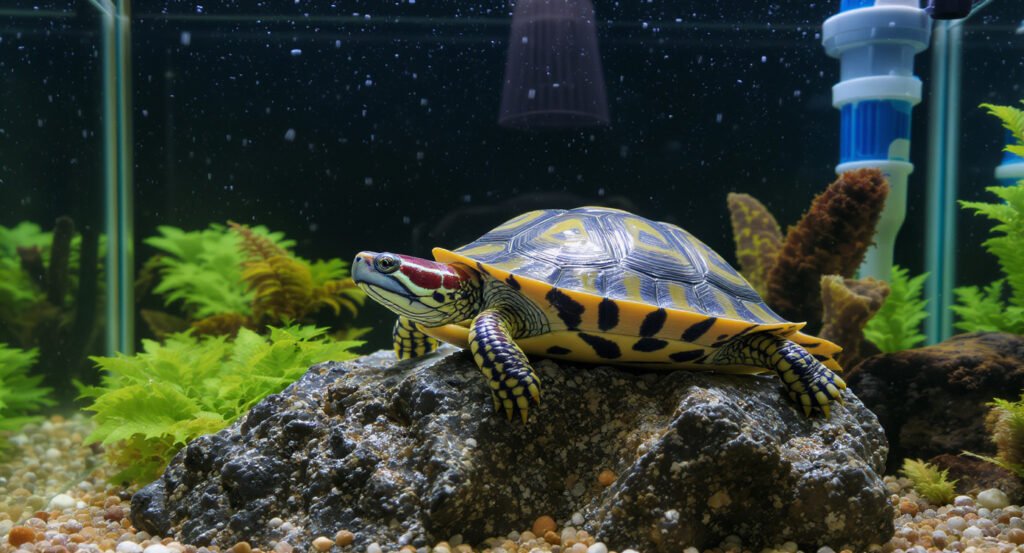
Setting up a proper habitat for your red-eared slider is one of the most important steps in becoming a responsible turtle owner. These semi-aquatic reptiles need specific environmental conditions to thrive, and getting the tank setup right from the start will save you time, money, and potential health issues down the road.
Tank Size Requirements: Bigger Is Always Better
The most common mistake new red-eared slider owners make is underestimating how much space their turtle needs. While hatchlings are adorable and tiny, red-eared sliders grow quickly and can reach 8–12 inches in length.
Minimum tank sizes:
- Hatchlings (2–4 inches): 20–30 gallons
- Juveniles (4–6 inches): 40–55 gallons
- Adults (6+ inches): 75–125 gallons minimum
A general rule of thumb is to provide 10 gallons of water per inch of shell length. For adult turtles, larger enclosures like stock tanks or custom-built ponds work exceptionally well and are often more cost-effective than massive aquariums.
Worried About Your Reptile's Health?
Upload a photo and get instant AI health analysis. Catch problems before they become expensive vet bills.
Get Free Health Check →Essential Equipment for Your Red-Eared Slider Tank
1. Powerful Filtration System
Red-eared sliders are messy eaters and produce significant waste. Your filtration system needs to handle at least twice the water volume of your tank. For a 75-gallon tank, use a filter rated for 150 gallons.
Filter options:
- Canister filters: Best for larger tanks, excellent filtration
- Hang-on-back filters: Good for smaller setups, easy maintenance
- Sponge filters: Supplemental filtration, safe for hatchlings
Plan to perform 25–30% water changes weekly, even with excellent filtration. This maintains water quality and prevents ammonia buildup.
2. Basking Platform
Your red-eared slider needs a completely dry basking area that’s easily accessible. The platform should be large enough for your turtle to completely dry off and should be positioned under the heat lamp.
Never Miss Early Warning Signs
AI photo analysis catches subtle health issues humans miss 80% of the time. Early detection = healthier reptile + lower vet bills.
Start Free Trial →Commercial turtle docks work well, but you can also create DIY platforms using slate, driftwood, or aquarium-safe materials. Ensure the basking area has a gentle ramp and textured surface to prevent slipping.
3. Heating and Lighting Setup
Proper temperature regulation is critical for your turtle’s health, digestion, and immune system.
Temperature requirements:
- Water temperature: 75–78°F
- Basking spot: 88–95°F
- Ambient air temperature: 75–80°F
Use a submersible aquarium heater (rated for your tank size) to maintain water temperature. For the basking area, a heat lamp with a 75–100 watt bulb typically works well, but adjust based on your specific setup.
Join thousands of successful reptile owners
Try ReptileCoach Free →4. UVB Lighting: Non-Negotiable
Red-eared sliders require UVB lighting to synthesize vitamin D3 and properly metabolize calcium. Without adequate UVB exposure, your turtle will develop metabolic bone disease, a painful and potentially fatal condition.
Use a reptile-specific UVB bulb (10.0 or 5.0 strength) positioned 10–12 inches above the basking area. Replace UVB bulbs every 6–12 months, as their effectiveness diminishes over time even when they still produce visible light.
Maintain a consistent light cycle of 10–12 hours of light and 12–14 hours of darkness to mimic natural conditions.
Water Depth and Quality
Red-eared sliders are strong swimmers and need adequate water depth. Aim for water that’s at least 1.5–2 times the length of your turtle’s shell. For an 8-inch turtle, that means a minimum of 12–16 inches of water depth.
"This app saved my bearded dragon's life. The AI caught early MBD in photos I thought looked completely normal. Worth every penny!"
— Sarah K., ReptileCoach User
Get Your Free 7-Day Trial →Water quality parameters:
- pH: 6.5–8.0
- Ammonia: 0 ppm
- Nitrite: 0 ppm
- Nitrate: Below 40 ppm
Invest in an aquarium test kit and monitor water quality weekly, especially during the first few months as your tank’s biological filtration establishes itself.
Substrate: To Use or Not to Use?
Many experienced keepers recommend a bare-bottom tank for red-eared sliders. This approach makes cleaning easier and eliminates the risk of substrate ingestion.
If you prefer substrate for aesthetic reasons, use large river rocks (too big to swallow) or sand. Avoid small gravel, which poses an impaction hazard if ingested.
Worried About Your Reptile's Health?
Upload a photo and get instant AI health analysis. Catch problems before they become expensive vet bills.
Get Free Health Check →Common Setup Mistakes to Avoid
1. Using glass bowls or small tanks: These provide inadequate space and filtration. Red-eared sliders need room to swim and exercise.
2. Forgetting the dry basking area: Without a completely dry spot, your turtle is susceptible to shell rot and respiratory infections.
3. Skipping UVB lighting: Natural sunlight through a window doesn’t provide UVB rays. Your turtle needs direct exposure from a proper reptile UVB bulb.
4. Inadequate filtration: Under-filtering leads to poor water quality, frequent water changes, and stressed, unhealthy turtles.
Never Miss Early Warning Signs
AI photo analysis catches subtle health issues humans miss 80% of the time. Early detection = healthier reptile + lower vet bills.
Start Free Trial →5. No temperature monitoring: Use digital thermometers with probes to monitor both water and basking temperatures accurately.
Ongoing Maintenance Schedule
Keeping your red-eared slider healthy requires consistent care. Track your pet’s care schedule with our free app to stay on top of essential maintenance tasks:
- Daily: Check temperatures, observe turtle behavior, feed appropriate amounts
- Weekly: 25–30% water change, test water parameters, clean basking area
- Monthly: Clean filter media, inspect equipment, check UVB bulb position
- Every 6 months: Replace UVB bulb, deep clean tank, inspect heater and thermometers
Setting Up Your Tank: Step-by-Step
Step 1: Position your tank on a sturdy stand away from direct sunlight and drafts.
Step 2: Install the filter, heater, and basking platform before adding water.
Join thousands of successful reptile owners
Try ReptileCoach Free →Step 3: Fill the tank with dechlorinated water to the appropriate depth.
Step 4: Position heat and UVB lamps above the basking area, ensuring proper distances.
Step 5: Let the system run for 24–48 hours before adding your turtle, allowing temperatures to stabilize and chlorine to dissipate.
Step 6: Monitor temperatures and water quality closely for the first week.
"This app saved my bearded dragon's life. The AI caught early MBD in photos I thought looked completely normal. Worth every penny!"
— Sarah K., ReptileCoach User
Get Your Free 7-Day Trial →Final Thoughts
Creating the perfect red-eared slider habitat requires an upfront investment of time and money, but the reward is a healthy, active turtle that can live 20–40 years or more. Focus on providing adequate space, excellent filtration, proper heating and lighting, and consistent maintenance.
Remember that your turtle’s needs will change as it grows. Plan ahead for larger housing, and don’t hesitate to upgrade equipment as needed. With the right setup and dedicated care, your red-eared slider will thrive and become a fascinating long-term companion.
Ready to Give Your Reptile the Best Care?
Stop guessing and start knowing. Get personalized AI-powered care guidance, photo health analysis, and 24/7 expert advice for YOUR specific reptile.
Get Personalized Care Guidance
AI-powered photo analysis and daily care tracking for YOUR reptile
Try Free for 7 Days →