
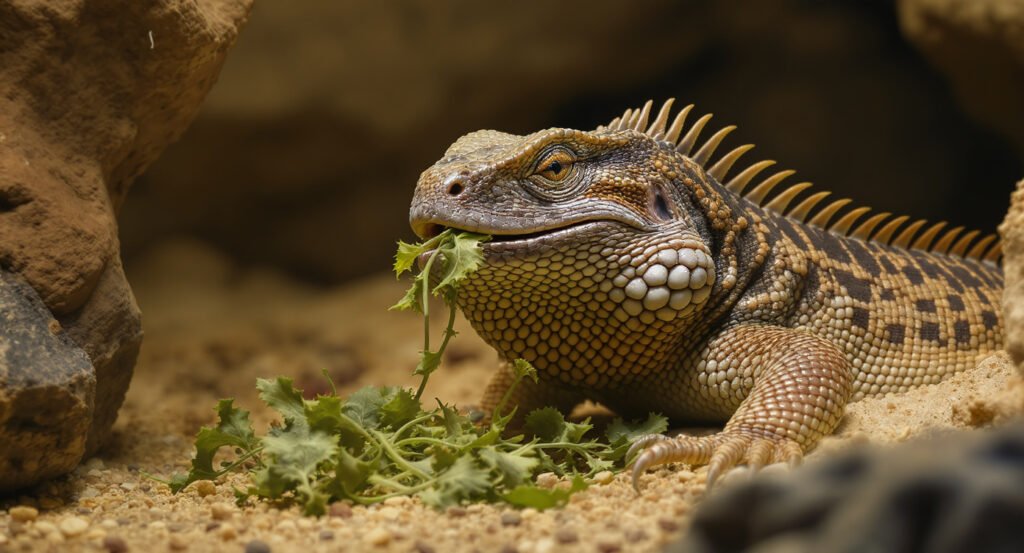
Uromastyx lizards, affectionately known as “spiny-tailed lizards,” are captivating herbivorous reptiles that require a specialized diet to thrive in captivity. Unlike many popular pet lizards, these desert-dwelling creatures are strictly herbivorous as adults, making proper nutrition both simple and critically important. Understanding what to feed your uromastyx—and equally important, what to avoid—is essential for maintaining their vibrant colors, robust health, and impressive longevity of 15-20 years or more.
Understanding the Natural Uromastyx Diet
In their native habitats across North Africa and the Middle East, uromastyx lizards are opportunistic herbivores that forage on a variety of desert vegetation. They’ve evolved to extract maximum nutrition and moisture from seemingly harsh, fibrous plants. Their digestive systems are specifically adapted to process high-fiber, low-protein vegetation, which is why replicating this diet in captivity is so crucial.
Wild uromastyx primarily consume flowers, seeds, and leaves from desert plants. They’re particularly fond of plants in the legume family, which provide essential nutrients without excess protein or oxalates. Understanding this natural dietary preference helps us create an appropriate feeding plan for captive specimens.
What to Feed Your Uromastyx: The Core Diet
The foundation of a healthy uromastyx diet consists of dark leafy greens and vegetables. Aim for variety, rotating between different food items to ensure balanced nutrition. The bulk of their diet—about 70-80%—should come from leafy greens and vegetables, with the remainder consisting of seeds, lentils, and occasional treats.
Worried About Your Reptile's Health?
Upload a photo and get instant AI health analysis. Catch problems before they become expensive vet bills.
Get Free Health Check →Best Leafy Greens and Vegetables
- Collard greens (excellent staple)
- Dandelion greens (highly nutritious)
- Turnip greens
- Endive and escarole
- Mustard greens (in moderation)
- Butternut squash
- Bell peppers (all colors)
- Okra
- Green beans
- Lentils (dried or sprouted)
Seeds and Supplementary Foods
Seeds provide important nutrients and enrichment for your uromastyx. Offer small amounts 2-3 times per week as part of their regular diet:
- Millet
- Safflower seeds
- Lentils (dried or sprouted)
- Split peas
- Grass seeds (chemical-free)
Edible Flowers and Herbs
Uromastyx absolutely love edible flowers, which can be offered fresh whenever available. These provide excellent nutrition and enrichment:
- Hibiscus flowers
- Rose petals (pesticide-free)
- Dandelion flowers
- Nasturtiums
- Pansies
- Basil and cilantro (herbs in moderation)
Ready for personalized reptile care advice? Try the ReptileCoach AI App — your 24/7 reptile care expert!
Foods to Avoid: Critical Dietary Don’ts
Equally important to knowing what to feed is understanding what foods can harm your uromastyx. Several common vegetables and practices can cause serious health issues:
Never Miss Early Warning Signs
AI photo analysis catches subtle health issues humans miss 80% of the time. Early detection = healthier reptile + lower vet bills.
Start Free Trial →High-Oxalate Foods
Avoid or strictly limit foods high in oxalates, which bind calcium and can lead to metabolic bone disease:
- Spinach (never feed)
- Beet greens
- Swiss chard
- Parsley (high amounts)
Other Foods to Avoid
- Insects and animal protein (uromastyx are herbivores; protein overload causes kidney damage)
- Lettuce (iceberg or romaine—too low in nutrition, too high in water)
- Cabbage and broccoli (goitrogenic properties interfere with thyroid function)
- Citrus fruits (too acidic)
- Avocado (toxic to reptiles)
- Processed human foods
Feeding Schedule and Best Practices
Adult uromastyx should be offered fresh food daily, preferably in the morning after their basking area has warmed up. They’re most active and have the best appetite when their body temperature is optimal. Remove uneaten food after several hours to prevent spoilage.
Portion Size and Frequency
Offer a salad bowl of mixed greens and vegetables about the size of your uromastyx’s body (minus the tail). Juvenile uromastyx should eat daily, while adults can be fed 5-6 times per week once fully grown. Monitor your lizard’s body condition—they should have a plump tail base and visible muscle tone without appearing obese.
Supplementation Guidelines
Unlike insect-eating reptiles, uromastyx require minimal supplementation when fed a proper varied diet:
Join thousands of successful reptile owners
Try ReptileCoach Free →- Calcium powder (without D3): Lightly dust food 2-3 times per week
- Multivitamin: Once every 1-2 weeks
- Ensure proper UVB lighting (10-12% UVB bulb), which is more important than vitamin D3 supplementation
Hydration Matters
While uromastyx obtain most moisture from their food, always provide a shallow water dish. Many uromastyx rarely drink, but the option should be available. Lightly misting greens before feeding also helps with hydration. Avoid over-misting the enclosure, as these desert species require low humidity.
Common Dietary Problems and Solutions
Picky eating is relatively common in uromastyx, especially during seasonal changes or temperature fluctuations. If your uromastyx refuses food, first verify that basking temperatures are adequate (120-130°F basking spot). Without proper heat, they won’t metabolize food effectively.
If your lizard consistently refuses food, try offering more variety, including flowers and colorful vegetables like bell peppers. Some uromastyx develop strong preferences for certain foods—while it’s fine to offer favorites, continue presenting variety to prevent nutritional deficiencies.
Conclusion: Setting Your Uromastyx Up for Success
Feeding your uromastyx properly is one of the most important aspects of their care, yet it’s remarkably straightforward once you understand their herbivorous needs. Focus on variety, emphasize leafy greens and vegetables, avoid protein and high-oxalate foods, and ensure proper supplementation and UVB lighting. With these dietary foundations in place, your spiny-tailed lizard will display vibrant colors, maintain excellent health, and potentially live for two decades or more as your scaly companion.
"This app saved my bearded dragon's life. The AI caught early MBD in photos I thought looked completely normal. Worth every penny!"
— Sarah K., ReptileCoach User
Get Your Free 7-Day Trial →Remember that every uromastyx is an individual with unique preferences. Observe your lizard’s eating habits, maintain consistent husbandry parameters, and adjust their diet as needed based on their response. The effort you invest in proper nutrition will be rewarded with a thriving, active, and beautifully colored uromastyx.
Ready to Give Your Reptile the Best Care?
Stop guessing and start knowing. Get personalized AI-powered care guidance, photo health analysis, and 24/7 expert advice for YOUR specific reptile.
Get Personalized Care Guidance
AI-powered photo analysis and daily care tracking for YOUR reptile
Try Free for 7 Days →