Red-Eared Slider Turtle Tank Setup: Complete Beginner’s Guide
Red-eared slider turtles are among the most popular pet turtles in the world, known for their distinctive red stripe behind each eye and engaging personalities. However, many new turtle owners underestimate the commitment required to provide proper care. This comprehensive guide will walk you through everything you need to know about setting up the perfect habitat and caring for your red-eared slider.
Tank Size Requirements: Bigger Is Always Better
One of the most common mistakes beginners make is purchasing a tank that’s too small. Red-eared sliders grow quickly and can reach 8-12 inches in shell length, with females typically growing larger than males.
Minimum Tank Sizes
- Hatchlings (under 2 inches): 20-30 gallons
- Juveniles (2-4 inches): 40-55 gallons
- Adults (over 6 inches): 75-125 gallons or larger
A general rule of thumb is to provide 10 gallons of water per inch of shell length. Since these turtles can live 20-40 years, investing in a larger tank from the start saves money and stress in the long run. Many experienced keepers recommend starting with at least a 75-gallon tank even for juveniles.
Water Quality and Filtration Systems
Red-eared sliders are messy eaters and produce significant waste, making robust filtration absolutely essential for maintaining water quality and turtle health.
Worried About Your Reptile's Health?
Upload a photo and get instant AI health analysis. Catch problems before they become expensive vet bills.
Get Free Health Check →Choosing the Right Filter
Your filter should be rated for 2-3 times your actual water volume. For a 75-gallon tank with 50 gallons of water, use a filter rated for 100-150 gallons. Canister filters are the gold standard for turtle tanks because they provide superior mechanical, chemical, and biological filtration.
Popular options include:
- Fluval FX series for large tanks
- Penn-Plax Cascade canister filters for budget-friendly efficiency
- Aqueon QuietFlow for smaller setups
Perform 25-30% water changes weekly even with excellent filtration. Test water parameters regularly: ammonia and nitrite should be 0 ppm, and nitrates below 40 ppm.
Creating the Perfect Basking Area
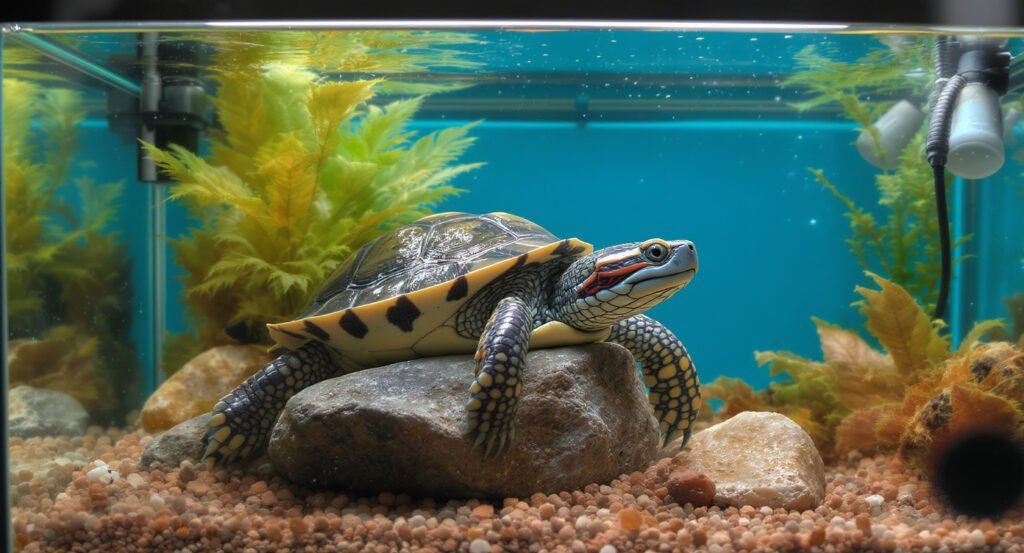
Red-eared sliders are semi-aquatic and need a dry basking platform where they can completely leave the water. Basking serves crucial functions: it helps regulate body temperature, aids digestion, prevents shell rot, and allows their shells to dry completely.
Never Miss Early Warning Signs
AI photo analysis catches subtle health issues humans miss 80% of the time. Early detection = healthier reptile + lower vet bills.
Start Free Trial →Basking Platform Requirements
- Size: Large enough for your turtle to turn around comfortably
- Access: A gradual ramp or textured surface for easy climbing
- Height: Positioned so the basking spot is 6-12 inches below the heat lamp
- Stability: Securely anchored to prevent tipping
Commercial basking docks, floating platforms, or DIY solutions using egg crate and river rocks all work well. Ensure there are no sharp edges that could injure your turtle.
Temperature Requirements
Maintaining proper temperatures is critical for your turtle’s metabolism, immune function, and overall health.
Temperature Zones
- Water temperature: 75-80°F (24-27°C)
- Basking spot: 88-95°F (31-35°C)
- Ambient air temperature: 75-85°F (24-29°C)
Use a submersible aquarium heater rated for your tank size to maintain water temperature. Position it near the filter output for even heat distribution. For the basking area, use a heat lamp with a reflector dome positioned at the proper distance to achieve the target temperature range.
Always use thermometers to verify temperatures rather than guessing. Digital thermometers with probes provide the most accurate readings.
Join thousands of successful reptile owners
Try ReptileCoach Free →UV Lighting: Non-Negotiable for Health
UVB lighting is absolutely essential for red-eared sliders. Without it, they cannot synthesize vitamin D3, which is required for calcium absorption. This leads to metabolic bone disease, a serious and potentially fatal condition.
UVB Lighting Guidelines
- Use a UVB bulb specifically designed for reptiles (10.0 or 5.0 UVB)
- Position the light 10-12 inches above the basking platform
- Provide 10-12 hours of UVB exposure daily
- Replace bulbs every 6-12 months, even if they still produce visible light
- Ensure nothing blocks the UV rays (glass and plastic filter UVB)
Mercury vapor bulbs provide both heat and UVB in one fixture, making them an excellent all-in-one option, though they’re more expensive initially.
Diet and Nutrition Basics
Red-eared sliders are omnivores with dietary needs that shift as they mature. Hatchlings and juveniles require more protein, while adults need more plant matter.
Protein Sources
- Commercial turtle pellets (Mazuri, ReptoMin, Hikari)
- Live or frozen feeder fish (occasionally)
- Earthworms, crickets, and other insects
- Cooked chicken or lean beef (rarely)
Plant Matter
- Dark leafy greens (collard greens, dandelion greens, mustard greens)
- Aquatic plants (water lettuce, duckweed, anacharis)
- Small amounts of vegetables (squash, carrots, bell peppers)
Feeding Schedule
- Hatchlings/juveniles: Daily feeding, primarily protein-based
- Adults: Every 2-3 days, 50-75% vegetables
Feed only what your turtle can consume in 15-20 minutes. Overfeeding contributes to poor water quality and obesity.
"This app saved my bearded dragon's life. The AI caught early MBD in photos I thought looked completely normal. Worth every penny!"
— Sarah K., ReptileCoach User
Get Your Free 7-Day Trial →Common Mistakes to Avoid
1. Undersized Tanks
Starting with a small tank seems economical but creates water quality issues and requires expensive upgrades as your turtle grows.
2. No UVB Lighting
Skipping UVB to save money leads to metabolic bone disease, which costs far more to treat than preventing.
3. Inadequate Filtration
Cheap filters can’t handle turtle waste, resulting in frequent water changes and potential health issues.
4. Wrong Substrate
Gravel substrates can cause impaction if ingested. Bare-bottom tanks or large river rocks are safer choices.
Worried About Your Reptile's Health?
Upload a photo and get instant AI health analysis. Catch problems before they become expensive vet bills.
Get Free Health Check →5. Poor Basking Setup
Without proper basking access and temperatures, turtles develop shell rot and respiratory infections.
6. Inconsistent Care
Irregular feeding, lighting schedules, and water maintenance lead to stress and illness.
Track Your Turtle’s Care with Ease
Managing all these care requirements can feel overwhelming, especially for beginners. From feeding schedules and water changes to lighting replacement reminders and growth tracking, there’s a lot to remember.
That’s where Reptile Coach comes in. This personalized care tracking tool helps you stay on top of every aspect of your red-eared slider’s needs. Set reminders for water changes, track feeding patterns, monitor growth, and receive care tips tailored specifically to your turtle’s age and setup. With Reptile Coach, you’ll have confidence that you’re providing the best possible care for your shelled companion.
Never Miss Early Warning Signs
AI photo analysis catches subtle health issues humans miss 80% of the time. Early detection = healthier reptile + lower vet bills.
Start Free Trial →Final Thoughts
Red-eared sliders make rewarding pets when provided with proper care. While the initial setup requires investment in equipment and knowledge, the result is a healthy, active turtle that can be part of your family for decades. Focus on getting the fundamentals right: adequate space, proper filtration, correct temperatures, essential UVB lighting, and appropriate nutrition.
Take your time researching, invest in quality equipment, and don’t cut corners on your turtle’s basic needs. Your red-eared slider will thrive in a well-maintained habitat and reward you with years of fascinating behavior and interaction.
Ready to Give Your Reptile the Best Care?
Stop guessing and start knowing. Get personalized AI-powered care guidance, photo health analysis, and 24/7 expert advice for YOUR specific reptile.
Get Personalized Care Guidance
AI-powered photo analysis and daily care tracking for YOUR reptile
Try Free for 7 Days →