Setting up the perfect axolotl tank is crucial for keeping these fascinating aquatic salamanders healthy and thriving. While axolotls aren’t technically reptiles, their unique care requirements make them popular among exotic pet enthusiasts. This comprehensive guide covers everything you need to know about creating an ideal axolotl habitat.
Choosing the Right Tank Size
The foundation of proper axolotl care starts with selecting an appropriately sized aquarium. A single adult axolotl requires a minimum of 20 gallons, though 30-40 gallons is ideal for optimal water quality and swimming space. For each additional axolotl, add at least 10 gallons to your tank size.
Longer tanks are preferable to tall ones since axolotls are bottom-dwellers that rarely swim to the surface. A 36-inch long tank provides better territory and reduces stress compared to a narrow, tall aquarium of the same volume.
Water Parameters and Temperature Control
Maintaining proper water conditions is the most critical aspect of axolotl tank setup. These cold-water amphibians thrive in temperatures between 60-64°F (16-18°C), with 68°F being the absolute maximum. Higher temperatures stress axolotls and can lead to disease.
Worried About Your Reptile's Health?
Upload a photo and get instant AI health analysis. Catch problems before they become expensive vet bills.
Get Free Health Check →Essential Water Quality Requirements
- pH level: 6.5-8.0 (ideally 7.4-7.6)
- Ammonia: 0 ppm
- Nitrite: 0 ppm
- Nitrate: Below 20 ppm
- Water hardness: 7-14 GH
Invest in a reliable aquarium chiller or keep your tank in a cool room with air conditioning. Clip-on fans can help lower water temperature by a few degrees through evaporative cooling, but they’re not sufficient in warm climates.
Filtration System Setup
Axolotls produce significant waste, making efficient filtration essential. However, they’re sensitive to strong water currents, so choose your filter carefully. A canister filter or sponge filter works best, providing biological filtration without creating excessive flow.
Set your filter output to create minimal current—axolotls should be able to swim comfortably without fighting against the flow. You can use a spray bar to diffuse the output or aim it toward the tank wall to reduce direct current.
Cycle your tank for 4-6 weeks before introducing axolotls. This establishes beneficial bacteria that convert toxic ammonia into less harmful compounds. Test water parameters regularly during cycling and after adding your axolotl.
Never Miss Early Warning Signs
AI photo analysis catches subtle health issues humans miss 80% of the time. Early detection = healthier reptile + lower vet bills.
Start Free Trial →Substrate Selection
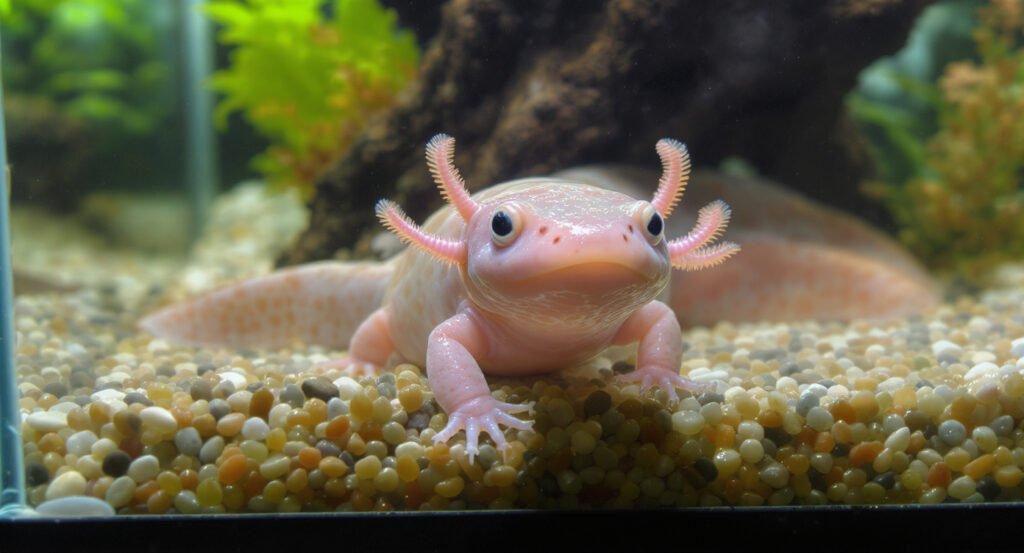
Substrate choice significantly impacts axolotl safety and tank maintenance. Young axolotls under 6 inches should be kept in bare-bottom tanks or with large river rocks (too large to swallow) to prevent impaction from ingesting substrate.
For adult axolotls, fine sand is the safest substrate option. If accidentally ingested, fine sand passes through their digestive system harmlessly. Avoid gravel, small pebbles, or any substrate pieces between sand and large rock size—these pose serious impaction risks.
Many keepers successfully maintain bare-bottom tanks, which simplify cleaning and eliminate impaction concerns entirely. Add smooth slate tiles or large flat rocks to provide varied terrain if desired.
Lighting and Décor
Axolotls have no eyelids and are sensitive to bright light. Keep lighting minimal—standard room lighting is usually sufficient. If you want to view your axolotl at night, use dim blue or red LED lights that won’t disturb them.
Join thousands of successful reptile owners
Try ReptileCoach Free →Safe Hiding Spots and Enrichment
Provide multiple hiding places to reduce stress. Suitable options include:
- PVC pipes (4-6 inches diameter)
- Terracotta pots (smooth edges)
- Aquarium-safe caves and tunnels
- Live or silk plants (avoid plastic plants with sharp edges)
Ensure all decorations have smooth surfaces without sharp edges that could damage their delicate skin. Axolotls have external gills that can easily be injured by rough surfaces.
Live Plants for Axolotl Tanks
Live plants improve water quality by absorbing nitrates and provide natural enrichment. Choose cold-water tolerant species that thrive in low light conditions. Excellent options include Java fern, Anubias, Marimo moss balls, and water sprite.
Avoid plants that require high light or warm temperatures. Anchor plants securely or use weighted pots, as axolotls may uproot them while exploring.
"This app saved my bearded dragon's life. The AI caught early MBD in photos I thought looked completely normal. Worth every penny!"
— Sarah K., ReptileCoach User
Get Your Free 7-Day Trial →Water Changes and Maintenance Schedule
Establish a consistent maintenance routine to keep water parameters stable. Perform 20-25% water changes weekly, using a gravel vacuum to remove waste from the substrate or tank bottom.
Always treat tap water with a dechlorinator before adding it to the tank. Match the temperature of new water to your tank temperature to avoid shocking your axolotl. Test water parameters weekly, especially during the first few months.
Equipment Checklist for Axolotl Tank Setup
Before bringing home your axolotl, ensure you have these essential items:
- Appropriately sized aquarium (minimum 20 gallons)
- Aquarium chiller or cooling method
- Gentle filtration system
- Aquarium thermometer
- Water test kit (liquid tests are most accurate)
- Dechlorinator
- Fine sand substrate or bare-bottom setup
- Hiding spots and decorations
- Turkey baster or pipette for spot cleaning
- Aquarium-safe net or container for handling
Common Setup Mistakes to Avoid
New axolotl owners often make preventable errors. Don’t add your axolotl to an uncycled tank—this exposes them to toxic ammonia and nitrite. Never use gravel-sized substrate with young axolotls. Avoid keeping axolotls with fish or other tank mates, as they may eat small fish or be nipped by aggressive species.
Worried About Your Reptile's Health?
Upload a photo and get instant AI health analysis. Catch problems before they become expensive vet bills.
Get Free Health Check →Don’t rely on room temperature alone unless you live in a consistently cool climate. Summer heat waves can quickly raise water temperature to dangerous levels without proper cooling equipment.
Getting Started with Your Axolotl
Creating the perfect axolotl habitat requires careful planning and the right equipment, but the reward is watching these incredible creatures thrive in your care. Take time to properly cycle your tank, maintain cool water temperatures, and provide a stress-free environment.
Need personalized guidance for your exotic pet setup? Get personalized AI advice for your reptile and receive expert recommendations tailored to your specific situation and local conditions.
With proper tank setup and consistent maintenance, your axolotl can live 10-15 years or more, providing endless fascination as you observe their unique behaviors and regenerative abilities. Start with the fundamentals covered in this guide, and you’ll be well-prepared to provide excellent care for these remarkable amphibians.
Never Miss Early Warning Signs
AI photo analysis catches subtle health issues humans miss 80% of the time. Early detection = healthier reptile + lower vet bills.
Start Free Trial →Ready to Give Your Reptile the Best Care?
Stop guessing and start knowing. Get personalized AI-powered care guidance, photo health analysis, and 24/7 expert advice for YOUR specific reptile.
Get Personalized Care Guidance
AI-powered photo analysis and daily care tracking for YOUR reptile
Try Free for 7 Days →