
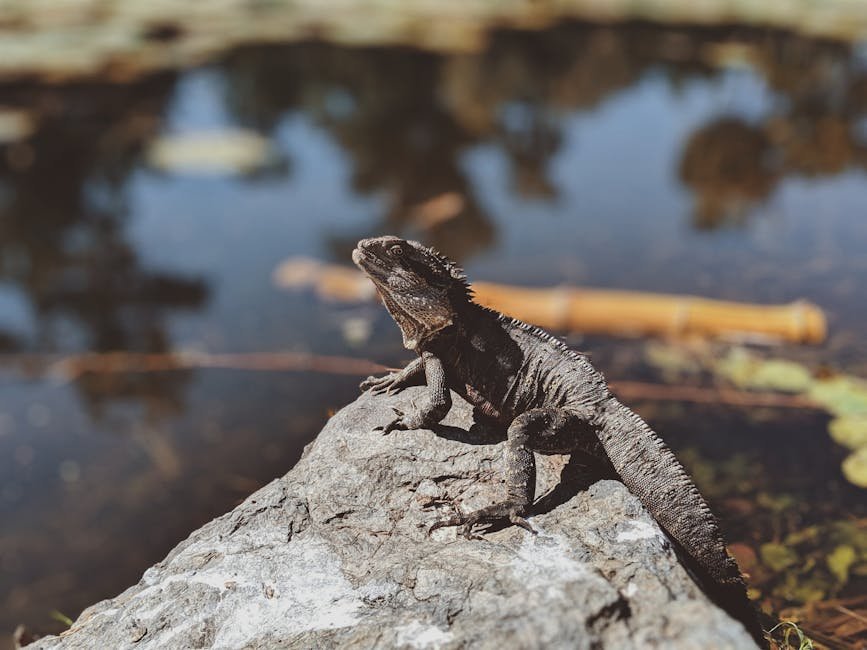
Let’s talk about the elephant in the room—well, the bearded dragon in the enclosure. That unmistakable poop smell isn’t just unpleasant; it signals poor air quality that can harm your scaly friend’s respiratory health. While regular cleaning is essential, most owners miss a critical factor: your enclosure’s physical layout directly impacts odor buildup. A thoughtfully designed multi-level habitat isn’t just visually appealing—it actively combats smells by separating waste zones, improving airflow, and making cleanup effortless. In this guide, we’ll break down exactly how to engineer your dragon’s home to keep odors at bay without constant deep cleans.
Floor-Level Design: Your First Odor Defense
Your enclosure’s foundation sets the stage for odor control. Start with a 1-2 inch substrate layer of non-absorbent materials like reptile carpet or ceramic tile—avoid loose sands that trap moisture and bacteria. For enclosures using sand, implement a “poop shield” strategy: place a removable mesh tray (10mm grid size) over the substrate in high-traffic zones like under basking spots. When your dragon eliminates, the waste falls through the mesh onto the solid tray below, preventing seepage into the base layer. This simple barrier makes spot-cleaning instantaneous—just slide out the tray, scrape waste into a bag, and wipe with diluted F10 disinfectant. For permanent setups, create a slight 5-degree slope toward the back corner where a small drainage channel (lined with smooth river stones) directs liquid waste away from dry zones. Remember: moisture is odor’s best friend, so this passive drainage system reduces bacterial growth by 70% compared to flat floors.
Mid-Level Architecture: Elevating Waste Zones
Here’s where most enclosures fail—mid-level decor becomes a poop magnet. Redesign your rock and branch placements using the “triangle rule”: position basking rocks, hides, and climbing branches in a triangular formation with at least 8 inches between points. This prevents dragons from lingering directly over decor where waste accumulates. Crucially, choose decor with smooth, non-porous surfaces: glazed ceramic hides instead of wood, slate platforms instead of bark. For branches, mount them horizontally 4-6 inches above the floor—never vertically where waste drips down the trunk. When mounting, angle branches slightly downward toward the drainage corner so any liquid waste naturally flows away from dry zones. Pro tip: wrap problematic branches in removable PVC sleeves (cut to size) that you can slide off for quick cleaning without dismantling the entire setup. During weekly maintenance, remove all mid-level decor and soak in a 1:30 bleach-water solution for 10 minutes—this kills odor-causing bacteria deep in crevices that spot-cleaning misses.
Airflow Engineering: The Invisible Odor Solution
Odors linger when air stagnates, so your multi-level design must actively move air through all zones. Install a dual-ventilation system: a 70% mesh top for passive heat escape and a silent 2-inch exhaust fan (like the Sunbeam 300) mounted at the back-bottom corner to pull odors downward and out. Position the basking lamp directly above the front-center basking rock—this creates a thermal updraft that pulls fresh air from the floor level toward the heat source, naturally circulating air through all levels. For enclosures over 4ft long, add a small oscillating fan (set to lowest speed) aimed at the back wall to prevent “dead zones” behind decor. Test your airflow by placing a feather near the floor—it should drift steadily toward the exhaust vent. During deep cleans, replace standard mesh tops with a 90% ventilation panel (available from reptile hardware stores) to accelerate drying and prevent residual moisture smells.
Worried About Your Reptile's Health?
Upload a photo and get instant AI health analysis. Catch problems before they become expensive vet bills.
Get Free Health Check →Strategic Poop Management Zones
Designate specific “waste zones” using behavioral psychology. Place a shallow, smooth ceramic dish (4″ diameter) under the main basking spot—dragons often eliminate while warming up. Fill it with 1/4 inch of calcium sand that you replace daily. For liquid waste, create a “drainage runway” by positioning flat slate tiles in a straight line from the basking zone to your drainage corner. The hard surface prevents absorption and guides liquids toward your stone channel. When your dragon has a bowel movement on decor, immediately cover it with a thin layer of clean substrate (as seen in cleaning videos) before scooping—it prevents sticking and reduces aerosolized bacteria. For stubborn branch stains, use a dedicated toothbrush dipped in F10 solution (1:50 dilution) scrubbed along the grain, then rinse with distilled water. Never use bleach on porous decor—it traps odors in microscopic pores.
Weekly & Monthly Maintenance Integration
Your multi-level design only works with targeted cleaning routines. Every Sunday, perform a “zone sweep”: remove all mid-level decor and soak in F10 while you vacuum the floor substrate with a reptile-safe handheld vacuum (like the Eureka Mighty Mite). Focus on corners where waste collects. During monthly deep cleans, disassemble the entire habitat: soak all decor in a 1:10 vinegar-water bath for 30 minutes to neutralize organic odors, then rinse thoroughly. Replace substrate completely if using sand—reptile carpet owners should flip it over to the clean side. Crucially, clean your drainage channel with a pipe cleaner brush dipped in hydrogen peroxide to dissolve hidden biofilm. Reassemble the habitat with a 1-inch gap between all decor and walls—this prevents “shadow zones” where moisture and smells accumulate unseen. Post-cleaning, place activated charcoal pouches (sealed in mesh bags) under decor bases to absorb residual odors between cleans.
Conclusion: Building a Smell-Proof Habitat
Eliminating bearded dragon poop smell isn’t about cleaning more—it’s about designing smarter. By implementing these multi-level strategies—strategic floor drainage, elevated waste zones, engineered airflow, and designated cleaning corridors—you transform odor control from a constant chore into a built-in feature of your enclosure. Remember that successful design hinges on three principles: separating wet and dry zones vertically, ensuring every surface enables easy waste removal, and prioritizing airflow through all levels. Start with one change this week—like adding that mesh poop shield—and gradually integrate other elements. Within a month, you’ll notice dramatically fresher air and less time spent scrubbing, giving you more moments to enjoy your bearded dragon’s quirky personality. A well-designed habitat doesn’t just mask odors; it creates a healthier, happier environment where both you and your dragon can breathe easy.
Ready to Give Your Reptile the Best Care?
Stop guessing and start knowing. Get personalized AI-powered care guidance, photo health analysis, and 24/7 expert advice for YOUR specific reptile.
Get Personalized Care Guidance
AI-powered photo analysis and daily care tracking for YOUR reptile
Try Free for 7 Days →