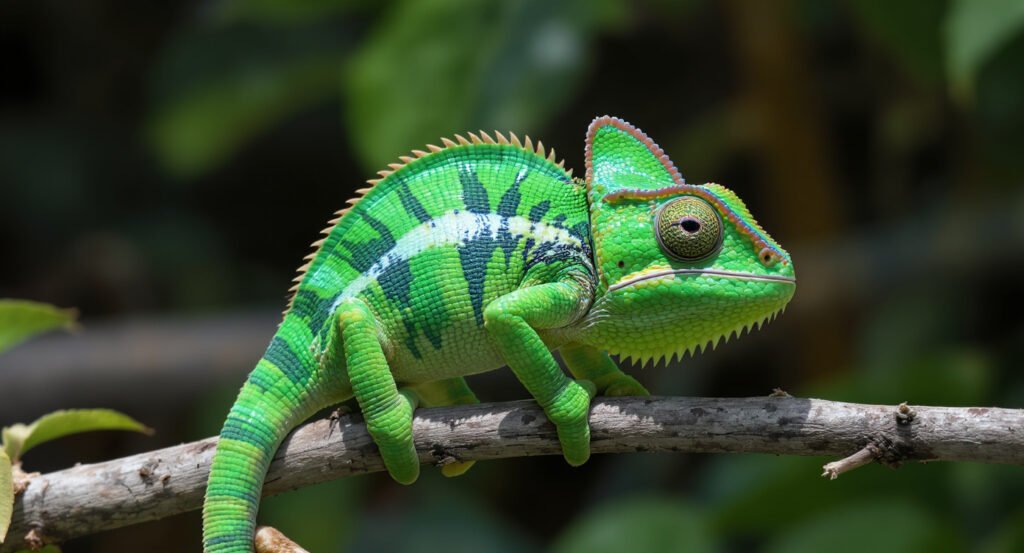
Proper UVB lighting is absolutely essential for chameleon health. Without adequate UVB exposure, chameleons cannot synthesize vitamin D3, which leads to metabolic bone disease and other serious health problems. This comprehensive guide will help you understand everything you need to know about chameleon UVB lighting requirements.
Why Chameleons Need UVB Light
In their natural habitats across Africa, Madagascar, and other regions, chameleons receive direct sunlight that contains both UVA and UVB wavelengths. UVB light in the 290-320 nanometer range is particularly critical because it enables chameleons to produce vitamin D3 in their skin. This vitamin D3 is necessary for calcium absorption and proper bone development.
Without sufficient UVB exposure, chameleons develop metabolic bone disease (MBD), a painful and potentially fatal condition characterized by weak bones, deformities, lethargy, and tremors. Even with calcium supplements in their diet, chameleons cannot properly utilize that calcium without adequate vitamin D3 production, which requires UVB light.
Types of UVB Bulbs for Chameleons
There are several types of UVB lighting options available for chameleon keepers, each with distinct advantages and considerations.
Worried About Your Reptile's Health?
Upload a photo and get instant AI health analysis. Catch problems before they become expensive vet bills.
Get Free Health Check →Linear Fluorescent Tubes
Linear fluorescent UVB tubes are the gold standard for chameleon enclosures. These long, tube-shaped bulbs provide even UVB distribution across a large area, which is ideal for chameleon habitats. The most commonly recommended options are the ReptiSun 5.0 or Arcadia 6% bulbs for most chameleon species.
Linear tubes should be placed on top of a screen enclosure, as the screen will filter approximately 30-40% of the UVB output. Replace these bulbs every 6-12 months, as UVB output diminishes over time even though the visible light remains bright.
Compact Fluorescent Bulbs
Compact fluorescent UVB bulbs (also called coil bulbs) are smaller and more concentrated. While convenient, they have significant drawbacks for chameleons. These bulbs create hotspots of intense UVB in small areas rather than even distribution, and some older models have been associated with eye problems in reptiles.
Most experienced chameleon keepers recommend avoiding compact bulbs in favor of linear tubes for more natural and safer UVB exposure.
Never Miss Early Warning Signs
AI photo analysis catches subtle health issues humans miss 80% of the time. Early detection = healthier reptile + lower vet bills.
Start Free Trial →Mercury Vapor Bulbs
Mercury vapor bulbs provide both heat and UVB in a single bulb. These are powerful options suitable for large enclosures or free-range setups. However, they produce intense heat and UVB, making them better suited for larger chameleon species like Parsons or Mellers chameleons rather than smaller species like veiled or panther chameleons.
UVB Requirements for Different Chameleon Species
Different chameleon species have varying UVB requirements based on their natural habitats.
Veiled and Panther Chameleons
These popular species come from regions with moderate to high sun exposure. They thrive with ReptiSun 5.0 or Arcadia 6% linear tubes positioned 8-12 inches from their basking branches. This provides a UVI (UV Index) of approximately 3.0-6.0 at basking spots, which replicates their natural exposure levels.
Jackson’s Chameleons
Jackson’s chameleons originate from higher elevations with more cloud cover. They require slightly lower UVB levels than veiled or panther chameleons. A ReptiSun 5.0 or Arcadia 6% tube positioned 10-14 inches away provides appropriate exposure without overwhelming them.
Join thousands of successful reptile owners
Try ReptileCoach Free →Pygmy Chameleons
These tiny forest-floor dwellers require lower UVB levels. A ReptiSun 5.0 positioned further away (12-15 inches) or an Arcadia 2% bulb works well for their more shaded natural environment.
Proper UVB Bulb Placement and Setup
Correct positioning of your UVB bulb is just as important as choosing the right type. The bulb should span approximately two-thirds the length of your enclosure to create a UVB gradient, allowing your chameleon to self-regulate exposure.
Place the bulb on top of a screen enclosure rather than inside it. This protects the bulb from moisture and waste while still allowing UVB penetration. Remember that glass and plastic block UVB rays, so never place barriers between the bulb and your chameleon.
Your chameleon should have access to basking spots at varying distances from the UVB source. This allows them to move closer when they need more exposure and retreat to shadier areas when they’ve had enough. Include plenty of branches and foliage at different heights to facilitate this natural behavior.
"This app saved my bearded dragon's life. The AI caught early MBD in photos I thought looked completely normal. Worth every penny!"
— Sarah K., ReptileCoach User
Get Your Free 7-Day Trial →Measuring UVB Output with a Solarmeter
While following manufacturer guidelines is a good starting point, the most accurate way to ensure proper UVB levels is using a Solarmeter 6.5 UVI meter. This device measures the UV Index at different locations in your enclosure, allowing you to verify that basking spots fall within the appropriate UVI range for your species.
Target UVI readings of 3.0-6.0 at basking spots for most common chameleon species. Lower areas of the enclosure should measure 1.0-3.0 UVI, and shaded retreat areas should be near zero. These measurements help you fine-tune bulb placement and identify when bulbs need replacement.
UVB Bulb Replacement Schedule
UVB output degrades over time, even though the visible light remains unchanged. Most linear fluorescent tubes should be replaced every 6-12 months depending on the manufacturer’s specifications. Arcadia bulbs typically maintain effective output for 12 months, while ReptiSun bulbs should be replaced every 6-8 months.
Mark your calendar when you install new bulbs to ensure timely replacement. Using a Solarmeter can help you monitor degradation and replace bulbs based on actual performance rather than arbitrary timelines.
Worried About Your Reptile's Health?
Upload a photo and get instant AI health analysis. Catch problems before they become expensive vet bills.
Get Free Health Check →Photoperiod: How Long Should UVB Lights Stay On?
Chameleons need a consistent day-night cycle to maintain healthy circadian rhythms. Provide 12 hours of light and 12 hours of complete darkness for most species. Some keepers adjust this slightly based on seasonal variations, providing 13-14 hours in summer and 10-11 hours in winter to simulate natural conditions.
Use a reliable timer to automate your lighting schedule. Consistency is crucial for chameleon health, as irregular lighting can cause stress and disrupt normal behaviors like feeding, basking, and sleeping.
Common UVB Lighting Mistakes to Avoid
Many new chameleon keepers make preventable mistakes with UVB lighting. Avoid placing UVB bulbs inside the enclosure where they can be splashed with water or soiled. Never rely solely on window light, as glass blocks UVB rays. Don’t use UVB bulbs past their effective lifespan, even if they still produce visible light.
Additionally, avoid using UVB bulbs without proper fixtures and reflectors, as these significantly improve efficiency and distribution. And remember that compact coil bulbs should generally be avoided in favor of linear tubes for chameleons.
Never Miss Early Warning Signs
AI photo analysis catches subtle health issues humans miss 80% of the time. Early detection = healthier reptile + lower vet bills.
Start Free Trial →Take Your Chameleon Care to the Next Level
Providing proper UVB lighting is fundamental to chameleon health, but it’s just one piece of the comprehensive care these fascinating reptiles require. Temperature gradients, humidity levels, nutrition, supplementation, and enclosure setup all work together to keep your chameleon thriving.
Want personalized guidance on your chameleon’s care? Try the ReptileCoach app for expert advice, care sheets, feeding schedules, and a supportive community of experienced reptile keepers ready to help you provide the best possible care for your chameleon.
Ready to Give Your Reptile the Best Care?
Stop guessing and start knowing. Get personalized AI-powered care guidance, photo health analysis, and 24/7 expert advice for YOUR specific reptile.
Get Personalized Care Guidance
AI-powered photo analysis and daily care tracking for YOUR reptile
Try Free for 7 Days →