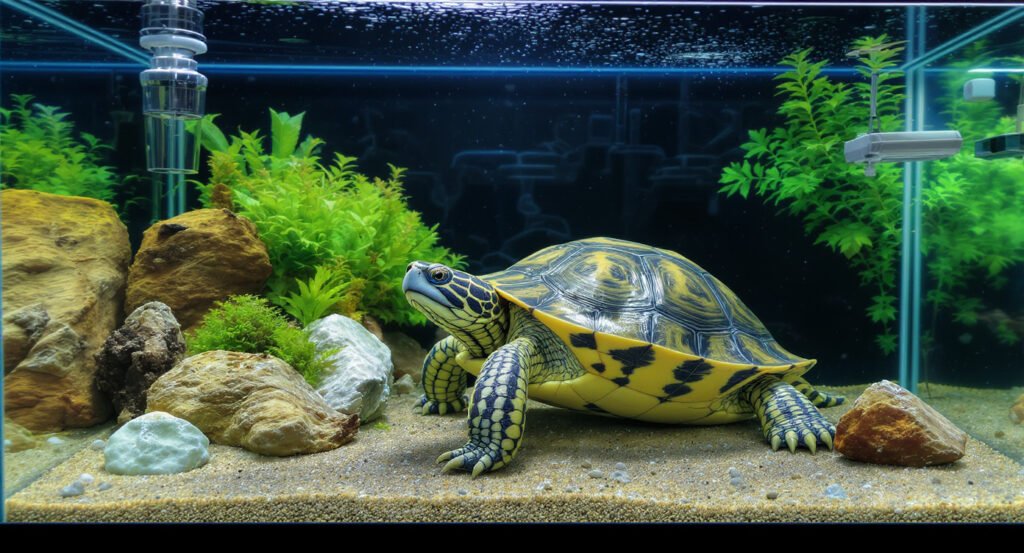
Red-eared slider turtles are among the most popular pet reptiles worldwide, known for their distinctive red markings and engaging personalities. However, creating the right habitat is crucial for their health and longevity. This comprehensive guide will walk you through everything you need to know about setting up a proper home for your red-eared slider.
Understanding Red-Eared Slider Habitat Requirements
Red-eared sliders are semi-aquatic turtles that require both water and land areas in their enclosure. In the wild, they spend most of their time in ponds, lakes, and slow-moving streams, basking on logs and rocks to regulate their body temperature. Replicating this environment in captivity is essential for their wellbeing.
Choosing the Right Tank Size
One of the most common mistakes beginners make is underestimating the space requirements for red-eared sliders. These turtles grow significantly larger than most people expect.
Tank Size Guidelines
- Hatchlings (up to 2 inches): Minimum 20-gallon tank
- Juveniles (2-4 inches): 40-55 gallon tank
- Adults (6-12 inches): 75-125 gallon tank or larger
A good rule of thumb is to provide 10 gallons of water per inch of turtle shell length. Since adult red-eared sliders can reach 8-12 inches, investing in a large tank from the start will save money in the long run. Many turtle keepers opt for stock tanks or custom-built enclosures for adult turtles.
Worried About Your Reptile's Health?
Upload a photo and get instant AI health analysis. Catch problems before they become expensive vet bills.
Get Free Health Check →Water Quality and Filtration
Red-eared sliders are messy eaters and produce significant waste, making water quality management critical for preventing bacterial infections and shell problems.
Filtration System
Invest in a high-quality canister filter rated for 2-3 times your tank’s water volume. For example, if you have a 75-gallon tank, use a filter rated for 150-225 gallons. Canister filters provide superior mechanical, chemical, and biological filtration compared to hang-on-back filters.
Water Parameters
- Temperature: 75-80°F (24-27°C)
- pH Level: 6.5-8.0
- Ammonia and Nitrite: 0 ppm
- Nitrate: Below 40 ppm
Perform partial water changes of 25-50% weekly to maintain optimal water quality. Use a dechlorinator when adding tap water to remove harmful chlorine and chloramines.
Creating the Basking Area
Basking is essential for red-eared sliders to thermoregulate, dry their shells, and synthesize vitamin D3. Your habitat must include a dedicated basking platform.
Never Miss Early Warning Signs
AI photo analysis catches subtle health issues humans miss 80% of the time. Early detection = healthier reptile + lower vet bills.
Start Free Trial →Basking Platform Setup
The basking area should be large enough for your turtle to completely dry off and should be positioned so the turtle can easily climb out of the water. Options include:
- Commercial turtle docks
- DIY platforms made from egg crate and river rocks
- Floating cork bark or driftwood
- Stacked slate or flagstone
The platform should occupy about 25% of the tank’s surface area and be positioned under the heat lamp.
Basking Temperature
Use a basking lamp to create a temperature gradient:
- Basking spot: 88-92°F (31-33°C)
- Ambient air temperature: 75-80°F (24-27°C)
Measure temperatures with a reliable digital thermometer with a probe placed directly on the basking surface.
Join thousands of successful reptile owners
Try ReptileCoach Free →Lighting Requirements
Proper lighting is non-negotiable for red-eared slider health. These turtles require two types of lighting.
UVB Lighting
UVB light enables turtles to synthesize vitamin D3, which is essential for calcium absorption and shell health. Without adequate UVB, turtles develop metabolic bone disease.
- Use a 10.0 or 12% UVB bulb designed for reptiles
- Position the bulb 10-12 inches above the basking area
- Replace UVB bulbs every 6-12 months (they lose effectiveness even when still producing visible light)
- Provide UVB lighting for 10-12 hours daily
Heat Lamp
A separate heat lamp creates the basking temperature. Use a ceramic heat emitter, halogen flood lamp, or incandescent bulb. Mercury vapor bulbs combine both heat and UVB but are more expensive.
Want to stay on top of your turtle’s care routine? Track your pet’s care schedule with our free app and never miss water changes, feeding times, or bulb replacements.
"This app saved my bearded dragon's life. The AI caught early MBD in photos I thought looked completely normal. Worth every penny!"
— Sarah K., ReptileCoach User
Get Your Free 7-Day Trial →Substrate and Décor
Substrate Options
Many experienced keepers prefer a bare-bottom tank for easier cleaning. If you want substrate for aesthetic reasons, consider:
- Large river rocks: Too large to swallow, easy to clean
- Sand: Natural appearance but requires careful maintenance
Avoid: Gravel small enough to ingest, which can cause impaction.
Enrichment
Add hiding spots and visual barriers to reduce stress:
- Smooth driftwood or mopani wood
- PVC pipes for hiding
- Live or artificial aquatic plants (anacharis, water lettuce, java fern)
Heating the Water
If your home temperature drops below 75°F, use a submersible aquarium heater to maintain proper water temperature. Choose a heater rated for your tank size and use a heater guard to prevent your turtle from getting burned or breaking the glass heater.
Worried About Your Reptile's Health?
Upload a photo and get instant AI health analysis. Catch problems before they become expensive vet bills.
Get Free Health Check →Feeding and Nutrition Area
While not part of the physical habitat setup, consider designating a feeding area or using a separate feeding container. This practice keeps the main tank cleaner and makes monitoring food intake easier.
Maintenance Schedule
Keeping your red-eared slider habitat clean requires consistent maintenance:
- Daily: Remove uneaten food, check temperatures
- Weekly: 25-50% water change, clean basking area
- Monthly: Clean filter media, test water parameters
- Every 6-12 months: Replace UVB bulbs
Common Setup Mistakes to Avoid
New turtle owners often make these preventable errors:
- Starting with a tank that’s too small
- Inadequate filtration leading to poor water quality
- No UVB lighting or incorrect UVB bulb placement
- Basking area too small or at wrong temperature
- Using substrate that poses impaction risk
- Insufficient water depth (should be at least 1.5-2 times the turtle’s shell length)
Final Thoughts
Setting up a proper red-eared slider habitat requires careful planning and initial investment, but it’s essential for your turtle’s long-term health. These remarkable reptiles can live 20-40 years in captivity when provided with appropriate care. By following this guide, you’ll create an environment where your red-eared slider can thrive.
Never Miss Early Warning Signs
AI photo analysis catches subtle health issues humans miss 80% of the time. Early detection = healthier reptile + lower vet bills.
Start Free Trial →Remember that turtle care is an ongoing commitment. Regular maintenance, monitoring water quality, and adjusting the habitat as your turtle grows are all part of responsible pet ownership. With the right setup and dedicated care, your red-eared slider will become a fascinating and rewarding companion for decades to come.
Ready to Give Your Reptile the Best Care?
Stop guessing and start knowing. Get personalized AI-powered care guidance, photo health analysis, and 24/7 expert advice for YOUR specific reptile.
Get Personalized Care Guidance
AI-powered photo analysis and daily care tracking for YOUR reptile
Try Free for 7 Days →