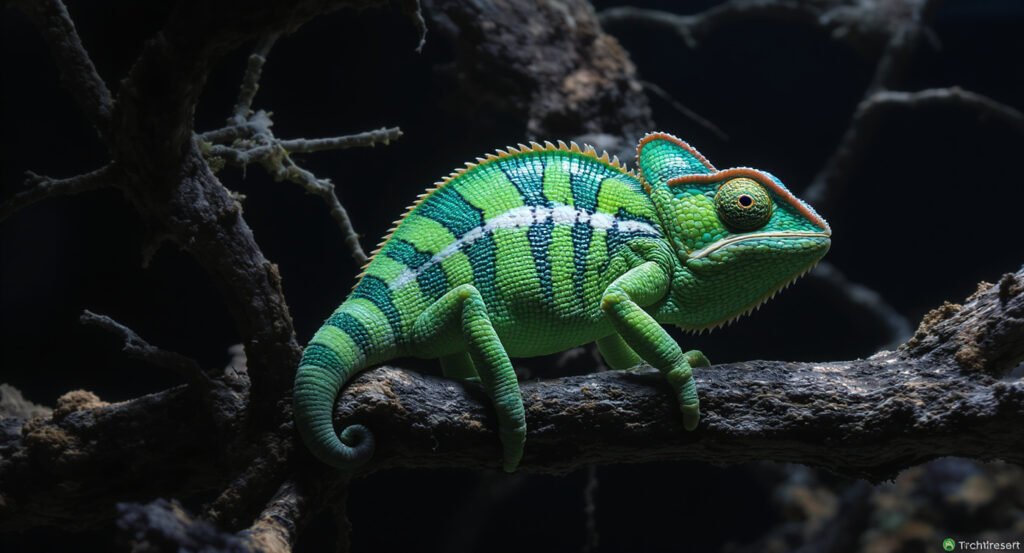
Providing proper UVB lighting is one of the most critical aspects of chameleon care. Without adequate ultraviolet B radiation, chameleons cannot synthesize vitamin D3, leading to metabolic bone disease and other serious health complications. This comprehensive guide covers everything you need to know about chameleon UVB lighting requirements.
Why UVB Light is Essential for Chameleons
In their natural habitats across Africa, Madagascar, and parts of Asia, chameleons receive direct sunlight daily. This sunlight contains UVB radiation in the 290-320 nanometer wavelength range, which is crucial for their physiological processes.
When UVB light contacts a chameleon’s skin, it triggers a photochemical reaction that converts 7-dehydrocholesterol into previtamin D3, which then becomes vitamin D3. This vitamin is essential for calcium metabolism—without it, chameleons cannot properly absorb dietary calcium, regardless of how much calcium supplementation you provide.
The consequences of inadequate UVB exposure include:
Worried About Your Reptile's Health?
Upload a photo and get instant AI health analysis. Catch problems before they become expensive vet bills.
Get Free Health Check →- Metabolic Bone Disease (MBD): The most common result, causing weak bones, deformities, tremors, and difficulty moving
- Lethargy and weakness: Due to improper muscle function from calcium deficiency
- Reproductive issues: Females cannot produce healthy eggs without sufficient calcium
- Compromised immune system: Making chameleons susceptible to infections
- Shortened lifespan: Chronic deficiency leads to premature death
Types of UVB Bulbs for Chameleons
Not all UVB bulbs are created equal. Understanding the different types helps you choose the right lighting solution for your chameleon enclosure.
Linear Fluorescent Tubes
These are the gold standard for chameleon keeping. Linear fluorescent UVB tubes provide even light distribution across the enclosure and come in two primary strengths:
5.0 or 6% UVB tubes: Suitable for species from partially shaded forests or smaller enclosures. These include Jackson’s chameleons, carpet chameleons, and some montane species.
10.0 or 12% UVB tubes: Recommended for most common pet chameleons including veiled chameleons, panther chameleons, and other species from sunnier habitats. These are also appropriate for taller enclosures where the basking spot sits further from the light.
Never Miss Early Warning Signs
AI photo analysis catches subtle health issues humans miss 80% of the time. Early detection = healthier reptile + lower vet bills.
Start Free Trial →Popular brands include ReptiSun, Arcadia, and Zoo Med. Arcadia bulbs are particularly praised for their longevity and consistent output.
Compact Fluorescent Bulbs (CFLs)
These screw-in bulbs are more affordable but have significant drawbacks. They provide concentrated UVB in a small area rather than even distribution, create hotspots that can cause eye damage, and have been associated with photokeratoconjunctivitis in reptiles. While they work in emergencies, linear tubes are strongly preferred.
Mercury Vapor Bulbs (MVBs)
These all-in-one bulbs provide both heat and UVB. They’re extremely powerful and typically too intense for screen-top enclosures at safe distances. MVBs work better for large, free-range setups or glass terrariums where distance can be carefully controlled. They’re not the first choice for standard chameleon enclosures.
LED UVB Technology
Recent innovations have brought LED-based UVB to market. While promising for longevity and energy efficiency, this technology is still relatively new for reptile keeping. Stick with proven fluorescent technology unless you thoroughly research specific LED UVB products designed for reptiles.
Join thousands of successful reptile owners
Try ReptileCoach Free →Proper UVB Placement and Distance
The placement of your UVB light directly impacts its effectiveness. UVB radiation decreases rapidly with distance and is blocked by glass, plastic, and even screen mesh.
Distance Guidelines
For 5.0/6% tubes through screen: Position the basking branch 6-8 inches below the light. For 10.0/12% tubes through screen: Position the basking branch 8-12 inches below the light. These distances provide optimal UVB levels (measured in μW/cm² UVI) without risking overexposure.
Positioning Best Practices
Mount UVB lights on top of screen enclosures, not inside where chameleons can climb directly beneath them and risk overexposure or burns. Position the tube to run the length of the enclosure, providing a UVB gradient. Place the fixture over the basking area so your chameleon receives UVB and heat simultaneously, mimicking natural sunlight. Never place glass or plastic between the bulb and your chameleon—these materials block most UVB radiation.
UVB Lighting Duration and Schedule
Consistency in lighting schedules is crucial for chameleon health and well-being.
"This app saved my bearded dragon's life. The AI caught early MBD in photos I thought looked completely normal. Worth every penny!"
— Sarah K., ReptileCoach User
Get Your Free 7-Day Trial →Daily Duration: Provide 10-12 hours of UVB light daily. Most keepers use 12 hours during summer months and 10 hours during winter to mimic natural seasonal changes.
Use a Timer: Digital timers ensure consistent on/off cycles, which help regulate your chameleon’s circadian rhythm, feeding schedule, and activity patterns.
Nighttime Darkness: Chameleons need complete darkness at night. Turn off all lights, including UVB and basking bulbs. If temperatures drop below 50°F (10°C), use a ceramic heat emitter rather than light-emitting bulbs.
Bulb Replacement Schedule: Even when they still produce visible light, UVB bulbs lose their UVB output over time. Replace fluorescent tubes every 6-12 months depending on the brand. Arcadia bulbs typically last 12 months, while ReptiSun bulbs should be replaced every 6-9 months. Mark your calendar when you install a new bulb to track replacement timing.
Worried About Your Reptile's Health?
Upload a photo and get instant AI health analysis. Catch problems before they become expensive vet bills.
Get Free Health Check →Common UVB Lighting Mistakes
Avoiding these frequent errors will help ensure your chameleon receives proper UVB exposure:
Using old bulbs: Many keepers continue using bulbs that still produce light but no longer emit adequate UVB. This is one of the leading causes of MBD in captive chameleons.
Incorrect distance: Placing basking branches too far from the UVB source renders it ineffective. Too close can cause eye damage and skin issues.
Relying solely on supplements: While vitamin D3 supplementation helps, it cannot fully replace UVB exposure. Chameleons need both.
Never Miss Early Warning Signs
AI photo analysis catches subtle health issues humans miss 80% of the time. Early detection = healthier reptile + lower vet bills.
Start Free Trial →Using compact bulbs in small enclosures: This creates dangerous UVB hotspots that can damage eyes and skin.
Blocking UVB with barriers: Dense foliage directly beneath the UVB light blocks radiation. Provide clear basking spots with filtered light deeper in the enclosure.
Inconsistent schedules: Irregular lighting disrupts natural behaviors and stress levels.
No UVB meter verification: Investing in a Solarmeter 6.5 allows you to measure actual UVB output and verify proper levels throughout the enclosure.
Join thousands of successful reptile owners
Try ReptileCoach Free →Track Your Chameleon’s Health and Care Schedule
Managing UVB bulb replacements, lighting schedules, and overall chameleon care can be complex. That’s why many reptile keepers use specialized tools to stay organized. ReptileCoach’s care tracking app helps you set reminders for bulb replacements, log health observations, and maintain optimal care schedules for your chameleon.
Conclusion
Proper UVB lighting is non-negotiable for chameleon health. By choosing appropriate bulbs, positioning them correctly, maintaining consistent schedules, and replacing them before UVB output diminishes, you provide your chameleon with the foundation for calcium metabolism and overall wellness. Combined with proper supplementation, hydration, and nutrition, quality UVB lighting ensures your chameleon thrives in captivity for years to come.
Remember that different chameleon species have varying requirements based on their natural habitats. Research your specific species’ needs, invest in quality equipment, and monitor your chameleon’s health regularly. When in doubt, consult with a reptile veterinarian experienced in chameleon care to ensure you’re meeting all your pet’s needs.
Ready to Give Your Reptile the Best Care?
Stop guessing and start knowing. Get personalized AI-powered care guidance, photo health analysis, and 24/7 expert advice for YOUR specific reptile.
Get Personalized Care Guidance
AI-powered photo analysis and daily care tracking for YOUR reptile
Try Free for 7 Days →