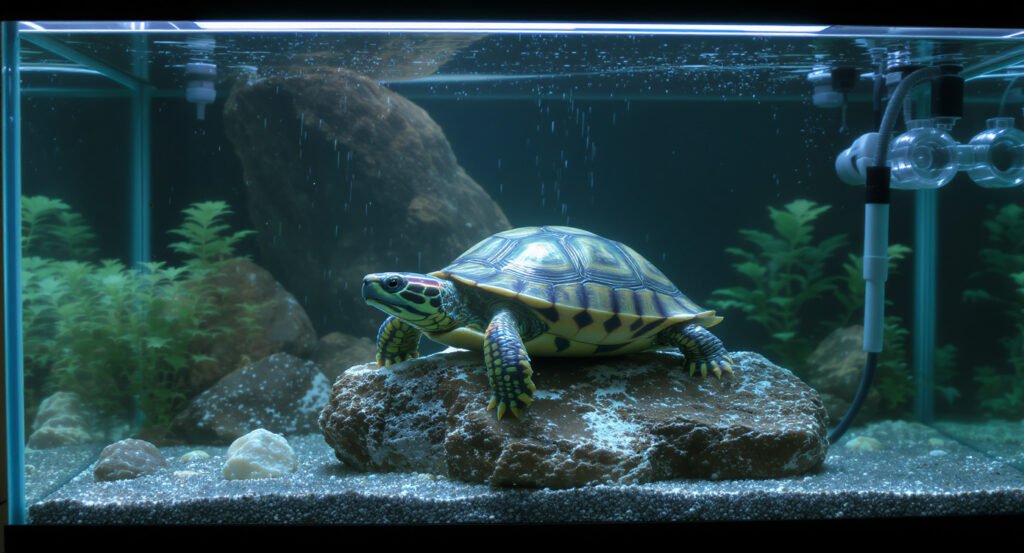
Red-eared slider turtles are among the most popular pet turtles in the world, known for their distinctive red stripe behind each eye and their engaging personalities. However, many new turtle owners underestimate the commitment required to provide a proper habitat for these aquatic reptiles. Setting up the right environment is critical for your turtle’s health, growth, and longevity. In this comprehensive guide, we’ll walk you through everything you need to know about creating the perfect red-eared slider habitat.
Tank Size Requirements: Bigger Is Always Better
One of the most common mistakes beginners make is purchasing a tank that’s too small. Red-eared sliders grow quickly and can reach 8-12 inches in length, with females typically being larger than males. As a general rule, you should provide 10 gallons of water per inch of turtle shell length. This means an adult red-eared slider needs a minimum 75-120 gallon tank.
For hatchlings (2-3 inches), you can start with a 40-gallon tank, but be prepared to upgrade within the first year or two. A larger tank from the start saves money in the long run and provides better water quality stability. The tank should be long and wide rather than tall, as red-eared sliders are active swimmers that need horizontal swimming space more than depth.
Beyond the water area, your turtle needs a dry basking platform that’s large enough for them to completely dry off. The basking area should be easily accessible with a gentle ramp or slope, and it should be positioned under your heat and UVB lighting.
Worried About Your Reptile's Health?
Upload a photo and get instant AI health analysis. Catch problems before they become expensive vet bills.
Get Free Health Check →Water Temperature and Heating Requirements
Red-eared sliders are ectothermic, meaning they rely on their environment to regulate body temperature. Maintaining proper water temperature is essential for digestion, immune function, and overall health.
The water temperature should be kept between 75-80°F (24-27°C). You’ll need a submersible aquarium heater rated for your tank size—typically 3-5 watts per gallon. Always use a heater guard to prevent your turtle from accidentally breaking the heater or burning themselves. An aquarium thermometer is essential for monitoring water temperature daily.
The basking area should be significantly warmer, between 85-90°F (29-32°C). Use a heat lamp with an appropriate wattage bulb (usually 50-100 watts depending on distance) to create this warm basking spot. Position the lamp 12-18 inches above the basking platform and adjust as needed to achieve the target temperature.
Essential UVB Lighting for Turtle Health
UVB lighting is absolutely non-negotiable for red-eared sliders. Without proper UVB exposure, turtles cannot synthesize vitamin D3, which is essential for calcium absorption. This leads to metabolic bone disease, shell deformities, and other serious health problems.
Never Miss Early Warning Signs
AI photo analysis catches subtle health issues humans miss 80% of the time. Early detection = healthier reptile + lower vet bills.
Start Free Trial →Use a reptile-specific UVB bulb (10-12% UVB output) positioned 10-12 inches above the basking area. Linear fluorescent UVB bulbs are generally more effective than compact coil bulbs. Replace UVB bulbs every 6-12 months even if they still produce visible light, as UVB output degrades over time.
Your turtle needs 10-12 hours of light daily. Use a timer to maintain a consistent day/night cycle. Never rely on indirect sunlight through a window as glass blocks most UVB rays.
Filtration: The Key to Water Quality
Red-eared sliders are messy eaters and produce significant waste. A powerful filtration system is crucial for maintaining water quality and reducing your maintenance workload.
Choose a canister filter or hang-on-back filter rated for at least 2-3 times your tank’s water volume. For a 75-gallon tank with 60 gallons of water, you’d want a filter rated for 120-180 gallons. Canister filters generally provide superior filtration for turtle tanks and can handle the higher bioload.
Join thousands of successful reptile owners
Try ReptileCoach Free →Even with excellent filtration, you’ll need to perform partial water changes. Change 25-30% of the water weekly and perform a full substrate vacuum monthly. Test water parameters regularly using an aquarium test kit, monitoring ammonia, nitrite, and nitrate levels.
Many turtle keepers also add a pre-filter sponge to catch larger debris and extend the life of filter media. Some use an additional powerhead for extra water circulation, which helps distribute heat evenly and provides exercise for your turtle.
Diet Basics: What to Feed Your Red-Eared Slider
Red-eared sliders are omnivores with dietary needs that change as they age. Juveniles (under 2 years) are primarily carnivorous, requiring about 70% protein and 30% vegetables. Adults shift to about 50/50 or even more plant matter.
A balanced diet includes commercial turtle pellets as a staple (Mazuri, ReptoMin, or Omega One), supplemented with protein sources like feeder fish, earthworms, crickets, and occasional cooked chicken. For vegetation, offer dark leafy greens like collard greens, mustard greens, dandelion greens, and red leaf lettuce. Aquatic plants like water lettuce, duckweed, and anacharis provide enrichment and nutrition.
"This app saved my bearded dragon's life. The AI caught early MBD in photos I thought looked completely normal. Worth every penny!"
— Sarah K., ReptileCoach User
Get Your Free 7-Day Trial →Feed juveniles daily, offering an amount they can consume in 15-20 minutes. Adults can be fed every other day. Always feed in the water, as turtles need water to swallow properly. Remove uneaten food promptly to prevent water quality issues.
Common Beginner Mistakes to Avoid
Even with the best intentions, new turtle owners often make preventable mistakes. Here are the most common pitfalls:
- Undersized tanks: Starting with a tiny tank leads to stunted growth, poor water quality, and stressed turtles. Plan for adult size from the beginning.
- No UVB lighting: Using only heat lamps without UVB will cause severe health problems. Both are required.
- Improper basking area: A floating dock that’s too small or unstable won’t allow your turtle to fully dry off and thermoregulate properly.
- Cohabitation: Keeping multiple turtles together often leads to aggression, competition for basking spots, and injuries. If you must keep multiple turtles, significantly increase tank size and provide multiple basking areas.
- Using tap water without treatment: Chlorine and chloramines in tap water can harm your turtle. Always use a water conditioner designed for reptiles or let water sit for 24 hours before adding.
- Overfeeding: Too much food causes obesity, shell pyramiding, and water quality issues. Follow feeding guidelines based on age and size.
- Handling too frequently: While occasional handling is fine, red-eared sliders are primarily aquatic animals that stress easily with excessive handling. Let them thrive in their habitat.
Ongoing Maintenance and Monitoring
Once your habitat is set up, establish a regular maintenance routine. Weekly tasks include water changes, filter cleaning, and checking equipment function. Monthly deep cleans should include substrate vacuuming and basking platform sanitizing. Replace UVB bulbs on schedule and monitor your turtle’s behavior, appetite, and shell condition for signs of health issues.
Track your turtle’s growth by measuring shell length every few months. Healthy red-eared sliders grow steadily during their first few years before growth slows significantly. Any sudden changes in behavior, appetite, or appearance warrant a veterinary consultation with a reptile specialist.
Worried About Your Reptile's Health?
Upload a photo and get instant AI health analysis. Catch problems before they become expensive vet bills.
Get Free Health Check →Take Your Turtle Care to the Next Level
Setting up a proper habitat is just the beginning of your journey as a red-eared slider owner. These fascinating reptiles can live 20-40 years with proper care, making them a long-term commitment that’s incredibly rewarding.
Want personalized guidance on your turtle care routine? Check out the ReptileCoach app for expert advice, care schedules, and a supportive community of reptile enthusiasts who can help you troubleshoot issues and optimize your setup.
With the right habitat, proper lighting, quality filtration, and a balanced diet, your red-eared slider will thrive for decades. Take the time to set things up correctly from the start, and you’ll enjoy watching your turtle grow, explore, and display their unique personality in a healthy, enriching environment. The investment in proper equipment and knowledge pays dividends in your turtle’s quality of life and your enjoyment as a keeper.
Ready to Give Your Reptile the Best Care?
Stop guessing and start knowing. Get personalized AI-powered care guidance, photo health analysis, and 24/7 expert advice for YOUR specific reptile.
Get Personalized Care Guidance
AI-powered photo analysis and daily care tracking for YOUR reptile
Try Free for 7 Days →