Red-eared slider turtles are among the most popular pet reptiles, but creating the right environment is crucial for their health and longevity. A proper setup can mean the difference between a thriving turtle and one plagued with health issues. This comprehensive guide walks you through every essential component of a red-eared slider habitat.
Tank Size Requirements
The most common mistake new turtle owners make is underestimating space needs. Red-eared sliders grow significantly larger than the tiny hatchlings sold in pet stores. A general rule is to provide 10 gallons of water per inch of shell length. For an adult slider (8-12 inches), you’ll need a minimum 75-100 gallon tank, though 125 gallons or larger is ideal.
Remember that these are aquatic turtles spending most of their time in water. The tank should be long rather than tall, providing maximum swimming space. Many owners opt for large plastic stock tanks or custom-built enclosures as more economical alternatives to glass aquariums.
Water Filtration System
Red-eared sliders are messy eaters and produce substantial waste. A robust filtration system is non-negotiable. Your filter should be rated for at least 2-3 times your tank’s water volume since turtles create more waste than fish.
Worried About Your Reptile's Health?
Upload a photo and get instant AI health analysis. Catch problems before they become expensive vet bills.
Get Free Health Check →Canister filters are the gold standard for turtle tanks, offering superior mechanical and biological filtration. Popular options include the Fluval FX series or Penn-Plax Cascade models. Expect to perform 25-30% water changes weekly even with excellent filtration, and clean your filter media monthly.
Basking Area Setup
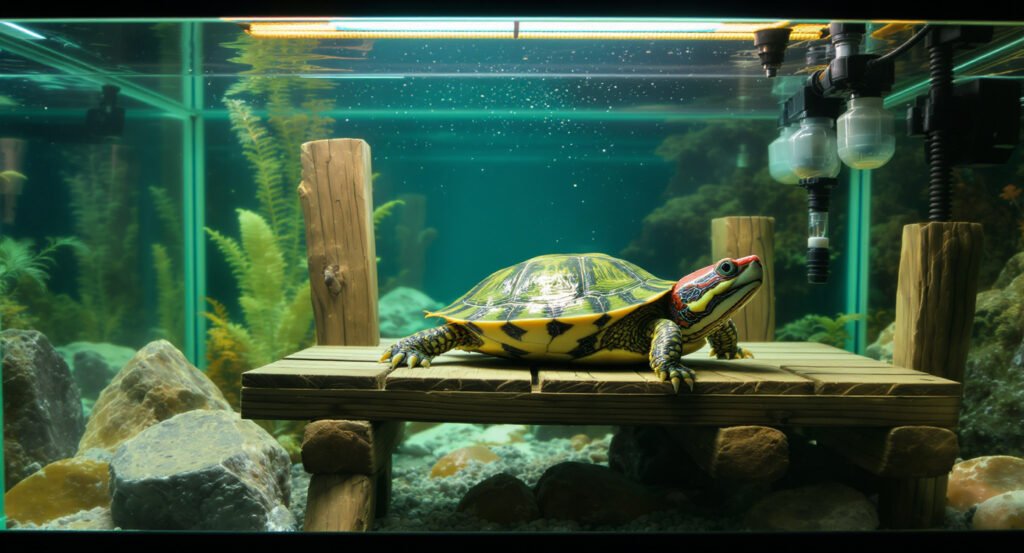
Turtles need a completely dry basking platform where they can climb out of the water to thermoregulate and dry their shells. The basking area should be large enough for your turtle to turn around comfortably and positioned to allow easy access from the water.
Commercial turtle docks work well, or you can create custom platforms using slate, cork bark, or egg crate louvers. The basking surface should be positioned so your turtle can get within 6-8 inches of the heat lamp. Ensure the platform is stable and won’t tip when your turtle climbs on it.
Lighting Requirements
Proper lighting is critical and consists of two components: UVB and heat. UVB lighting enables vitamin D3 synthesis, which is essential for calcium absorption and shell health. Without adequate UVB, turtles develop metabolic bone disease.
Never Miss Early Warning Signs
AI photo analysis catches subtle health issues humans miss 80% of the time. Early detection = healthier reptile + lower vet bills.
Start Free Trial →Use a high-quality UVB bulb (10.0 or 12% UVB) positioned 10-12 inches above the basking area. Replace UVB bulbs every 6-12 months as their output diminishes even when they still produce visible light. Mercury vapor bulbs provide both UVB and heat in one fixture, though they’re more expensive initially.
For basking heat, use a separate incandescent bulb or ceramic heat emitter to create a basking spot temperature of 88-92°F. The ambient air temperature should remain around 75-80°F. Use a reliable thermometer to monitor temperatures accurately.
Water Temperature and Heating
Water temperature should stay between 74-78°F year-round. Submersible aquarium heaters maintain consistent temperatures, but choose one rated for your tank size and protect it with a heater guard since turtles may damage exposed heaters.
For larger setups, you may need multiple heaters to distribute heat evenly. Always use a thermometer to verify water temperature rather than relying solely on heater settings. Track your turtle’s habitat parameters and feeding schedule with specialized reptile care apps to ensure you’re maintaining optimal conditions consistently.
Join thousands of successful reptile owners
Try ReptileCoach Free →Substrate Considerations
Substrate choice is debated among turtle keepers. Many experienced owners prefer bare-bottom tanks for easier cleaning and to eliminate impaction risks if turtles ingest substrate. If you want substrate for aesthetic reasons, use large river rocks (too large to swallow) or sand.
Avoid gravel-sized stones that turtles might accidentally consume while feeding. Whatever you choose, be prepared for more intensive cleaning since substrate harbors waste and bacteria.
Decorations and Enrichment
While not strictly necessary, decorations provide mental stimulation and hiding spots. Live or artificial plants create visual barriers and make turtles feel more secure. Ensure any decorations are smooth without sharp edges that could injure your turtle.
Driftwood, PVC pipes, and smooth rocks create interesting landscapes. Avoid overcrowding the tank—your turtle needs plenty of open swimming space. Any decorations should be secured so they won’t shift and potentially trap your turtle.
"This app saved my bearded dragon's life. The AI caught early MBD in photos I thought looked completely normal. Worth every penny!"
— Sarah K., ReptileCoach User
Get Your Free 7-Day Trial →Maintenance Schedule
Consistent maintenance keeps your turtle healthy and your tank manageable. Weekly tasks include 25-30% water changes and removing uneaten food. Monthly maintenance involves cleaning filter media and checking equipment function. Every 6-12 months, replace UVB bulbs and deep clean the entire enclosure.
Monitor water quality with test kits, checking ammonia, nitrite, and nitrate levels. Ammonia and nitrite should always read zero, while nitrates should stay below 40 ppm.
Final Thoughts
Setting up a proper red-eared slider habitat requires significant investment in equipment and space, but the reward is a healthy, active turtle that can live 30-40 years. Don’t cut corners on essentials like filtration, lighting, and space. Your turtle depends entirely on you to create an environment that meets all its biological needs. With the right setup and consistent care, your red-eared slider will thrive for decades to come.
Ready to Give Your Reptile the Best Care?
Stop guessing and start knowing. Get personalized AI-powered care guidance, photo health analysis, and 24/7 expert advice for YOUR specific reptile.
Get Personalized Care Guidance
AI-powered photo analysis and daily care tracking for YOUR reptile
Try Free for 7 Days →