
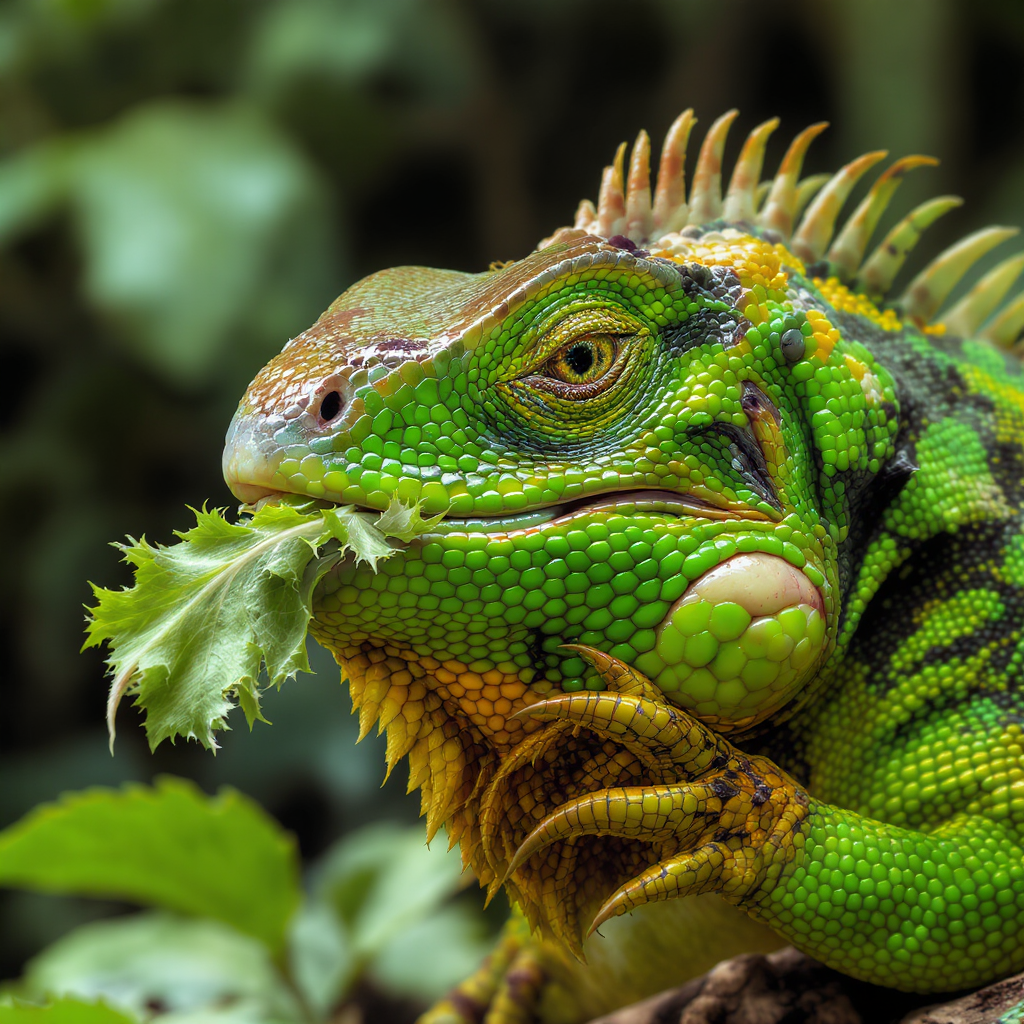
Understanding the Green Iguana’s Natural Diet
Green iguanas are strict herbivores in the wild, spending their days foraging through tropical canopies for leaves, flowers, and fruits. As a green iguana owner, replicating this natural diet is essential for your pet’s long-term health and longevity. A proper green iguana diet prevents metabolic bone disease, organ failure, and other common health issues that plague captive iguanas.
Many new iguana owners make the critical mistake of feeding animal proteins or an imbalanced diet, leading to serious health complications. This complete feeding guide will help you provide optimal nutrition for your green iguana at every life stage.
Core Components of a Healthy Green Iguana Diet
A well-balanced green iguana diet consists primarily of dark leafy greens, vegetables, and small amounts of fruit. The ideal ratio is approximately 70% greens, 25% vegetables, and 5% fruit. This macronutrient distribution supports proper digestion, calcium absorption, and overall health.
Best Leafy Greens for Green Iguanas
Leafy greens should form the foundation of every meal. These calcium-rich options provide essential nutrients:
Worried About Your Reptile's Health?
Upload a photo and get instant AI health analysis. Catch problems before they become expensive vet bills.
Get Free Health Check →- Collard greens – high in calcium and vitamin A
- Mustard greens – excellent calcium to phosphorus ratio
- Turnip greens – nutrient-dense and readily accepted
- Dandelion greens – natural option with high calcium content
- Escarole – adds variety while maintaining nutritional value
- Arugula – provides beneficial phytonutrients
Recommended Vegetables for Variety
Adding vegetables to your iguana’s diet provides essential vitamins and minerals while creating dietary diversity:
- Butternut squash – rich in vitamin A and fiber
- Bell peppers – red, yellow, and orange varieties offer vitamin C
- Green beans – good source of minerals
- Snap peas – adds texture and nutrition
- Shredded carrots – occasional treat high in beta-carotene
- Okra – provides calcium and moisture
Fruits as Occasional Treats
While fruits should comprise only a small portion of the green iguana diet, they provide natural sugars and hydration. Offer fruits 1-2 times per week:
- Papaya – easily digestible with beneficial enzymes
- Mango – highly palatable and nutritious
- Strawberries – vitamin C boost in moderation
- Blueberries – antioxidant-rich occasional treat
- Figs – natural source of calcium
Foods to Avoid Feeding Your Green Iguana
Certain foods are toxic or harmful to green iguanas and must be completely avoided. Never feed your iguana animal proteins including insects, meat, eggs, or dairy products. Green iguanas lack the digestive enzymes to process animal matter, leading to kidney and liver damage.
Additionally, avoid these problematic plant foods:
Never Miss Early Warning Signs
AI photo analysis catches subtle health issues humans miss 80% of the time. Early detection = healthier reptile + lower vet bills.
Start Free Trial →- Spinach – contains oxalates that bind calcium
- Iceberg lettuce – nutritionally void with minimal value
- Cabbage and broccoli – goitrogens interfere with thyroid function
- Rhubarb – contains toxic compounds
- Avocado – highly toxic to reptiles
Calcium and Vitamin Supplementation
Even with a perfect diet, green iguanas require calcium supplementation to prevent metabolic bone disease. Dust fresh food with calcium powder 3-4 times weekly for juveniles and 2-3 times weekly for adults. Choose a calcium supplement without phosphorus and without vitamin D3 if your iguana receives adequate UVB lighting.
A high-quality reptile multivitamin should be provided once weekly to ensure complete nutritional coverage. Avoid over-supplementation, which can cause vitamin toxicity and health problems.
Feeding Schedule and Portion Sizes
Young green iguanas under two years old should receive fresh food daily, preferably in the morning after they’ve warmed up under their basking light. Juveniles are rapid growers and require consistent nutrition.
Adult green iguanas can be fed daily or every other day, depending on body condition and activity level. Offer a portion roughly the size of your iguana’s head, adjusting based on whether food is consistently left over or completely consumed.
Join thousands of successful reptile owners
Try ReptileCoach Free →Remove uneaten food after 2-3 hours to prevent spoilage and bacterial growth. Always provide fresh, chlorine-free water in a large bowl for drinking and occasional soaking.
Preparing Food for Your Green Iguana
Proper food preparation ensures maximum nutrition and safety. Wash all produce thoroughly to remove pesticides and contaminants. Chop greens and vegetables into appropriately sized pieces – smaller for juveniles, larger for adults.
Mix ingredients thoroughly to prevent selective feeding, where iguanas only eat preferred items and miss essential nutrients. Create colorful salads that combine multiple greens, vegetables, and occasional fruit for visual appeal and nutritional completeness.
Hydration and Moisture Content
Green iguanas obtain much of their hydration from fresh vegetables and greens. However, maintaining a water bowl and lightly misting food can encourage additional water intake. Proper hydration supports kidney function, digestion, and healthy shedding.
"This app saved my bearded dragon's life. The AI caught early MBD in photos I thought looked completely normal. Worth every penny!"
— Sarah K., ReptileCoach User
Get Your Free 7-Day Trial →During breeding season or warmer months, increase moisture-rich foods like cucumber or provide additional water sources to prevent dehydration.
Special Considerations for Baby and Juvenile Iguanas
Young green iguanas have the same dietary requirements as adults but need more frequent feeding and finer food preparation. Offer fresh food daily without fail, as growth rates during the first two years are dramatic. Calcium supplementation is especially critical during this rapid growth phase to ensure proper skeletal development.
Ready to give your reptile the best care? Track your reptile’s health and care schedule with our free app.
Monitoring Your Iguana’s Health Through Diet
A healthy green iguana on a proper diet will exhibit bright eyes, smooth skin, healthy weight, and active behavior. Monitor your iguana’s body condition regularly – you should see a full, round body without visible hip bones or a sunken appearance. Changes in appetite, lethargy, or weight loss indicate potential health issues requiring veterinary attention.
Worried About Your Reptile's Health?
Upload a photo and get instant AI health analysis. Catch problems before they become expensive vet bills.
Get Free Health Check →By following this complete green iguana feeding guide and providing fresh, varied, nutrient-rich foods daily, you’ll support your iguana’s health for their potential 15-20 year lifespan in captivity.
Ready to Give Your Reptile the Best Care?
Stop guessing and start knowing. Get personalized AI-powered care guidance, photo health analysis, and 24/7 expert advice for YOUR specific reptile.
Get Personalized Care Guidance
AI-powered photo analysis and daily care tracking for YOUR reptile
Try Free for 7 Days →