
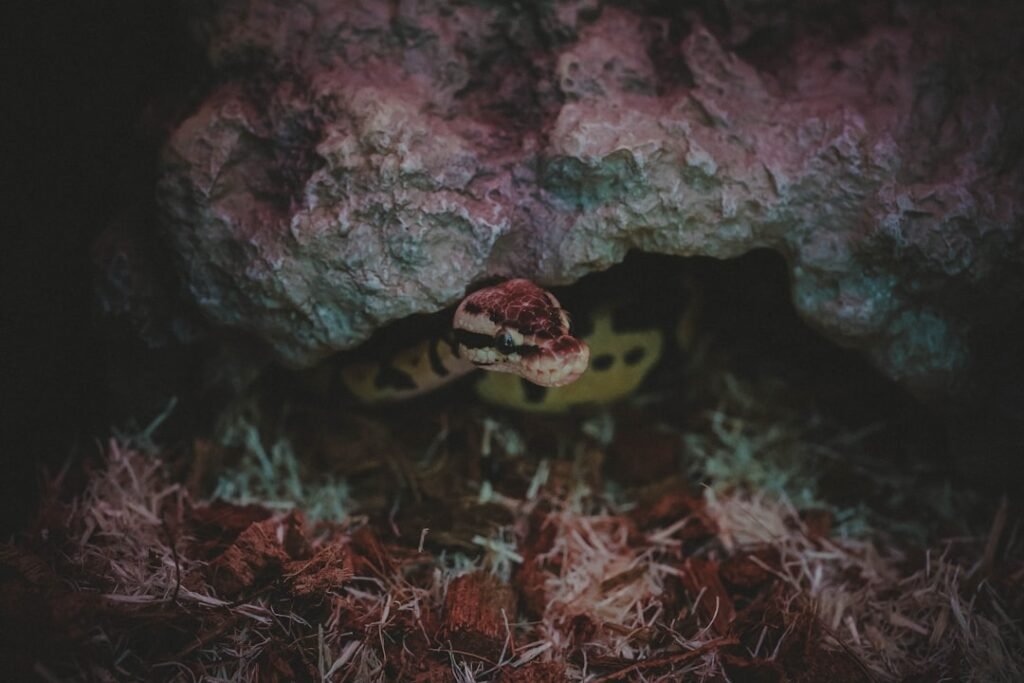
Ball pythons aren’t just beginner-friendly snakes—they’re long-term commitments requiring nuanced care to truly thrive. While basic husbandry keeps them alive, advanced techniques transform their quality of life, preventing common issues like chronic dehydration, stress-induced refusal to eat, and incomplete sheds. With lifespans stretching 20-30 years, investing in these sophisticated care strategies ensures your python doesn’t just survive but flourishes. Forget generic advice; this guide dives into the subtle, science-backed methods top breeders and rescues use to keep ball pythons vibrant and healthy for decades.
Mastering Microclimate Management
Forget “set-and-forget” humidity settings. Advanced keepers create dynamic microclimates within a single enclosure using targeted techniques. Start by positioning your primary hygrometer probe inside the cool-side hide—not on open substrate—to measure the humidity where your snake actually spends 90% of its time. Aim for 55-65% ambient humidity, but allow localized spikes: the warm-side hide should read 40-50% while a dedicated humid hide (lined with damp sphagnum moss) hits 75-85%. Achieve this by placing a 20oz water bowl directly under your heat source on the warm side—evaporation creates a natural humidity gradient. For dry climates, layer moisture-retaining substrates: a 1″ base of clay balls topped with 2″ of coconut fiber and ½” of leaf litter. Mist ONLY the cool side and humid hide every 48 hours with distilled water, avoiding the warm zone to prevent thermal disruption. Monitor surface temps with an infrared thermometer—your warm-side basking spot must hit 90°F (±2°) while the cool side stays at 78-80°F. This precise gradient mimics African savanna conditions, triggering natural thermoregulation behavior.
Strategic Hide Optimization
Most keepers provide two hides—but advanced setups feature *four* purpose-built retreats. Position them using this formula: one snug opaque hide (just 1.5x the snake’s width) on the warm side for digestion, one identical cool-side hide for resting, a large humid hide (lined with sphagnum moss) in the coolest corner for shedding, and a suspended cork bark tube 6″ above substrate for arboreal enrichment. The secret? Customize entrances: file narrow slits (1″ wide) into warm-side hides to create “tight” security ball pythons seek in termite mounds, while cool-side hides get wider openings for airflow. Replace standard plastic hides with ventilated cork bark or PVC units wrapped in 3mm-thick foam insulation—this stabilizes internal temps 5°F warmer than ambient, crucial for juveniles. Check hide humidity daily with a mini hygrometer; if sphagnum moss dries in under 72 hours, switch to hydroponic clay balls mixed with 30% sphagnum to retain moisture longer without molding.
Bioactive Terrarium Deep Dive
True bioactive setups go beyond adding springtails. Start with a 4-layer substrate: 1″ drainage (LECA balls), 1″ moisture barrier (coco fiber), 2″ mineral layer (50% crushed oyster shell, 30% play sand, 20% topsoil), and 1″ bioactive top layer (coco fiber + leaf litter). Introduce 50+ springtails AND 10 isopods per sq. ft. *before* adding your snake—they need 8 weeks to establish. Plant smart: Pothos roots aerate soil while absorbing excess moisture, and snake plants (Sansevieria) release oxygen at night. Water plants ONLY at the base using a turkey baster—never mist the entire enclosure—to maintain humidity without oversaturating. The magic? Live plants pull water vapor through leaves, boosting humidity 15% more effectively than misting alone. Monitor soil health monthly: if springtails vanish, add decaying leaves; if mold appears, introduce more isopods. This self-sustaining ecosystem reduces enclosure cleaning to spot-removal only, cutting stress from 90% of maintenance tasks.
Worried About Your Reptile's Health?
Upload a photo and get instant AI health analysis. Catch problems before they become expensive vet bills.
Get Free Health Check →Feeding Precision Protocols
Advanced feeding isn’t just about prey size—it’s about circadian rhythm alignment. Feed exclusively between 7-9 PM when ball pythons naturally hunt in the wild. Thaw frozen rodents in lukewarm water (85°F), then warm to 100°F using a reptile-safe heating pad for 10 minutes—this mimics live prey body heat, triggering strike response. For picky eaters, use “scent transfer”: rub quail feathers on thawed mice or dip prey in chicken broth (low-sodium). Critical timing: never feed within 72 hours of shedding (skin opacity indicates 48-hour pre-shed), and skip meals if humidity drops below 50% for 24+ hours. Post-feeding, darken the enclosure entirely for 72 hours—light exposure stresses digestion. Use a thermal camera to confirm belly temps stay at 88°F during digestion; if temps dip below 82°F, add a temporary heat mat under only the warm-side hide. Record every meal’s weight: a healthy adult should gain 5-7% body weight weekly. Sudden drops? Check for mites using a white towel test (place snake on towel; black specks indicate parasites).
Stress Recognition & Mitigation
Subtle stress signs precede health crises. Watch for “stargazing”—brief upward head tilts indicating neurological stress from poor humidity. “Pacing” along glass walls means insecure hides; fix this by covering 75% of enclosure sides with matte black contact paper. Heavy breathing after handling? Your snake’s oxygen debt from anxiety—limit sessions to 5 minutes max. Advanced keepers use “stress mapping”: log daily behaviors (feeding, hiding, movement) in a spreadsheet. Spikes in cool-side hide usage predict upcoming sheds; increased warm-side time signals illness. For chronically stressed snakes, implement “security zones”: place a black fleece blanket over the enclosure for 3 days (remove only for feeding), then gradually reduce coverage by 25% every 48 hours. During shedding, replace all hides with paper towel tubes lined with damp paper—smooth surfaces prevent scale damage. Never handle during blue phase (opaque eyes); instead, mist the humid hide twice daily to ease skin separation.
Proactive Health Monitoring
Daily health checks prevent emergencies. Use a digital scale weekly (record weights every Monday AM) to catch 10%+ drops indicating parasites. Examine the vent area weekly with a flashlight: pink tissue is healthy; redness or swelling requires vet care. Test humidity gradients every Sunday morning—you should see condensation ONLY inside the humid hide. For respiratory issues, listen for wheezing during cool-down periods; immediate action means raising humidity to 70% for 72 hours while lowering temps by 3°F. Keep a “shed journal”: note incomplete sheds—they reveal chronic low humidity (replace sphagnum moss if it dries in <48 hours). Advanced tip: place a 3″ ceramic tile in the warm hide; if your snake avoids it during digestion, your basking spot is too hot (ideal surface temp: 92°F). Annual vet visits should include fecal tests even for asymptomatic snakes—many parasites show no visible signs until severe.
Enrichment Evolution Strategies
Static enclosures cause boredom. Rotate enrichment weekly: Week 1 features a cork bark “cave” with hidden food; Week 2 adds a bamboo branch for climbing; Week 3 uses a fleece tunnel for burrowing. Introduce scent trails by dragging prey through substrate before feeding—this triggers natural foraging behavior. For mental stimulation, place live crickets (with legs removed) in a secure container inside the enclosure 2x/week; the vibrations mimic prey movement. Adjust lighting cycles seasonally: 12 hours light in summer, 10 hours in winter using a programmable LED strip. During “rainy season” (simulated via daily misting for 2 weeks in fall), add a shallow water feature (2″ deep dish) to encourage soaking. Monitor engagement: if your snake ignores new items after 72 hours, simplify the setup—overly complex environments increase stress. Remember, ball pythons prefer subtle changes; swap only 30% of decor at once to avoid territorial anxiety.
Never Miss Early Warning Signs
AI photo analysis catches subtle health issues humans miss 80% of the time. Early detection = healthier reptile + lower vet bills.
Start Free Trial →Advanced Husbandry in Practice
Putting it all together: Imagine your ball python refusing meals during winter. Basic care might suggest force-feeding, but advanced techniques diagnose the root cause. First, check thermal gradients—surface temps below 78°F on the cool side slow digestion. Next, review humidity logs; consistent readings under 50% dehydrate the respiratory tract, suppressing appetite. Then, inspect hides—worn foam insulation on the warm-side hide indicates temperature instability. Solution: replace the hide liner, add a thermostat-controlled heat mat, and introduce a humid hide with pre-moistened moss. Within 72 hours, appetite typically returns. This holistic approach—addressing microclimate, security, and physiological needs—resolves 90% of “problem” behaviors without veterinary intervention. It’s not about more equipment; it’s about smarter application of proven principles tailored to your snake’s individual responses.
Advanced ball python care transforms routine husbandry into a responsive partnership with your reptile. By mastering microclimate gradients, optimizing hide security, and implementing bioactive systems, you prevent the chronic issues that shorten lifespans. Remember: humidity isn’t just a number—it’s a dynamic ecosystem within your enclosure. Feeding isn’t just offering food—it’s aligning with natural rhythms. Every adjustment, from substrate layers to enrichment rotation, reduces cumulative stress that manifests as refusal to eat or shed. These techniques demand observation and patience, but the reward is a snake that doesn’t merely tolerate captivity but exhibits vibrant, natural behaviors for decades. Start with one advanced strategy this week—refine your humid hide or map thermal gradients—and you’ll see immediate improvements in your python’s confidence and vitality. True expertise lies not in complexity, but in the thoughtful execution of fundamentals that honor this species’ wild instincts.
Ready to Give Your Reptile the Best Care?
Stop guessing and start knowing. Get personalized AI-powered care guidance, photo health analysis, and 24/7 expert advice for YOUR specific reptile.
Get Personalized Care Guidance
AI-powered photo analysis and daily care tracking for YOUR reptile
Try Free for 7 Days →