Setting up a proper habitat for your red-eared slider is one of the most important responsibilities you’ll have as a turtle owner. These semi-aquatic reptiles need a carefully balanced environment that mimics their natural habitat to thrive. Let’s walk through everything you need to know to create the perfect home for your slider.
Tank Size Requirements
Red-eared sliders grow larger than most people expect. A common rule of thumb is to provide 10 gallons of water per inch of shell length. For a single adult slider (which can reach 10-12 inches), you’re looking at a minimum of 75-100 gallons. Hatchlings can start in smaller tanks, but plan to upgrade as they grow.
The tank should be long rather than tall, since sliders are swimmers who need horizontal space. A 4-foot long tank is ideal for adults. Remember that bigger is always better when it comes to aquatic turtle habitats.
Water Filtration System
Turtles are messy eaters and produce significant waste, making filtration absolutely critical. You’ll need a filter rated for 2-3 times your tank’s water volume. For a 75-gallon tank, use a filter rated for 150-200 gallons.
Worried About Your Reptile's Health?
Upload a photo and get instant AI health analysis. Catch problems before they become expensive vet bills.
Get Free Health Check →Canister filters work best for turtle tanks because they:
- Handle heavy biological loads efficiently
- Provide mechanical, chemical, and biological filtration
- Are less likely to be damaged by curious turtles
- Require less frequent maintenance
Even with excellent filtration, plan to do 25-30% water changes weekly to maintain water quality.
Basking Area Setup
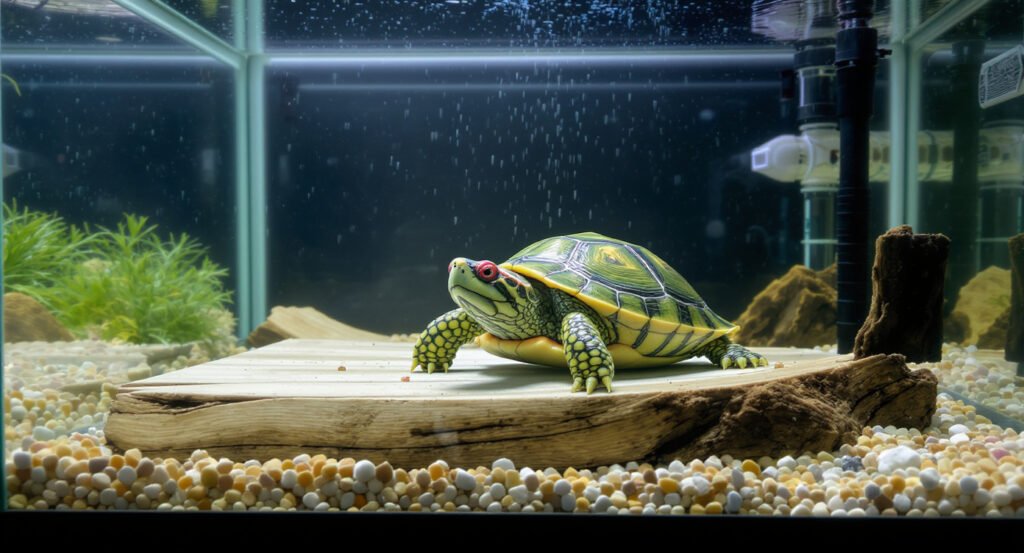
Red-eared sliders need a dry basking area that’s easily accessible from the water. The basking platform should be large enough for your turtle to completely dry off and should be positioned so it’s stable and won’t tip.
Options include:
Never Miss Early Warning Signs
AI photo analysis catches subtle health issues humans miss 80% of the time. Early detection = healthier reptile + lower vet bills.
Start Free Trial →- Commercial turtle docks that attach with suction cups
- DIY platforms made from egg crate and river rocks
- Floating cork bark pieces
- Above-tank basking areas (great for maximizing swim space)
The basking area should take up about 25-30% of the tank’s footprint and have a gentle ramp or textured surface for easy climbing.
Lighting Requirements
UVB Lighting
UVB light is non-negotiable for red-eared sliders. They need it to synthesize vitamin D3, which allows them to absorb calcium and maintain healthy shells and bones. Without proper UVB, your turtle will develop metabolic bone disease.
Use a 10.0 UVB bulb positioned 10-12 inches above the basking area. Replace it every 6-12 months, as UVB output degrades over time even when the bulb still produces visible light. Run the UVB light for 10-12 hours daily to simulate natural day cycles.
Heat Lighting
A separate basking bulb creates the warm spot your slider needs to thermoregulate. The basking area should reach 85-90°F, while the water stays cooler. Use a regular incandescent bulb or a specific basking bulb, and adjust the wattage based on your setup. A dimmer switch or thermostat helps maintain consistent temperatures.
Join thousands of successful reptile owners
Try ReptileCoach Free →Track your turtle’s habitat parameters and feeding schedule with ReptileCoach to ensure you’re maintaining optimal conditions year-round.
Water Temperature
Red-eared sliders are cold-blooded and rely on their environment to regulate body temperature. Water temperature should stay between 75-78°F. Use a submersible aquarium heater rated for your tank size, and always use a heater guard to prevent burns if your turtle comes in contact with it.
Monitor water temperature with a reliable aquarium thermometer. Avoid placing the heater directly under the basking area, as this can create temperature gradients that are too extreme.
Substrate Considerations
Many experienced turtle keepers recommend going bare-bottom (no substrate) for easier cleaning and to prevent impaction if your turtle ingests substrate. However, if you prefer a more natural look, you have options:
"This app saved my bearded dragon's life. The AI caught early MBD in photos I thought looked completely normal. Worth every penny!"
— Sarah K., ReptileCoach User
Get Your Free 7-Day Trial →- River rocks: Use stones larger than your turtle’s head to prevent swallowing
- Sand: Fine sand can work but requires diligent cleaning
- No substrate: Easiest to maintain and safest option
Avoid gravel smaller than your turtle’s head, as it poses a serious impaction risk. Whatever you choose, be prepared to clean it regularly.
Decorations and Enrichment
While red-eared sliders don’t need elaborate decorations, some additions can improve their quality of life:
Live or artificial plants: Provide hiding spots and visual barriers. If using live plants, choose hardy species like anacharis or java fern that can tolerate turtle nibbling.
Hiding spots: PVC pipes, caves, or driftwood give your turtle places to feel secure. This reduces stress, especially in high-traffic areas.
Worried About Your Reptile's Health?
Upload a photo and get instant AI health analysis. Catch problems before they become expensive vet bills.
Get Free Health Check →Smooth rocks: Large river rocks create visual interest and give your turtle surfaces to explore.
Avoid sharp decorations, small objects that could be swallowed, or anything that might trap your turtle underwater.
Putting It All Together
Creating the perfect red-eared slider habitat takes planning and investment, but it’s worth it to see your turtle thrive. Start with the largest tank you can accommodate, invest in quality filtration and lighting, and maintain consistent temperatures. Regular maintenance and monitoring will keep your slider healthy for the 20-40 years they can live in captivity.
Remember that every turtle is an individual. Observe your slider’s behavior and adjust the setup as needed. A well-designed habitat isn’t just about meeting minimum requirements—it’s about creating an environment where your turtle can exhibit natural behaviors and live their best life.
Never Miss Early Warning Signs
AI photo analysis catches subtle health issues humans miss 80% of the time. Early detection = healthier reptile + lower vet bills.
Start Free Trial →Ready to Give Your Reptile the Best Care?
Stop guessing and start knowing. Get personalized AI-powered care guidance, photo health analysis, and 24/7 expert advice for YOUR specific reptile.
Get Personalized Care Guidance
AI-powered photo analysis and daily care tracking for YOUR reptile
Try Free for 7 Days →