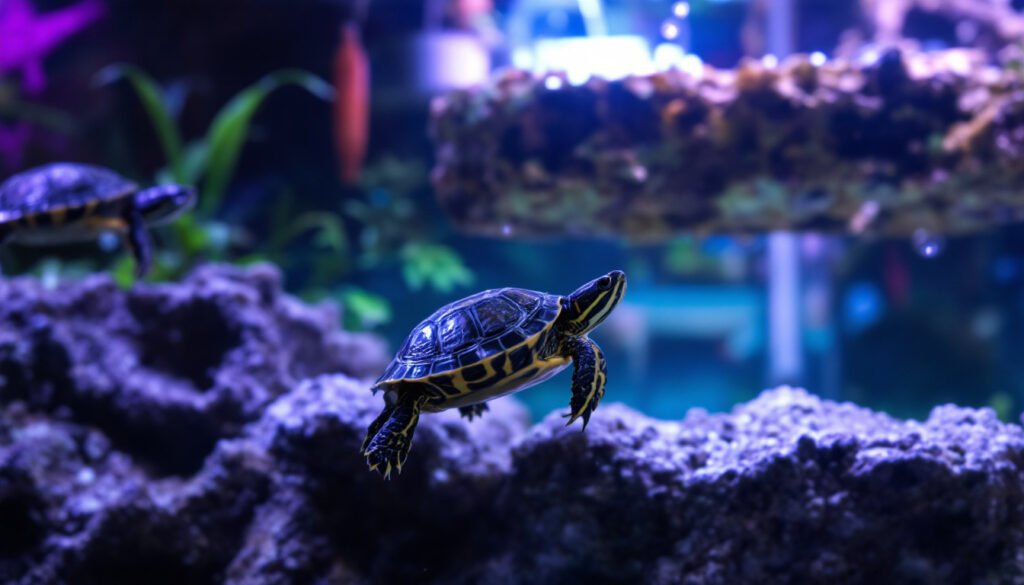
Setting up a proper red-eared slider setup is essential for keeping your aquatic turtle healthy and thriving. These popular pet turtles require specific environmental conditions, including adequate water depth, basking areas, filtration, and lighting. Whether you’re a first-time turtle owner or upgrading your current enclosure, this comprehensive guide will walk you through everything you need to create an ideal habitat for your red-eared slider.
Tank Size Requirements
Red-eared sliders grow significantly larger than many people expect, and your tank size should reflect their adult dimensions. A common mistake is starting with a tank that’s too small, which leads to costly upgrades later.
- Hatchlings and juveniles (up to 4 inches): Minimum 20-40 gallon tank
- Sub-adults (4-6 inches): 55-75 gallon tank
- Adults (6-12 inches): 75-125+ gallon tank or larger
The general rule is to provide 10 gallons of water per inch of shell length. Since red-eared sliders can reach 12 inches, plan for a large enclosure from the start or be prepared to upgrade. Many experienced keepers recommend going straight to a 75-gallon or larger tank to avoid multiple upgrades as your turtle grows.
Water Depth and Quality
Red-eared sliders are strong swimmers and need adequate water depth to exercise and stay healthy. The water should be at least twice as deep as the turtle’s shell length to allow natural swimming behavior. For an adult turtle with an 8-inch shell, this means at least 16 inches of water depth.
Worried About Your Reptile's Health?
Upload a photo and get instant AI health analysis. Catch problems before they become expensive vet bills.
Get Free Health Check →Filtration Systems
Turtles are messy eaters and produce significant waste, making powerful filtration critical. Your filter should be rated for at least double your tank’s water volume. For a 75-gallon tank, use a filter rated for 150 gallons or more. Canister filters are highly recommended for turtle tanks due to their superior mechanical and biological filtration capacity.
Even with excellent filtration, plan to perform partial water changes of 25-50% weekly to maintain water quality. Test water parameters regularly using an aquarium test kit to monitor ammonia, nitrite, and nitrate levels.
Basking Area Setup
Red-eared sliders are semi-aquatic and must have access to a completely dry basking area where they can haul out of the water. The basking platform should be sturdy, easily accessible, and large enough for your turtle to completely dry off.
Basking Platform Options
You can create a basking area using commercial turtle docks, stacked rocks, driftwood, or custom-built platforms. Ensure the surface provides good traction and is positioned to allow easy climbing. The basking spot should be raised above the water line so your turtle can fully dry its shell and plastron, which prevents shell rot and bacterial infections.
Never Miss Early Warning Signs
AI photo analysis catches subtle health issues humans miss 80% of the time. Early detection = healthier reptile + lower vet bills.
Start Free Trial →Lighting Requirements
Proper lighting is non-negotiable for red-eared slider health. These turtles require two types of lighting positioned over the basking area.
UVB Lighting
UVB light enables turtles to synthesize vitamin D3, which is essential for calcium metabolism and preventing metabolic bone disease. Use a reptile-specific UVB bulb (10.0 or 5.0 strength) positioned 10-12 inches above the basking spot. Replace UVB bulbs every 6-12 months, as their UV output diminishes over time even when they still produce visible light.
Heat Lamp
A basking heat lamp creates the warm temperature gradient your turtle needs for thermoregulation. The basking spot should reach 85-90°F (29-32°C), while the water temperature should be maintained at 75-78°F (24-26°C). Use a reliable thermometer to monitor both temperatures accurately.
Maintain a 12-hour light cycle to mimic natural day and night rhythms. Consider using a timer to automate your lighting schedule for consistency.
Join thousands of successful reptile owners
Try ReptileCoach Free →Substrate and Decorations
Many experienced turtle keepers prefer a bare-bottom tank for easier cleaning, but if you want substrate, use large river rocks that cannot be swallowed. Avoid gravel smaller than your turtle’s head, as ingestion can cause serious health problems.
Add aquarium-safe decorations like driftwood, smooth rocks, and artificial plants to create visual interest and hiding spots. Live plants are challenging with red-eared sliders since they often uproot or eat them, but hardy species like anubias may survive.
Water Heater
Unless your room maintains consistently warm temperatures, you’ll need a submersible aquarium heater to keep water at the proper temperature. Choose a heater with a protective guard to prevent your turtle from accidentally burning itself or breaking the glass. Aim for 200-300 watts for a 75-gallon tank, adjusted based on your room’s ambient temperature.
Feeding Station Considerations
Some turtle owners prefer feeding in a separate container to minimize waste in the main tank. While not essential, this practice can reduce the load on your filtration system and keep water cleaner longer. If you choose this method, use dechlorinated water at the same temperature as the main tank.
"This app saved my bearded dragon's life. The AI caught early MBD in photos I thought looked completely normal. Worth every penny!"
— Sarah K., ReptileCoach User
Get Your Free 7-Day Trial →Maintenance Schedule
Keeping your red-eared slider setup in optimal condition requires consistent maintenance. Test water weekly, perform partial water changes, clean the filter monthly, check equipment function regularly, and replace UVB bulbs every 6-12 months. Staying on top of these tasks prevents health issues and keeps your turtle’s environment stable.
Creating the perfect red-eared slider setup requires investment and planning, but watching your turtle thrive in a properly designed habitat makes every effort worthwhile. Stay organized with your turtle care routine and track your reptile’s care schedule to ensure you never miss important maintenance tasks, feeding times, or lighting replacement dates.
Ready to Give Your Reptile the Best Care?
Stop guessing and start knowing. Get personalized AI-powered care guidance, photo health analysis, and 24/7 expert advice for YOUR specific reptile.
Get Personalized Care Guidance
AI-powered photo analysis and daily care tracking for YOUR reptile
Try Free for 7 Days →