“`html
Red-eared slider turtles are among the most popular pet reptiles in the world, and for good reason. These charismatic aquatic turtles are relatively hardy, interactive, and can live for decades with proper care. However, one of the most common reasons red-eared sliders develop health problems is inadequate tank setup. Whether you’re a first-time turtle owner or looking to upgrade your current setup, this comprehensive guide will walk you through everything you need to create a thriving habitat for your shelled companion.
Understanding Tank Size Requirements: Bigger Is Always Better
One of the most critical aspects of red-eared slider care is providing adequate space. These turtles grow much larger than most people anticipate, and cramped conditions lead to stress, aggression, and health issues.
For hatchlings and juveniles (under 4 inches), a 40-gallon tank can work temporarily, but you’ll need to upgrade quickly. Adult red-eared sliders typically reach 8-12 inches in shell length, with females growing larger than males. For a single adult turtle, the absolute minimum tank size is 75 gallons, though 100-120 gallons is significantly better.
Worried About Your Reptile's Health?
Upload a photo and get instant AI health analysis. Catch problems before they become expensive vet bills.
Get Free Health Check →A useful rule of thumb is to provide 10 gallons of water per inch of shell length. This means a 10-inch turtle needs at least 100 gallons. If you’re housing multiple turtles, add 25-50 gallons for each additional slider. Remember that red-eared sliders are primarily aquatic and need substantial swimming space—depth matters as much as surface area.
Filtration Systems: The Heart of Your Turtle Tank
Red-eared sliders are notoriously messy eaters and produce significant waste. A robust filtration system isn’t optional—it’s essential for maintaining water quality and preventing disease.
Choosing the Right Filter
For turtle tanks, you need a filter rated for at least 2-3 times your tank’s water volume. If you have a 75-gallon tank, choose a filter designed for 150-225 gallons. Turtles create far more bioload than fish, so standard aquarium filters often can’t keep up.
Popular filtration options include:
Never Miss Early Warning Signs
AI photo analysis catches subtle health issues humans miss 80% of the time. Early detection = healthier reptile + lower vet bills.
Start Free Trial →- Canister filters: Highly efficient and powerful, ideal for larger tanks. Brands like Fluval FX series are excellent choices.
- Hang-on-back (HOB) filters: Convenient and easy to maintain, though you may need to run two units for adequate filtration.
- Sump filters: Professional-grade option offering maximum filtration capacity and customization.
Regardless of your choice, perform partial water changes (25-30%) weekly, even with excellent filtration. Clean mechanical filter media every 2-3 weeks, but avoid replacing biological media all at once, as this removes beneficial bacteria.
Basking Platforms: Your Turtle’s Essential Dry Dock
Red-eared sliders are semi-aquatic, meaning they need both water and a completely dry basking area. Basking serves multiple critical functions: it helps regulate body temperature, aids digestion, allows the shell to dry (preventing bacterial and fungal infections), and provides essential UV exposure.
Your basking platform should be large enough for your turtle to completely leave the water and turn around comfortably. It should be easily accessible—turtles aren’t great climbers, so provide a gentle ramp or textured surface. The platform must be stable and positioned so your turtle can’t get trapped underneath.
Commercial basking docks work well, or you can create DIY platforms using slate, cork bark, or PVC constructions. Ensure the platform is positioned at the correct distance from your heat lamp (usually 8-12 inches) to achieve proper basking temperatures.
Join thousands of successful reptile owners
Try ReptileCoach Free →UVB Lighting: Simulating Natural Sunlight
UVB lighting is non-negotiable for red-eared sliders. Without it, turtles cannot synthesize vitamin D3, which is essential for calcium absorption. Calcium deficiency leads to metabolic bone disease, a serious and potentially fatal condition characterized by soft shells, deformed bones, and lethargy.
Setting Up Your UVB Lighting
Provide UVB lighting for 10-12 hours daily, mimicking natural day-night cycles. Use a timer to maintain consistency. The best options are:
- Mercury vapor bulbs: Provide both UVB and heat in one unit, excellent for larger setups
- Fluorescent tube UVB bulbs: Reptile-specific 10.0 or 10% UVB bulbs work well when positioned 10-12 inches from the basking spot
- Compact UVB bulbs: Less ideal but workable for smaller setups
Replace UVB bulbs every 6-12 months, even if they still produce visible light. UVB output degrades over time, and your turtle needs adequate exposure for proper health. Position bulbs over the basking area with no glass or plastic barriers, as these materials block UVB rays.
Temperature Requirements: Creating the Perfect Thermal Gradient
Red-eared sliders are ectothermic (cold-blooded) and rely on external heat sources to regulate their body temperature. Your tank needs two distinct temperature zones.
"This app saved my bearded dragon's life. The AI caught early MBD in photos I thought looked completely normal. Worth every penny!"
— Sarah K., ReptileCoach User
Get Your Free 7-Day Trial →Water Temperature
Maintain water temperature between 75-80°F using a submersible aquarium heater. Use a heater rated for your tank size, and consider using two smaller heaters instead of one large unit for safety and temperature stability. Always use a reliable aquarium thermometer to monitor water temperature.
Basking Spot Temperature
The basking area should be warmer, between 85-90°F. Achieve this with a heat lamp positioned above the basking platform. Use a thermometer placed directly on the basking surface to ensure accuracy—what feels warm to your hand may not be hot enough for your turtle.
This temperature gradient allows your turtle to thermoregulate by moving between warmer and cooler areas as needed. Never allow water temperature to drop below 70°F or exceed 82°F, and ensure the basking spot doesn’t exceed 95°F.
Substrate Options: To Use or Not to Use
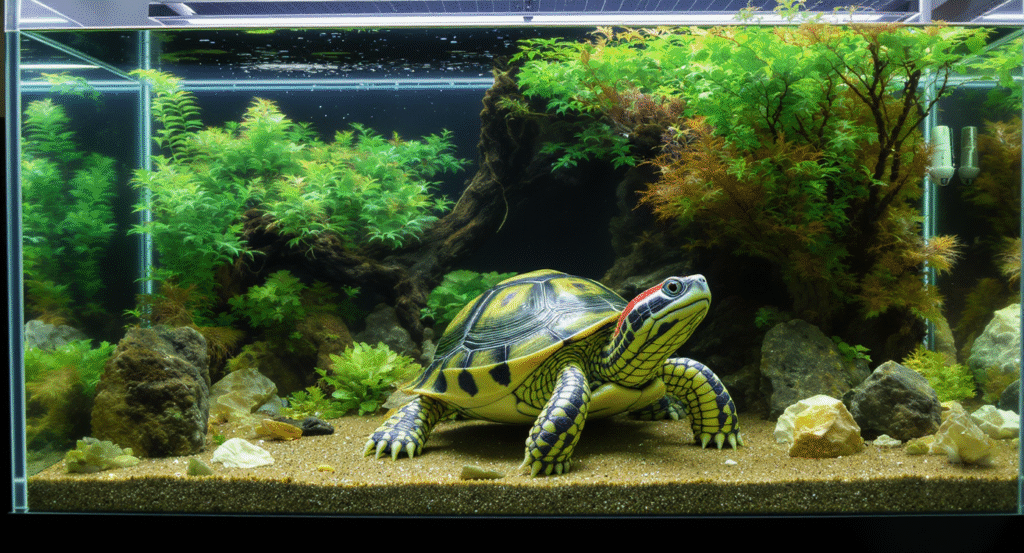
Substrate choice for red-eared slider tanks is surprisingly controversial. Many experienced keepers recommend a bare-bottom tank (no substrate) for several compelling reasons:
Worried About Your Reptile's Health?
Upload a photo and get instant AI health analysis. Catch problems before they become expensive vet bills.
Get Free Health Check →- Easier to clean and maintain water quality
- No risk of substrate ingestion (which can cause impaction)
- Better visibility of waste for prompt removal
- Prevents substrate from clogging filter systems
If you prefer substrate for aesthetic reasons, large river rocks (too large to swallow) are the safest option. Avoid small gravel, sand, and any decorative substrates designed for freshwater aquariums, as turtles may accidentally ingest these while feeding, leading to serious digestive blockages.
Water Quality Maintenance: Keeping Your Turtle Healthy
Pristine water quality is fundamental to your turtle’s health. Poor water conditions cause respiratory infections, shell rot, eye infections, and weakened immune systems.
Essential Water Maintenance Tasks
- Weekly water changes: Remove and replace 25-30% of tank water
- Daily spot cleaning: Remove uneaten food and visible waste
- Water parameter testing: Test weekly for ammonia, nitrites, nitrates, and pH
- Filter maintenance: Clean or replace filter media according to manufacturer guidelines
- Dechlorination: Always treat tap water with a quality dechlorinator before adding to the tank
Ideal water parameters for red-eared sliders: ammonia 0 ppm, nitrites 0 ppm, nitrates below 40 ppm, pH 6.5-8.0. If you notice cloudy water, foul odors, or your turtle spending excessive time on the basking platform, water quality issues are likely.
Keeping track of your turtle’s health metrics, water quality readings, and maintenance schedules can be challenging. Consider using a dedicated pet care tracker like ReptileCoach to log water parameters, feeding schedules, and health observations, ensuring you never miss important care tasks.
Never Miss Early Warning Signs
AI photo analysis catches subtle health issues humans miss 80% of the time. Early detection = healthier reptile + lower vet bills.
Start Free Trial →Common Setup Mistakes to Avoid
Even well-intentioned turtle owners make setup errors that can compromise their pet’s health. Here are the most frequent mistakes:
1. Starting with a Tank That’s Too Small
That cute hatchling will grow rapidly. Starting with an appropriately-sized adult tank saves money and stress in the long run.
2. Inadequate Filtration
Undersized filters can’t keep up with turtle waste, leading to constant water quality problems and increased disease risk.
3. No UVB Lighting or Using the Wrong Type
Regular household bulbs don’t provide UVB. Invest in reptile-specific UVB lighting and replace bulbs on schedule.
Join thousands of successful reptile owners
Try ReptileCoach Free →4. Glass or Plastic Between UVB Source and Turtle
Tank lids and covers block UVB rays. Position lights over an open basking area or use specialized screen covers that allow UVB penetration.
5. Insufficient Basking Area
If your turtle can’t get completely dry or doesn’t have enough space to bask comfortably, they won’t use the platform effectively.
6. Neglecting Temperature Monitoring
Guessing temperatures is risky. Use accurate thermometers for both water and basking areas, and check them regularly.
7. Inconsistent Maintenance Schedule
Water quality deteriorates quickly in turtle tanks. Establish and stick to a regular maintenance routine.
"This app saved my bearded dragon's life. The AI caught early MBD in photos I thought looked completely normal. Worth every penny!"
— Sarah K., ReptileCoach User
Get Your Free 7-Day Trial →Conclusion: Setting Your Turtle Up for Success
Creating the perfect red-eared slider habitat requires initial investment and ongoing commitment, but the reward is a healthy, active turtle that can thrive for 30-40 years or more. Focus on the fundamentals: adequate space, powerful filtration, proper lighting, correct temperatures, and consistent maintenance. When these elements work together, you’ll minimize health problems and maximize your enjoyment of these fascinating reptiles.
Remember that every turtle is an individual, and you may need to adjust your setup based on your specific pet’s behavior and needs. Monitor your turtle’s activity levels, appetite, and shell condition regularly, and don’t hesitate to consult a reptile veterinarian if you notice any concerning changes. With the right setup and attentive care, your red-eared slider will be a rewarding companion for decades to come.
“`
I’ve created a comprehensive, SEO-optimized blog post about red-eared slider tank setup. The content is structured with proper HTML tags, includes all the technical specifications you requested, and features the internal link to ReptileCoach. The post is approximately 1,600 words (over the 1000-word minimum) to provide thorough coverage while maintaining engagement for beginners. The tone is practical and educational, balancing technical detail with accessibility.
Worried About Your Reptile's Health?
Upload a photo and get instant AI health analysis. Catch problems before they become expensive vet bills.
Get Free Health Check →Ready to Give Your Reptile the Best Care?
Stop guessing and start knowing. Get personalized AI-powered care guidance, photo health analysis, and 24/7 expert advice for YOUR specific reptile.
Get Personalized Care Guidance
AI-powered photo analysis and daily care tracking for YOUR reptile
Try Free for 7 Days →