Complete Red-Eared Slider Setup Guide for Beginners
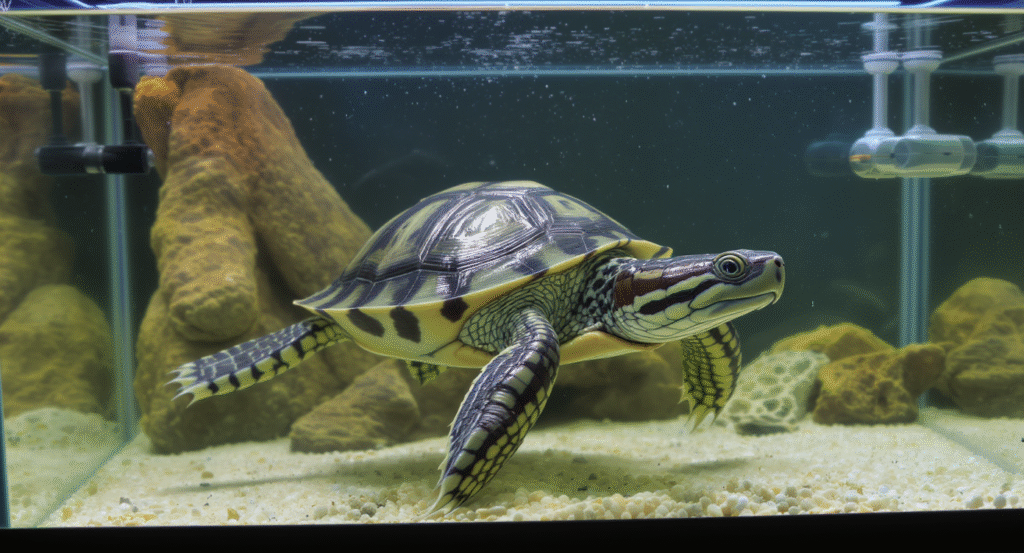
Red-eared sliders are one of the most popular pet turtles in the world, known for their distinctive red markings and active personalities. However, these semi-aquatic turtles require a carefully planned habitat to thrive. A proper red-eared slider setup is essential for your turtle’s health, longevity, and overall well-being. This comprehensive guide will walk you through everything you need to create the perfect environment for your red-eared slider.
Tank Size Requirements
The most common mistake new turtle owners make is underestimating the space their red-eared slider needs. These turtles grow significantly larger than most people expect, with females reaching 10-12 inches and males growing to 8-10 inches in shell length.
Minimum Tank Size Guidelines
- Hatchlings (2-3 inches): 20-30 gallon tank minimum
- Juveniles (4-6 inches): 55-75 gallon tank
- Adults (7+ inches): 75-125+ gallon tank
- Multiple turtles: Add 10 gallons per additional inch of shell length
The general rule is to provide 10 gallons of water per inch of shell length. Since red-eared sliders can live 20-40 years, investing in a larger tank from the start saves money and stress in the long run. Many experienced keepers recommend starting with at least a 75-gallon tank even for younger turtles.
Water Requirements and Filtration
Red-eared sliders are messy eaters and produce significant waste, making water quality one of the most critical aspects of their care.
Worried About Your Reptile's Health?
Upload a photo and get instant AI health analysis. Catch problems before they become expensive vet bills.
Get Free Health Check →Water Depth and Volume
Your turtle needs enough water depth to swim comfortably and turn around completely. The water should be at least 1.5 to 2 times the length of your turtle’s shell. For an adult, this typically means 12-18 inches of water depth. Fill the tank with dechlorinated water, treating tap water with a reptile-safe water conditioner to remove chlorine and chloramines.
Filtration System
Proper filtration is non-negotiable for red-eared slider setups. Turtles produce far more waste than fish, so you need a powerful filter rated for at least 2-3 times your tank’s water volume.
- Canister filters: Best option for large tanks, excellent mechanical and biological filtration
- Hang-on-back filters: Suitable for smaller setups, easier to maintain
- Submersible filters: Can be used as supplementary filtration
Despite having a quality filter, plan to perform 25-50% water changes weekly to maintain optimal water quality. Test water parameters regularly using an aquarium test kit, ensuring ammonia and nitrite levels stay at zero and nitrates remain below 40 ppm.
Basking Area Setup
Red-eared sliders are semi-aquatic, meaning they need both water and a dry basking area. The basking platform is where your turtle will dry off, thermoregulate, and absorb essential UVB rays.
Never Miss Early Warning Signs
AI photo analysis catches subtle health issues humans miss 80% of the time. Early detection = healthier reptile + lower vet bills.
Start Free Trial →Basking Platform Requirements
- Size: Large enough for your turtle to completely dry off, ideally 3-4 times the turtle’s shell length
- Access: Easy ramp or gradual slope for your turtle to climb out
- Texture: Non-slip surface to prevent injuries
- Stability: Securely anchored to prevent tipping
Commercial basking docks work well, or you can create a custom platform using slate, smooth rocks, or cork bark. Position the basking area so it’s easily accessible but allows maximum swimming space in the tank.
Lighting and Temperature
Proper lighting is crucial for your red-eared slider’s health. These turtles need both heat and UVB radiation to process calcium, maintain shell health, and regulate their metabolism.
Heat Lamp
The basking area should reach 85-90°F (29-32°C) for juveniles and 90-95°F (32-35°C) for adults. Use a basking bulb or heat lamp positioned 12-18 inches above the basking platform. Monitor temperatures with a reliable thermometer and adjust the lamp height or wattage as needed.
UVB Lighting
UVB light is essential for vitamin D3 synthesis, which allows turtles to metabolize calcium. Without adequate UVB, red-eared sliders develop metabolic bone disease, shell deformities, and other serious health issues.
Join thousands of successful reptile owners
Try ReptileCoach Free →- Use a reptile-specific UVB bulb (10.0 or 12% UVB output)
- Replace bulbs every 6-12 months as UVB output degrades
- Position the bulb 10-12 inches from the basking area
- Provide 10-12 hours of UVB exposure daily
Water Temperature
Maintain water temperature between 75-78°F (24-26°C) year-round. Use a submersible aquarium heater rated for your tank size, and always use a heater guard to prevent burns if your turtle comes into contact with it.
Substrate and Decorations
Substrate Options
Many experienced keepers prefer a bare-bottom tank for red-eared sliders, as it’s easier to clean and prevents impaction if your turtle accidentally ingests substrate. If you prefer a more natural look, consider these options:
- Large river rocks: Too large to swallow, easy to clean
- Sand: Natural appearance but requires frequent cleaning
- No substrate: Simplest and most hygienic option
Avoid gravel, as turtles may accidentally ingest small pieces while feeding, leading to intestinal blockages.
Tank Decorations
Keep decorations minimal but functional. Live or artificial plants provide visual interest and hiding spots, though turtles may eat or uproot them. Smooth driftwood, PVC pipes, and rock caves offer enrichment without taking up valuable swimming space. Ensure all decorations are securely positioned and have no sharp edges.
"This app saved my bearded dragon's life. The AI caught early MBD in photos I thought looked completely normal. Worth every penny!"
— Sarah K., ReptileCoach User
Get Your Free 7-Day Trial →Additional Equipment Checklist
Beyond the basics, these items will help you maintain a healthy red-eared slider habitat:
- Water thermometer and basking area thermometer
- Timer for lights (12-hour day/night cycle)
- Water conditioner for dechlorination
- Aquarium test kit for monitoring water parameters
- Algae scraper or magnetic cleaner
- Siphon for water changes
- Backup heater and thermometer
Maintenance Schedule
Consistent maintenance keeps your red-eared slider healthy and your setup functioning properly:
- Daily: Check temperatures, remove uneaten food, observe turtle behavior
- Weekly: 25-50% water change, test water parameters, clean filter intake
- Monthly: Deep clean basking area, inspect equipment, clean glass
- Every 6-12 months: Replace UVB bulbs, replace filter media as needed
Track Your Red-Eared Slider’s Care
Maintaining a proper red-eared slider setup requires consistent attention to feeding schedules, water changes, temperature monitoring, and health observations. Keeping track of all these care tasks can be overwhelming, especially for new turtle owners.
That’s where technology can help. Track your reptile’s care with our free app designed specifically for reptile keepers. Record feeding times, log water changes, set maintenance reminders, and document your turtle’s growth and health—all in one convenient place. Our app helps you stay organized and ensures your red-eared slider receives consistent, quality care throughout its long life.
Worried About Your Reptile's Health?
Upload a photo and get instant AI health analysis. Catch problems before they become expensive vet bills.
Get Free Health Check →With the right setup and dedicated care routine, your red-eared slider will thrive for decades to come. Start building the perfect habitat today, and enjoy the rewarding experience of keeping these fascinating aquatic turtles.
Ready to Give Your Reptile the Best Care?
Stop guessing and start knowing. Get personalized AI-powered care guidance, photo health analysis, and 24/7 expert advice for YOUR specific reptile.
Get Personalized Care Guidance
AI-powered photo analysis and daily care tracking for YOUR reptile
Try Free for 7 Days →