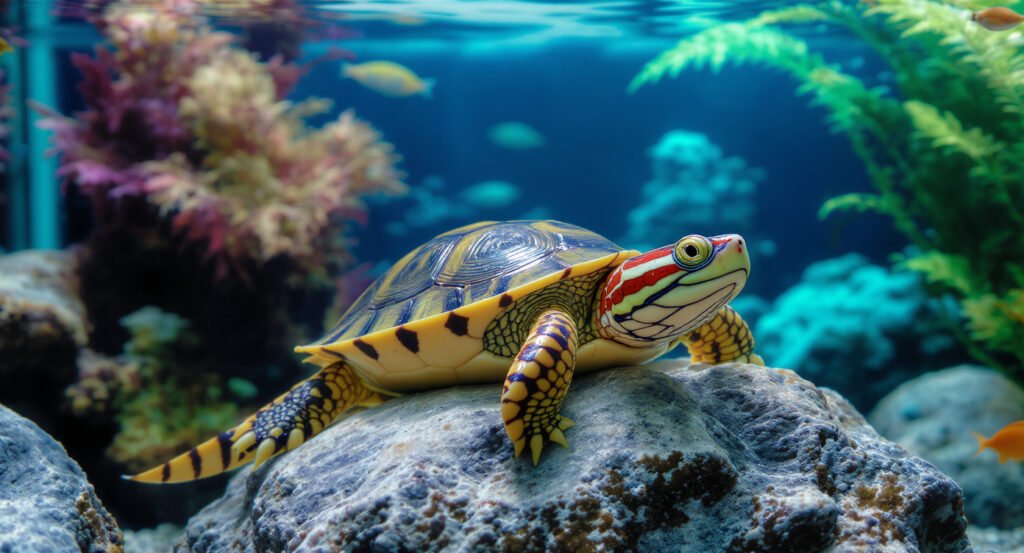
Red-eared slider turtles are among the most popular pet turtles in the world, known for their distinctive red markings and engaging personalities. However, setting up a proper habitat for these semi-aquatic reptiles requires careful planning and the right equipment. This comprehensive guide will walk you through everything you need to create a thriving environment for your red-eared slider.
Understanding Red-Eared Slider Basics
Before diving into the setup process, it’s important to understand what red-eared sliders need to thrive. These turtles are native to the southern United States and require both aquatic and terrestrial environments. They can live 20-40 years with proper care, so setting up their habitat correctly from the start is crucial for their long-term health and happiness.
Red-eared sliders grow larger than many beginners expect. Females can reach 10-12 inches in shell length, while males typically grow to 8-10 inches. This growth rate means you’ll need to plan for a spacious enclosure that can accommodate an adult turtle.
Choosing the Right Tank Size
Tank size is one of the most critical aspects of your red-eared slider setup. A common rule of thumb is to provide 10 gallons of water per inch of shell length. For a hatchling (2-3 inches), you might start with a 40-gallon tank, but you’ll need to upgrade as your turtle grows.
Worried About Your Reptile's Health?
Upload a photo and get instant AI health analysis. Catch problems before they become expensive vet bills.
Get Free Health Check →For an adult red-eared slider, you should aim for a minimum of 75-100 gallons, though larger is always better. A 125-gallon tank or custom-built pond provides optimal space for swimming, which is essential for their physical and mental health. Remember that red-eared sliders are powerful swimmers and need horizontal swimming space more than vertical depth.
Essential Equipment for Your Turtle Tank
Filtration System
Water quality is paramount for red-eared sliders. These turtles are messy eaters and produce significant waste, so you’ll need a robust filtration system. Choose a canister filter rated for at least 2-3 times your tank volume. For a 75-gallon tank, use a filter designed for 150-200 gallons. Popular options include the Fluval FX series or Penn-Plax Cascade canister filters.
Basking Platform
Your turtle needs a dry basking area where it can completely dry off and warm up. The basking platform should be easily accessible, stable, and large enough for your turtle to turn around comfortably. You can use commercial turtle docks, floating platforms, or DIY solutions using slate, driftwood, or PVC pipe constructions. The platform should sit partially in and out of the water.
Heating and Lighting
Red-eared sliders require two types of lighting: UVB and heat. A UVB bulb (10.0 strength) is essential for calcium metabolism and shell health. Position it 10-12 inches above the basking area and replace it every 6-12 months, even if it still produces visible light, as UVB output degrades over time.
Never Miss Early Warning Signs
AI photo analysis catches subtle health issues humans miss 80% of the time. Early detection = healthier reptile + lower vet bills.
Start Free Trial →For heating, use a basking bulb or ceramic heat emitter to create a basking spot temperature of 90-95°F. The water temperature should be maintained at 75-80°F using an aquarium heater. Use separate thermometers to monitor both basking and water temperatures accurately.
Water Heater
An adjustable aquarium heater is necessary to maintain consistent water temperature. Choose a heater with 3-5 watts per gallon of water. For a 75-gallon tank, a 300-watt heater works well. Submersible heaters with protective guards are safest, as turtles may bump or bite at equipment.
Setting Up Your Red-Eared Slider Tank
Now that you have all the equipment, here’s how to set everything up:
- Clean the tank thoroughly with warm water (no soap or chemicals) before adding anything
- Install the filter according to manufacturer instructions, ensuring the intake is protected to prevent turtle injury
- Add dechlorinated water to a depth of at least 1.5 times your turtle’s shell length (minimum 6-8 inches for hatchlings, 12-18 inches for adults)
- Position the water heater near the filter output for even heat distribution, and set it to 75-80°F
- Secure the basking platform so it cannot tip or shift when your turtle climbs on it
- Install the basking and UVB lights above the basking area using a light fixture or dome lamp
- Add decorations sparingly – red-eared sliders need open swimming space, though some hiding spots and live plants like anacharis can be beneficial
- Run the system for 24-48 hours before introducing your turtle to ensure proper temperatures and water chemistry
Substrate Considerations
Many experts recommend keeping the tank bottom bare for easier cleaning and to prevent impaction if your turtle accidentally ingests substrate. If you prefer substrate for aesthetic reasons, use large river rocks (too large to swallow) or sand. Avoid gravel, as turtles may eat small pieces, leading to serious health issues.
Join thousands of successful reptile owners
Try ReptileCoach Free →Water Maintenance and Quality
Even with an excellent filter, you’ll need to perform regular water changes. Change 25-30% of the water weekly, or more frequently if water appears cloudy or smells. Test water parameters regularly using an aquarium test kit, monitoring ammonia, nitrite, nitrate, and pH levels.
Ammonia and nitrite should always read zero, nitrates should stay below 40 ppm, and pH should range between 6.5-8.0. Establish a beneficial bacterial colony by cycling your tank before adding your turtle, or use bacteria starter products to speed up the process.
Common Setup Mistakes to Avoid
Many beginners underestimate the space and equipment requirements for red-eared sliders. Avoid tanks smaller than 40 gallons for hatchlings, and plan for upgrades. Don’t skip the UVB lighting – it’s not optional. Also, resist the urge to over-decorate the tank, as turtles need swimming room more than decorations.
Another common mistake is using tap water without treating it. Always use a water conditioner to remove chlorine and chloramines, which can harm your turtle and beneficial bacteria in your filtration system.
"This app saved my bearded dragon's life. The AI caught early MBD in photos I thought looked completely normal. Worth every penny!"
— Sarah K., ReptileCoach User
Get Your Free 7-Day Trial →Start Tracking Your Turtle Care Today
Setting up the perfect red-eared slider habitat is just the beginning of your turtle care journey. Consistent maintenance, feeding schedules, and health monitoring are essential for keeping your turtle healthy for decades to come. To simplify your turtle care routine and never miss important tasks like water changes, feeding times, or UVB bulb replacements, check out the Reptile Coach app. It helps you track all aspects of your red-eared slider’s care, set reminders, and monitor growth over time. Give your turtle the best care possible with organized tracking and expert guidance at your fingertips.
Ready to Give Your Reptile the Best Care?
Stop guessing and start knowing. Get personalized AI-powered care guidance, photo health analysis, and 24/7 expert advice for YOUR specific reptile.
Get Personalized Care Guidance
AI-powered photo analysis and daily care tracking for YOUR reptile
Try Free for 7 Days →