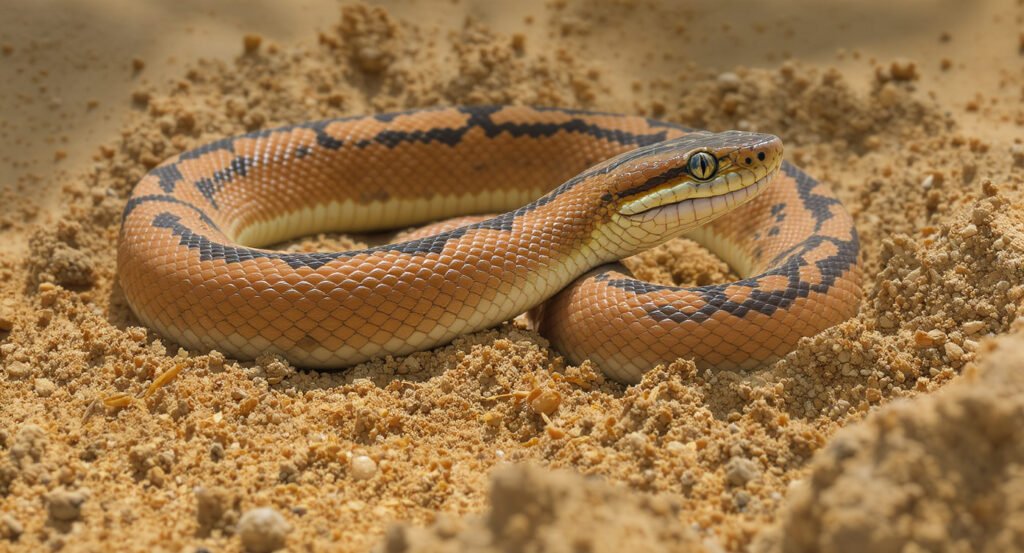
Sand boas are among the most rewarding pet snakes for both beginner and experienced reptile keepers. These small, docile constrictors are known for their gentle temperament, manageable size, and unique burrowing behavior. Whether you’re considering a Kenyan sand boa or another species in the Eryx genus, understanding proper sand boa care is essential for keeping your snake healthy and thriving for its 15-20 year lifespan.
This comprehensive guide covers everything you need to know about sand boa husbandry, from enclosure requirements to feeding schedules and common health concerns.
Understanding Sand Boa Species and Behavior
Sand boas are small, stout-bodied snakes native to arid regions of Africa and Asia. The Kenyan sand boa (Gongylophis colubrinus) is the most popular species in captivity, typically reaching 15-30 inches in length. These snakes are fossorial, meaning they spend most of their time burrowed beneath the substrate with only their head exposed, waiting to ambush prey.
Their calm demeanor and reluctance to bite make sand boas excellent pets for handlers of all experience levels. Unlike many snake species, sand boas rarely show defensive behavior and are comfortable being handled regularly once acclimated to their environment.
Worried About Your Reptile's Health?
Upload a photo and get instant AI health analysis. Catch problems before they become expensive vet bills.
Get Free Health Check →Habitat and Enclosure Setup
Creating the proper habitat is fundamental to sand boa care. A 10-20 gallon terrarium is sufficient for adult sand boas, though larger enclosures provide more enrichment opportunities. The enclosure should be escape-proof with a secure lid, as snakes are notorious escape artists.
Substrate choice is critical for these burrowing snakes. Aspen shavings are the gold standard for sand boa substrate, providing excellent burrowing opportunities while being safe if accidentally ingested. Provide at least 3-4 inches of substrate depth to accommodate natural digging behavior. Avoid sand, which can cause impaction, and cedar or pine, which contain harmful oils.
Include at least two hide boxes—one on the warm side and one on the cool side of the enclosure. A water bowl large enough for soaking should be available at all times, positioned on the cool side to prevent excessive humidity. While sand boas don’t require elaborate decorations, adding rocks or driftwood creates visual interest and additional hiding spots.
Temperature and Lighting Requirements
Proper temperature gradients are essential for sand boa health. The warm side should maintain 85-90°F, while the cool side should stay around 75-80°F. This gradient allows your snake to thermoregulate by moving between zones based on its needs.
Never Miss Early Warning Signs
AI photo analysis catches subtle health issues humans miss 80% of the time. Early detection = healthier reptile + lower vet bills.
Start Free Trial →Use an under-tank heating pad or heat tape on one side of the enclosure, controlled by a thermostat to prevent overheating. Never rely on heat rocks, which can cause severe burns. Monitor temperatures with digital thermometers placed at both ends of the enclosure at substrate level, where your snake spends most of its time.
Unlike many reptiles, sand boas don’t require UVB lighting since they’re primarily nocturnal and spend most time underground. However, a regular day-night cycle with ambient room lighting is beneficial for maintaining natural circadian rhythms. Keep humidity levels between 30-50%, which mimics their natural arid habitat.
Diet and Feeding Schedule
Sand boas are obligate carnivores with straightforward dietary needs. Feed appropriately-sized frozen-thawed rodents, with prey width roughly equal to the widest part of your snake’s body. Hatchlings typically start with pinky mice, while adults eat adult mice or small rats.
Young sand boas should be fed every 5-7 days, while adults can be fed every 10-14 days. Always thaw frozen prey completely and warm it to approximately body temperature before offering. Use feeding tongs to prevent accidental bites and consider feeding in a separate container to avoid substrate ingestion, though many keepers successfully feed in the enclosure.
Join thousands of successful reptile owners
Try ReptileCoach Free →After feeding, avoid handling your sand boa for 48-72 hours to allow proper digestion and prevent regurgitation. Fresh water should always be available, and bowls should be cleaned and refilled at least twice weekly.
Handling and Temperament
Sand boas are renowned for their docile temperament and tolerance of handling. However, new snakes should be given 5-7 days to acclimate before initial handling sessions. Start with brief 5-10 minute sessions and gradually increase duration as your snake becomes comfortable.
Support the snake’s body fully when handling, allowing it to move through your hands. Avoid sudden movements and never grab from above, which mimics predator behavior. Handle your sand boa 2-3 times weekly to maintain tameness, but always skip handling sessions for 48 hours after feeding.
While sand boas rarely bite, they may do so if stressed, startled, or mistaking your hand for food. Their small teeth rarely break skin, and bites are more surprising than painful. If bitten, remain calm and wait for the snake to release rather than pulling away.
"This app saved my bearded dragon's life. The AI caught early MBD in photos I thought looked completely normal. Worth every penny!"
— Sarah K., ReptileCoach User
Get Your Free 7-Day Trial →Common Health Issues and Prevention
With proper sand boa care, these snakes are remarkably hardy. However, several health issues can arise from improper husbandry. Respiratory infections, indicated by wheezing, mucus around the mouth, or labored breathing, typically result from temperatures that are too low or humidity that’s too high. If you notice these symptoms, adjust environmental conditions immediately and consult a reptile veterinarian.
Scale rot appears as discolored or damaged ventral scales and stems from overly moist conditions. Ensure proper substrate moisture levels and clean the enclosure regularly. Parasites, while less common in captive-bred specimens, can cause weight loss and lethargy. Annual fecal examinations by a qualified reptile vet help detect and treat parasitic infections early.
Obesity is surprisingly common in sand boas due to their sedentary nature. Monitor your snake’s body condition and adjust feeding frequency if it becomes overweight. Dehydration, conversely, manifests as wrinkled skin and sunken eyes—ensure clean water is always available.
Conclusion: Your Journey in Sand Boa Care
Sand boas make exceptional pets for reptile enthusiasts seeking a manageable, gentle snake species. By providing appropriate housing, maintaining correct temperatures, offering regular meals, and monitoring health, you’ll enjoy a rewarding relationship with your sand boa for decades to come.
Worried About Your Reptile's Health?
Upload a photo and get instant AI health analysis. Catch problems before they become expensive vet bills.
Get Free Health Check →Remember that successful reptile keeping requires ongoing education and attention to detail. Track your snake’s feeding schedule, shed cycles, and weight to identify potential issues early. For comprehensive care tracking and expert guidance tailored to your specific setup, check out the ReptileCoach App, designed to help reptile keepers provide optimal care for their scaly companions.
With patience, proper husbandry, and a commitment to learning, your sand boa will thrive as a fascinating and low-maintenance addition to your reptile collection.
Ready to Give Your Reptile the Best Care?
Stop guessing and start knowing. Get personalized AI-powered care guidance, photo health analysis, and 24/7 expert advice for YOUR specific reptile.
Get Personalized Care Guidance
AI-powered photo analysis and daily care tracking for YOUR reptile
Try Free for 7 Days →