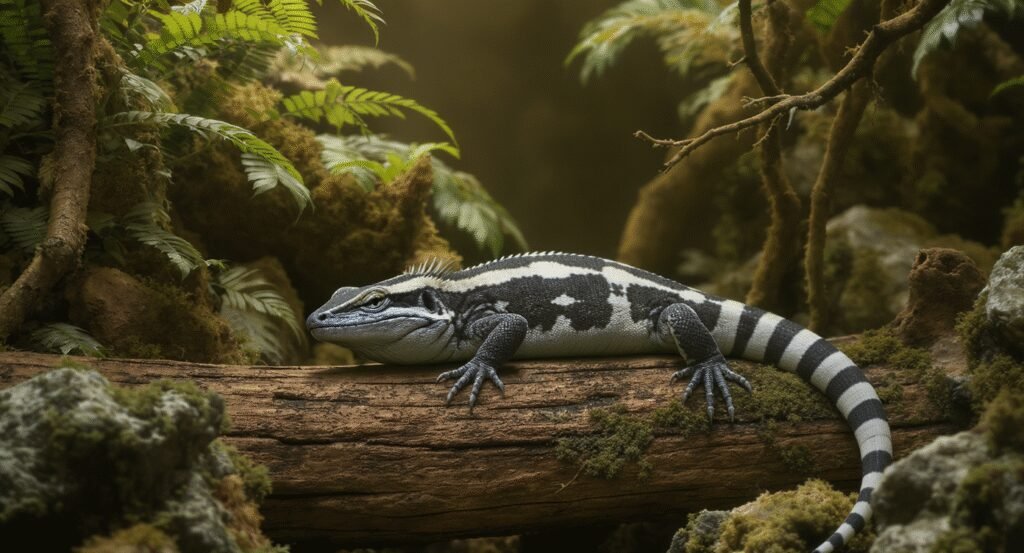
Argentine black and white tegus (Salvator merianae) are among the most intelligent and rewarding reptiles you can keep. These large lizards can reach 4–5 feet in length and live 15–20 years in captivity, making them a serious commitment — but one that pays off with a genuinely interactive companion.
Enclosure Requirements
Adult tegus need spacious enclosures. A minimum of 8×4×4 feet is recommended for a single adult. Many keepers convert large wooden rooms or build custom enclosures. The floor space matters most — tegus love to roam, dig, and explore horizontally.
Substrate should be 6–12 inches deep to allow burrowing. A mix of topsoil, play sand, and coconut coir works well. Tegus are diggers by nature and a deep substrate keeps them mentally stimulated and physically healthy.
Temperature and Lighting
Tegus are heliothermic — they rely on external heat sources. Provide a basking spot of 110–120°F with an ambient cool side of 75–85°F. At night, temperatures can drop to 70°F safely.
Worried About Your Reptile's Health?
Upload a photo and get instant AI health analysis. Catch problems before they become expensive vet bills.
Get Free Health Check →UVB lighting is essential. Use a high-output T5 HO UVB bulb (10.0 or 12%) for 10–12 hours per day. UVB exposure supports D3 synthesis and prevents metabolic bone disease. Replace bulbs every 6–12 months even if they still emit visible light.
Feeding Your Tegu
Tegus are omnivores with hearty appetites. Juveniles eat primarily protein: feeder insects, pinkie mice, and raw ground turkey. Adults eat a varied diet including:
- Lean raw meats (ground turkey, chicken hearts, whole prey)
- Eggs (raw or cooked)
- Fruits: mango, papaya, berries, melon
- Vegetables: squash, leafy greens, sweet potato
- Occasional treats: whole fish, shrimp, canned snails
Feed juveniles daily, sub-adults every other day, and adults 3–4 times per week. Dust food with calcium powder 2–3 times per week and a multivitamin once weekly.
Humidity and Hydration
Maintain humidity at 60–80%. Tegus need humid hides and a moisture-retaining substrate. Provide a large shallow soak dish — tegus often soak themselves and may defecate in water, so change it frequently. Mist the enclosure daily during warm months.
Never Miss Early Warning Signs
AI photo analysis catches subtle health issues humans miss 80% of the time. Early detection = healthier reptile + lower vet bills.
Start Free Trial →Handling and Taming
Tegus are one of the most tameable large lizards. With consistent, calm handling from a young age, most become genuinely affectionate. Start with short 10-minute sessions and gradually extend. Avoid handling during shedding or the first hour after eating.
Adult tegus can recognize their owners and often seek out human contact. Some keepers even allow their tegus to roam supervised in their homes.
Brumation
In the wild, tegus brumate (hibernate) during cooler months. In captivity, most tegus attempt brumation from November through February. Signs include reduced appetite, lethargy, and seeking cool dark areas. Allow natural brumation by gradually reducing photoperiod and temperatures. Provide a cool, dark hide at 55–65°F. Healthy adult tegus can safely brumate for 4–5 months.
Common Health Issues
- Metabolic Bone Disease — caused by insufficient UVB or calcium. Prevent with proper lighting and supplementation.
- Respiratory Infections — usually from inadequate temperatures or humidity extremes. Maintain proper gradients.
- Parasites — wild-caught tegus may carry internal parasites. Have a fecal test done by a reptile vet annually.
- Obesity — common in adults overfed on high-fat foods. Balance protein with fruits and vegetables.
Is a Tegu Right for You?
Tegus demand significant space, time, and financial investment. They’re not starter reptiles — but for experienced keepers ready to commit, they offer a relationship unlike any other lizard. Their intelligence, social nature, and sheer personality make every interaction rewarding.
Join thousands of successful reptile owners
Try ReptileCoach Free →Ready to track your tegu’s feeding schedule, health records, and care routines in one place? Try ReptileCoach free — the all-in-one app for reptile owners who take their pets seriously.
Ready to Give Your Reptile the Best Care?
Stop guessing and start knowing. Get personalized AI-powered care guidance, photo health analysis, and 24/7 expert advice for YOUR specific reptile.
Get Personalized Care Guidance
AI-powered photo analysis and daily care tracking for YOUR reptile
Try Free for 7 Days →