
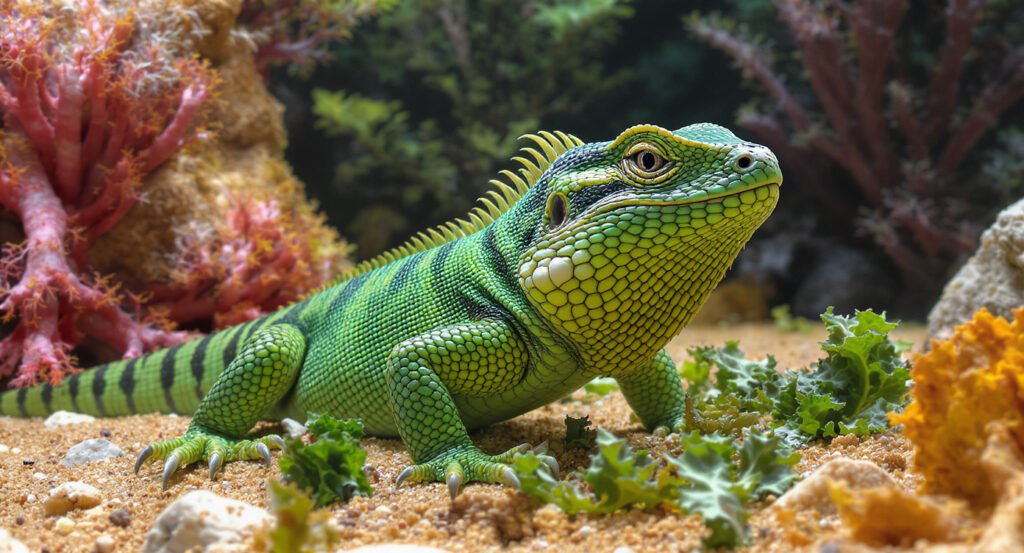
Uromastyx lizards are fascinating, hardy reptiles that make rewarding pets — but getting their diet right is one of the most important things you can do as a new owner. Unlike many other lizards, uromastyx are primarily herbivores, and feeding them the wrong foods can lead to serious health problems. This guide breaks down everything you need to know about what to feed your uromastyx, how often, and what to avoid.
What Do Uromastyx Eat in the Wild?
In their native desert habitats across North Africa and the Middle East, uromastyx survive on a diet of seeds, grasses, leaves, flowers, and occasional insects. Their digestive systems are built to process high-fiber, low-moisture plant matter. This is a key detail — it means your captive uromastyx does not need a water dish and actually does better with low-moisture foods.
The Core of a Captive Uromastyx Diet
A healthy captive diet should closely mirror what they eat in the wild. The bulk of their meals should come from leafy greens, seeds, and dried legumes. Here is a breakdown of the main food categories:
Leafy Greens and Vegetables
Leafy greens should make up the largest portion of your uromastyx’s diet — roughly 60 to 70 percent of their total food intake. Stick to low-oxalate, nutrient-dense options:
Worried About Your Reptile's Health?
Upload a photo and get instant AI health analysis. Catch problems before they become expensive vet bills.
Get Free Health Check →- Collard greens
- Dandelion greens and flowers
- Mustard greens
- Turnip greens
- Endive and escarole
- Spring mix (without spinach)
Avoid feeding spinach, beet greens, or Swiss chard regularly — these are high in oxalates, which can bind calcium and lead to metabolic bone disease over time.
Seeds and Dried Legumes
Seeds and legumes are a natural and important part of the uromastyx diet. They provide protein, healthy fats, and enrichment. Good options include:
- Millet (a favorite for most uromastyx)
- Lentils (dry or slightly moistened)
- Split peas
- Dried chickpeas
- Quinoa (rinsed and dried)
Seeds and legumes should make up around 20 to 30 percent of the diet. Scatter them in the enclosure to encourage natural foraging behavior — this also provides mental stimulation.
Flowers and Herbs
Many uromastyx go crazy for edible flowers and herbs. These make great variety additions and can encourage picky eaters to eat more:
Never Miss Early Warning Signs
AI photo analysis catches subtle health issues humans miss 80% of the time. Early detection = healthier reptile + lower vet bills.
Start Free Trial →- Hibiscus flowers
- Rose petals (pesticide-free)
- Cilantro
- Basil
- Dried chamomile
How Often Should You Feed a Uromastyx?
Juveniles (under 12 months) should be fed daily to support their rapid growth. Adults can be fed every day or every other day — both approaches work well as long as portions are appropriate. A good rule of thumb is to offer an amount of food roughly the size of the lizard’s head. Remove uneaten fresh food after a few hours to prevent spoilage in the warm enclosure.
Do Uromastyx Need Insects?
This is a common question among new owners. Adult uromastyx do not need insects and do best on a fully plant-based diet. However, juvenile uromastyx can benefit from occasional small insects like mealworms or crickets — no more than once or twice a week — to support growth. As they mature, phase insects out and focus on plant-based nutrition.
Supplements: Calcium and Vitamins
Even with a varied diet, supplementation helps fill nutritional gaps. Here is a simple supplementation schedule:
- Calcium without D3 — dust food lightly 3 to 4 times per week
- Multivitamin supplement — once a week
- Calcium with D3 — once every two weeks (especially if UVB lighting is limited)
Do not over-supplement. Too much vitamin A or D3 can be toxic. Light dusting is all that is needed.
Join thousands of successful reptile owners
Try ReptileCoach Free →Water and Hydration
Uromastyx get most of their hydration from the seeds and greens they eat. They do not need a standing water dish in their enclosure — in fact, high humidity can cause respiratory issues and skin problems. If you are concerned about hydration, a very light misting of their food once or twice a week is sufficient. Never mist the enclosure itself.
Foods to Avoid
Some foods are harmful to uromastyx and should never be offered:
- Fruit — too high in sugar and moisture
- Iceberg lettuce — no nutritional value
- Avocado — toxic to reptiles
- Rhubarb — toxic
- Any animal protein for adults — hard on their kidneys long-term
- Commercially prepared reptile pellets as a staple — these often contain too much moisture and filler
Tips for Picky Eaters
Some uromastyx, especially newly acquired ones, can be reluctant to eat. A few things that help:
- Make sure basking temperatures reach 120°F or higher — uromastyx need intense heat to digest food properly
- Offer food in the morning when they are most active
- Mix millet or seeds into greens to make the salad more appealing
- Try different greens to find their favorites
Ready to give your reptile the best care? Try ReptileCoach free — your AI reptile care companion.
"This app saved my bearded dragon's life. The AI caught early MBD in photos I thought looked completely normal. Worth every penny!"
— Sarah K., ReptileCoach User
Get Your Free 7-Day Trial →Final Thoughts
Feeding a uromastyx is straightforward once you understand their natural diet. Focus on leafy greens, seeds, and legumes, keep moisture low, supplement consistently, and avoid the foods on the danger list. Get those basics right and your uromastyx will thrive for years to come.
Ready to Give Your Reptile the Best Care?
Stop guessing and start knowing. Get personalized AI-powered care guidance, photo health analysis, and 24/7 expert advice for YOUR specific reptile.
Get Personalized Care Guidance
AI-powered photo analysis and daily care tracking for YOUR reptile
Try Free for 7 Days →