
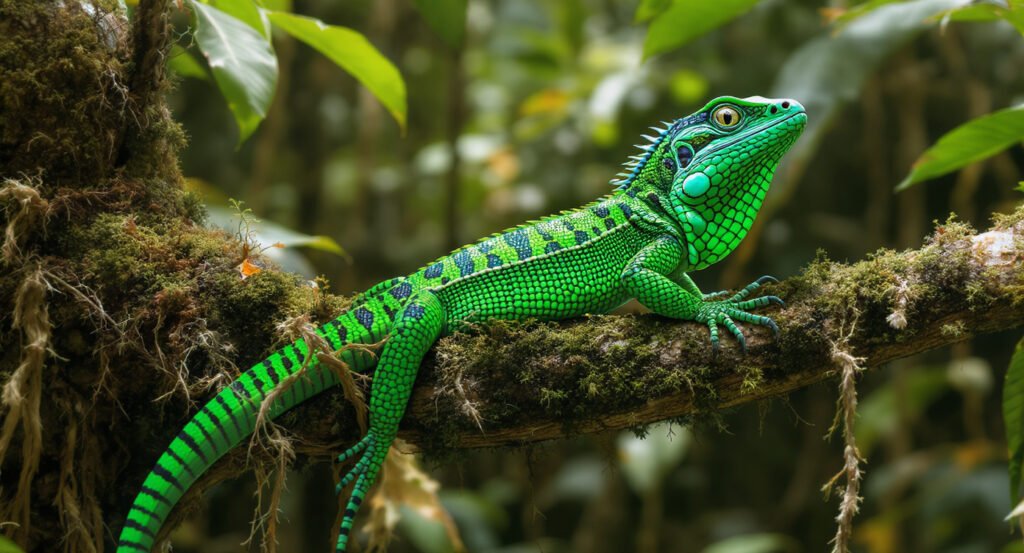
Water dragons are among the most visually stunning lizards you can keep as pets. With their vivid green scales, prehistoric silhouette, and surprisingly personable temperament, Chinese water dragons (Physignathus cocincinus) and Australian water dragons (Intellagama lesueurii) have earned a devoted following in the reptile hobby. But their beauty comes with real care demands. Get the setup right and you’ll have a thriving, interactive lizard for 10 to 15 years.
Choosing the Right Enclosure
Space is non-negotiable with water dragons. Adults reach 24 to 36 inches in total length and are highly active, arboreal lizards that need vertical space to climb and horizontal space to roam. A single adult requires a minimum enclosure of 6 feet tall by 4 feet wide by 3 feet deep. Bigger is always better.
Glass tanks are popular for juveniles but tend to cause a frustrating problem in adults: nose rubbing. Water dragons frequently fail to recognize glass as a barrier and repeatedly rub their snouts against it, leading to painful abrasions and infections. Covering the lower portion of glass panels with an opaque background dramatically reduces this behavior.
Substrate and Décor
A bioactive substrate works exceptionally well for water dragons. A mix of coconut fiber, organic topsoil, and sphagnum moss holds humidity, supports beneficial microfauna, and gives the enclosure a naturalistic look. Avoid substrates like sand or gravel that can cause impaction if accidentally ingested.
Worried About Your Reptile's Health?
Upload a photo and get instant AI health analysis. Catch problems before they become expensive vet bills.
Get Free Health Check →Furnish the enclosure with sturdy horizontal and diagonal branches at multiple heights, live or artificial plants for cover, and a large water feature. Water dragons are semi-aquatic and will soak and defecate in standing water, so a pool or tub large enough for the animal to submerge is essential.
Lighting and Temperature
Getting the thermal gradient and UV index right is where many water dragon setups fall short. These lizards come from subtropical and tropical forests in Southeast Asia and eastern Australia, where they bask in dappled sunlight and retreat to cooler, shaded areas throughout the day.
- Basking spot: 90–95°F (32–35°C)
- Warm side ambient: 80–85°F (27–29°C)
- Cool side ambient: 75–80°F (24–27°C)
- Nighttime low: No lower than 65°F (18°C)
UVB Lighting
Water dragons require strong UVB exposure to synthesize vitamin D3 and metabolize calcium properly. Without adequate UVB, metabolic bone disease (MBD) is almost inevitable. A T5 HO UVB bulb rated at 6% to 12% output, positioned 10 to 14 inches from the basking area, is the current standard recommendation. Replace bulbs every 12 months even if they still appear to emit visible light.
Humidity and Hydration
Water dragons need high ambient humidity between 70% and 80% to stay healthy and shed properly. Low humidity leads to retained shed, dehydration, and respiratory issues. Achieve this through a combination of live plants, a large water feature, and daily misting. Automatic misting systems make this much easier to maintain consistently.
Never Miss Early Warning Signs
AI photo analysis catches subtle health issues humans miss 80% of the time. Early detection = healthier reptile + lower vet bills.
Start Free Trial →Many water dragons will drink directly from misted surfaces rather than a standing water dish, so misting twice daily is both a hydration strategy and a humidity management tool.
Feeding Your Water Dragon
Water dragons are omnivores with a strong preference for animal protein, especially as juveniles. A well-rounded diet keeps them lean, active, and nutritionally complete.
Protein Sources
Crickets, dubia roaches, black soldier fly larvae, and mealworms form the backbone of most water dragon diets. Larger adults can take the occasional pinky mouse, though these should be treats rather than staples due to their high fat content. Gut-load all feeder insects 24 to 48 hours before offering them, and dust prey items with a calcium supplement at most feedings.
Plant Matter
Roughly 20 to 30 percent of an adult water dragon’s diet should come from leafy greens and vegetables. Collard greens, mustard greens, dandelion greens, and squash are all good options. Avoid spinach and kale as staples due to their oxalate and goitrogen content.
Join thousands of successful reptile owners
Try ReptileCoach Free →Juveniles should be fed daily. Adults do well on a feeding schedule of five to six days per week, with one or two fasting days to prevent obesity.
Handling and Temperament
One of the reasons water dragons are so popular is their capacity to become genuinely tame with consistent, patient handling. Wild-caught animals and poorly socialized captive-bred juveniles can be defensive, but most calm down significantly with regular, low-stress interaction.
Start with short sessions of five to ten minutes, supporting the animal’s full body weight and avoiding sudden movements. Never grab a water dragon from above; approach from the side to avoid triggering a predator-response.
Common Health Issues to Watch For
- Metabolic bone disease: Caused by insufficient UVB or calcium. Signs include soft jaw, limb deformities, and lethargy.
- Rostral abrasions: Nose injuries from glass rubbing. Keep wounds clean and address the root cause.
- Respiratory infections: Often linked to low temperatures or excessive humidity without adequate ventilation.
- Parasites: Both internal and external parasites are common, especially in wild-caught animals.
Take Your Reptile Care Further
Water dragon care has a real learning curve, and having expert guidance on hand makes a measurable difference. If you want personalized advice, care plan support, and access to a community of experienced reptile keepers, check out the Reptile Coach app. It’s built specifically for reptile enthusiasts who want to go beyond the basics and give their animals the best possible life.
"This app saved my bearded dragon's life. The AI caught early MBD in photos I thought looked completely normal. Worth every penny!"
— Sarah K., ReptileCoach User
Get Your Free 7-Day Trial →Final Thoughts
Water dragons reward attentive keepers with years of fascinating behavior and a level of interactivity that few lizards can match. The investment in a proper enclosure, quality lighting, and a varied diet pays off in an animal that’s visibly healthy, active, and engaged with its environment.
Ready to Give Your Reptile the Best Care?
Stop guessing and start knowing. Get personalized AI-powered care guidance, photo health analysis, and 24/7 expert advice for YOUR specific reptile.
Get Personalized Care Guidance
AI-powered photo analysis and daily care tracking for YOUR reptile
Try Free for 7 Days →