
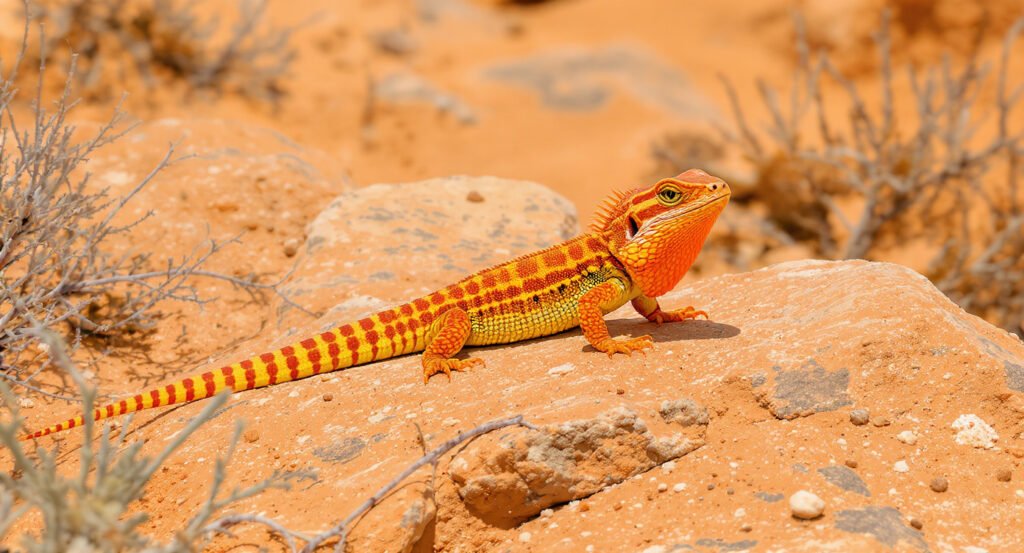
Uromastyx lizards are among the most rewarding reptiles you can keep, but their dietary needs are genuinely different from most other lizards in the hobby. Get the feeding right and you will have a vibrant, active animal with brilliant coloration and a long lifespan. Get it wrong and you will deal with a lethargic, dull-colored lizard that is slowly declining. This guide breaks down exactly what uromastyx eat, what to avoid, and how to build a feeding routine that keeps them thriving.
Understanding the Uromastyx Natural Diet
Uromastyx are native to the arid regions of North Africa, the Middle East, and South Asia. In the wild, they are almost exclusively herbivorous, feeding on seeds, flowers, leaves, and grasses. This is a critical point that separates them from most other commonly kept lizards: uromastyx do not need animal protein as a regular part of their diet, and feeding it to them can actually cause health problems over time.
Their digestive systems are adapted for a high-fiber, plant-based diet. They extract moisture from their food rather than drinking standing water, which means the freshness and water content of their greens matters more than it does for many other reptiles.
Staple Greens: The Foundation of the Diet
Leafy greens should make up the bulk of a uromastyx diet, roughly 50 to 60 percent of total food volume. The best options are calcium-rich and low in oxalates and goitrogens.
Worried About Your Reptile's Health?
Upload a photo and get instant AI health analysis. Catch problems before they become expensive vet bills.
Get Free Health Check →Top Choices
- Collard greens: Excellent calcium-to-phosphorus ratio, widely available, and well-accepted by most uromastyx.
- Dandelion greens: Highly nutritious and often eagerly eaten. Forage from pesticide-free areas or buy from a grocery store.
- Mustard greens: Good nutritional profile and easy to find year-round.
- Turnip greens: High in calcium and a solid rotation option.
- Endive and escarole: Lower in oxalates and a good variety addition.
Greens to Limit or Avoid
Spinach and beet greens are high in oxalates, which bind calcium and can contribute to metabolic bone disease over time. Kale and other brassicas contain goitrogens that can interfere with thyroid function when fed in large quantities. These are not emergency foods, but they should not be staples.
Seeds: An Important Energy Source
Seeds are a natural and important part of the uromastyx diet, providing concentrated energy and nutrients. Offer seeds as a supplement to greens rather than a replacement, making up roughly 10 to 20 percent of the diet.
Good seed options include lentils, millet, split peas, and various grass seeds. Many keepers offer a seed mix in a small dish alongside the greens. Dry lentils and split peas are particularly popular and easy to source. Avoid seeds that are salted, flavored, or treated in any way.
Vegetables and Other Plant Matter
Beyond leafy greens, a variety of vegetables rounds out the diet and provides different micronutrients. Butternut squash, acorn squash, and other winter squashes are excellent choices. Bell peppers add variety and are well-accepted. Shredded carrots can be offered occasionally. Edible flowers like hibiscus, rose petals, and dandelion flowers are often eagerly consumed and add enrichment to feeding time.
Never Miss Early Warning Signs
AI photo analysis catches subtle health issues humans miss 80% of the time. Early detection = healthier reptile + lower vet bills.
Start Free Trial →What Uromastyx Should Not Eat
Animal protein is the most important thing to keep out of a uromastyx diet. Insects, pinky mice, and other animal-based foods can cause kidney damage and gout over time. Unlike bearded dragons or blue-tongued skinks, uromastyx are not set up to process animal protein regularly.
Fruit should be offered very sparingly if at all. The high sugar content is not appropriate for a desert herbivore and can disrupt gut flora. Iceberg lettuce and other watery, low-nutrient greens should be avoided as they fill the animal up without providing meaningful nutrition.
Hydration: A Unique Consideration
Uromastyx are adapted to arid environments and extract most of their moisture from food. Many keepers do not provide a standing water dish at all, and uromastyx often ignore water even when it is offered. Fresh, moist greens are the primary hydration source. If you notice signs of dehydration such as wrinkled skin or sunken eyes, a brief soak in shallow warm water can help, but this should be an occasional intervention rather than a routine.
Feeding Schedule and Portion Size
Juveniles under 12 months should be fed daily. Adults can be fed five to six days per week with one or two fasting days. Offer an amount of food that the animal can consume within a few hours, then remove uneaten fresh food to prevent spoilage and maintain enclosure hygiene.
Join thousands of successful reptile owners
Try ReptileCoach Free →Supplementation: Calcium and Vitamins
Even with a varied diet, supplementation is important for captive uromastyx. Dust food with a calcium supplement two to three times per week. A multivitamin supplement can be offered once a week to cover any nutritional gaps. Avoid over-supplementing with vitamin A, as this can cause toxicity. Choose supplements that use beta-carotene as the vitamin A source instead.
Take Your Uromastyx Care to the Next Level
Dialing in your uromastyx’s diet is one piece of a larger puzzle. Proper husbandry including enclosure temperatures, UVB lighting, and substrate all work together to keep your lizard thriving. If you want personalized guidance, detailed care plans, and expert support for your specific setup, check out the Reptile Coach app. It connects you with experienced reptile coaches who can help you build a feeding routine and care plan tailored to your uromastyx.
Final Thoughts
Feeding a uromastyx well is not complicated once you understand their natural diet. Focus on a rotating mix of calcium-rich leafy greens, seeds, and varied vegetables, keep animal protein out of the equation, and supplement appropriately. A well-fed uromastyx is an active, alert, and colorful lizard, and watching them thrive on a diet you have carefully put together is one of the most satisfying parts of keeping these incredible animals.
Ready to Give Your Reptile the Best Care?
Stop guessing and start knowing. Get personalized AI-powered care guidance, photo health analysis, and 24/7 expert advice for YOUR specific reptile.
Get Personalized Care Guidance
AI-powered photo analysis and daily care tracking for YOUR reptile
Try Free for 7 Days →