
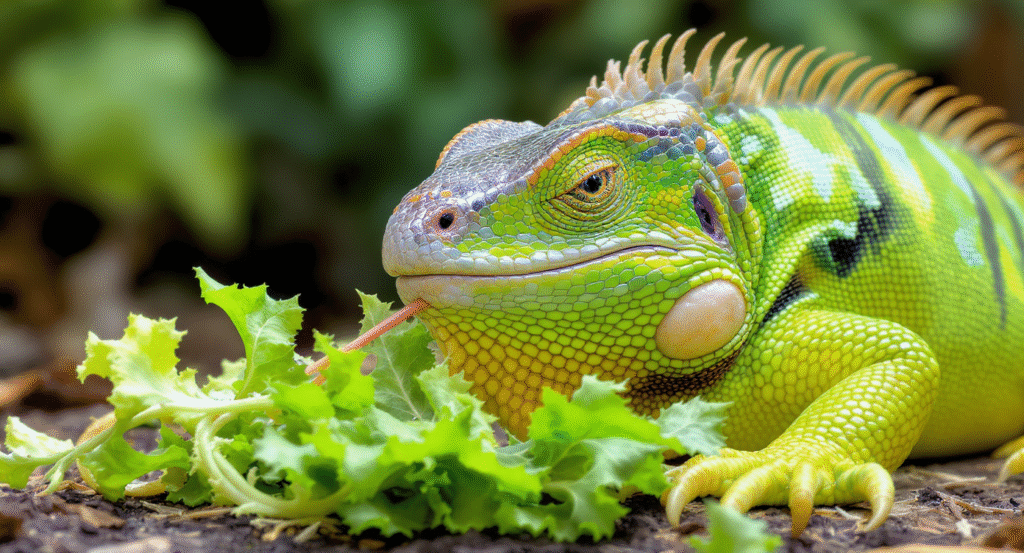
Understanding Your Green Iguana’s Dietary Needs
Green iguanas are strict herbivores that require a carefully balanced diet to thrive in captivity. Unlike many other reptiles, these magnificent creatures need a plant-based nutrition plan that mimics what they would consume in their natural Central and South American habitats. Proper nutrition is the foundation of iguana health, affecting everything from bone development to immune function and longevity.
Many new iguana owners make critical dietary mistakes that can lead to metabolic bone disease, kidney failure, and other serious health issues. This comprehensive guide will help you understand exactly what to feed your green iguana, how much, and how often to ensure they live a long, healthy life.
The Foundation of a Healthy Green Iguana Diet
A proper green iguana diet consists primarily of dark leafy greens, vegetables, and a small amount of fruit. The ideal calcium to phosphorus ratio should be approximately 2:1, which is crucial for preventing metabolic bone disease—one of the most common health problems in captive iguanas.
Best Staple Foods for Daily Feeding
These nutrient-rich foods should make up 80-90% of your iguana’s daily diet:
Worried About Your Reptile's Health?
Upload a photo and get instant AI health analysis. Catch problems before they become expensive vet bills.
Get Free Health Check →- Collard greens – Excellent calcium source with ideal Ca:P ratio
- Mustard greens – High in vitamins A and C, great calcium content
- Turnip greens – Nutrient-dense with excellent mineral profile
- Dandelion greens – Wild or organic, packed with calcium and vitamins
- Escarole – Good fiber content and nutritional balance
- Butternut squash – Rich in vitamin A and fiber
- Acorn squash – Excellent nutritional profile for regular feeding
- Green beans – Good source of fiber and minerals
Supplementary Vegetables (10-15% of Diet)
Rotate these vegetables to add variety and additional nutrients:
- Bell peppers (red, yellow, orange for higher vitamin content)
- Carrots (shredded, in moderation due to vitamin A content)
- Snap peas
- Okra
- Cactus pads (nopales)
- Parsnips
- Zucchini
Fruits: The Occasional Treat (5-10% Maximum)
While iguanas love fruit, it should be offered sparingly due to high sugar content and poor calcium ratios:
- Papaya
- Mango
- Strawberries
- Blueberries
- Figs
- Raspberries
Foods to Avoid: Dangerous Items for Green Iguanas
Certain foods can be toxic or nutritionally harmful to your iguana. Never feed the following:
- Animal protein – No insects, meat, eggs, or dairy products
- Spinach and chard – Contain oxalates that bind calcium
- Lettuce (iceberg) – Nutritionally void, can cause diarrhea
- Rhubarb – Contains toxic oxalic acid
- Avocado – Toxic to many reptiles
- Onions and garlic – Can cause digestive issues
- High-protein vegetables – Broccoli, cauliflower, and cabbage in excess
- Processed human foods – Bread, pasta, cooked foods
Practical Feeding Guidelines and Schedule
Portion Sizes and Frequency
Young iguanas (under 2 years) should be fed once daily, while adults can be fed every other day or daily with smaller portions. A good rule of thumb is to offer a salad bowl approximately the size of your iguana’s body (excluding tail).
Never Miss Early Warning Signs
AI photo analysis catches subtle health issues humans miss 80% of the time. Early detection = healthier reptile + lower vet bills.
Start Free Trial →Meal Preparation Tips
- Chop appropriately – Cut food into bite-sized pieces smaller than the space between your iguana’s eyes
- Mix thoroughly – Combine all ingredients so your iguana can’t pick out only favorite items
- Serve at room temperature – Never feed cold food directly from the refrigerator
- Remove uneaten food – Discard leftovers after 2-3 hours to prevent bacterial growth
- Provide fresh water daily – Change water bowl daily and mist vegetables for hydration
Supplementation Requirements
Even with a perfect diet, captive iguanas need calcium supplementation:
- Calcium powder – Dust food with calcium (without D3) 5-6 times weekly for juveniles, 2-3 times weekly for adults
- Calcium with D3 – Use once weekly if your iguana doesn’t receive adequate UVB exposure
- Multivitamin – Provide once weekly, but avoid over-supplementation
Age-Specific Dietary Considerations
Hatchlings and Juveniles (0-2 Years)
Young iguanas need more frequent feeding and higher protein content from plant sources. Focus on nutrient-dense greens and ensure calcium supplementation is consistent to support rapid growth and bone development.
Adults (2+ Years)
Adult iguanas require less frequent feeding but need continued attention to calcium ratios. Monitor body condition and adjust portions to prevent obesity, which is common in captive adults.
Breeding Females
Gravid females have increased nutritional demands, particularly for calcium. Increase feeding frequency and calcium supplementation during breeding season and egg production.
Join thousands of successful reptile owners
Try ReptileCoach Free →Common Dietary Mistakes to Avoid
Many well-intentioned iguana owners make these critical errors:
- Feeding too much fruit, leading to obesity and nutritional imbalances
- Offering animal protein, which can cause kidney damage
- Inconsistent calcium supplementation, resulting in metabolic bone disease
- Not providing enough variety, causing nutritional deficiencies
- Using improper calcium to phosphorus ratios in food selection
Take Control of Your Iguana’s Nutrition
Maintaining a proper diet for your green iguana requires planning, consistency, and attention to detail. The difference between a thriving iguana and one with chronic health problems often comes down to daily nutritional choices.
Ready to simplify your iguana’s meal planning and ensure they’re getting optimal nutrition every day? Track your iguana diet with our free app and get personalized feeding schedules, nutritional analysis, and reminders to keep your green iguana healthy for years to come.
Ready to Give Your Reptile the Best Care?
Stop guessing and start knowing. Get personalized AI-powered care guidance, photo health analysis, and 24/7 expert advice for YOUR specific reptile.
Get Personalized Care Guidance
AI-powered photo analysis and daily care tracking for YOUR reptile
Try Free for 7 Days →