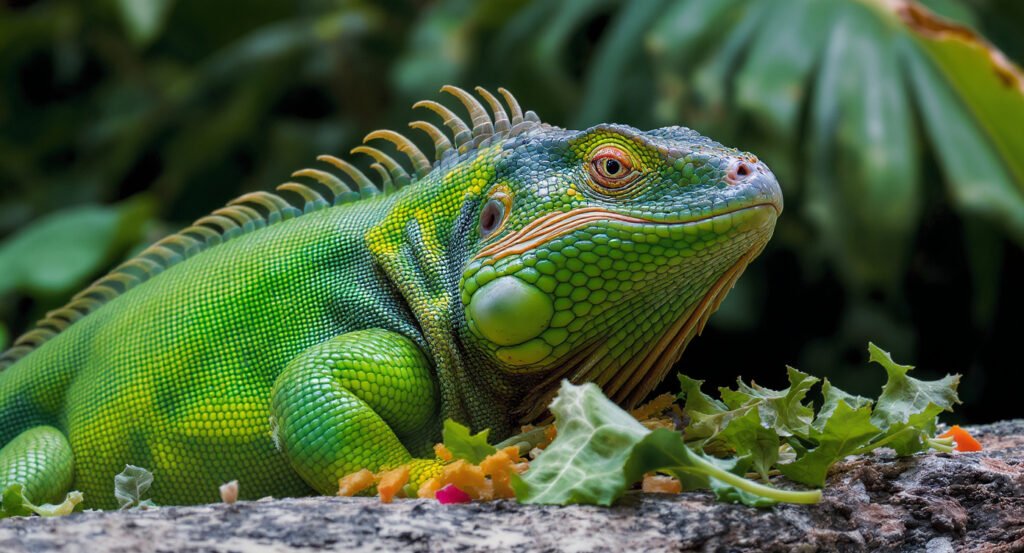
Feeding a green iguana correctly is one of the most important things you can do as a reptile owner. Despite being popular pets, iguanas are frequently misfed — and the consequences range from metabolic bone disease to organ failure. The good news is that once you understand what iguanas actually need, feeding them becomes straightforward and even enjoyable.
This guide covers everything you need to know about the green iguana diet: the best leafy greens, safe fruits and vegetables, foods to avoid, and how to build a balanced feeding routine your iguana will thrive on.
Understanding the Green Iguana’s Natural Diet
In the wild, green iguanas (Iguana iguana) are strict herbivores. They live in tropical rainforests across Central and South America, where they feed on leaves, flowers, and fruit. Their digestive systems are specifically designed to process plant matter — not insects, meat, or animal protein.
This is a common misconception among new iguana owners: iguanas do not need protein from animal sources. In fact, feeding them insects, dog food, or other protein-rich animal products puts serious strain on their kidneys and can lead to gout and renal failure over time.
Worried About Your Reptile's Health?
Upload a photo and get instant AI health analysis. Catch problems before they become expensive vet bills.
Get Free Health Check →The Foundation: Dark Leafy Greens
Dark, leafy greens should make up roughly 70 to 80 percent of your iguana’s diet. These provide calcium, vitamins, and fiber that mirror what iguanas consume in the wild. The best options include:
- Collard greens — high in calcium and widely available
- Mustard greens — a nutritional powerhouse with good calcium-to-phosphorus ratio
- Turnip greens — excellent calcium source and easy to find
- Dandelion greens — rich in vitamins A and C; iguanas tend to love them
- Endive and escarole — lower in oxalates, making them safe for regular feeding
- Arugula — a flavorful option that adds variety
These greens should be offered fresh, washed, and chopped into manageable pieces. Rotating between different greens throughout the week ensures your iguana gets a broad spectrum of nutrients rather than relying too heavily on any single plant.
Vegetables to Include Regularly
Beyond leafy greens, a range of vegetables can round out your iguana’s diet. Aim for these to make up around 15 to 20 percent of total food intake:
- Butternut squash — rich in beta-carotene and vitamin A
- Acorn squash — similar benefits, slightly different flavor profile
- Bell peppers — high in vitamin C, especially red and yellow varieties
- Green beans — a good source of fiber and easy to prepare
- Snap peas — iguanas often enjoy the crunch
- Carrots — use sparingly due to higher sugar content, but a good source of vitamin A
Lightly steaming vegetables like squash can make them easier for younger or smaller iguanas to eat, but raw is generally fine for adults.
Never Miss Early Warning Signs
AI photo analysis catches subtle health issues humans miss 80% of the time. Early detection = healthier reptile + lower vet bills.
Start Free Trial →Fruits: Use as Occasional Treats
Fruits are naturally high in sugar, so they should be limited to around 5 to 10 percent of the diet and offered as an occasional treat rather than a staple. Safe fruit options include:
- Mango
- Papaya
- Figs
- Strawberries
- Blueberries
- Melon (without seeds)
Fruits are useful for encouraging picky eaters or adding variety, but too much fruit can cause loose stools and displace more nutritious greens from the diet. A small piece offered a few times a week is plenty.
Foods to Avoid
Just as important as knowing what to feed your iguana is knowing what to keep away from them. Some foods are outright toxic; others are simply harmful over time.
Never Feed These Foods
- Animal protein — including insects, crickets, pinkie mice, eggs, and meat. This damages kidneys.
- Spinach and beet greens — high in oxalates that bind calcium and prevent absorption
- Iceberg lettuce — almost zero nutritional value and can cause diarrhea
- Avocado — toxic to iguanas and many other reptiles
- Rhubarb — contains oxalic acid at levels that are dangerous
- Onions and garlic — can cause blood disorders
- Dog or cat food — far too high in protein and often contains ingredients iguanas cannot safely process
Feed With Caution
- Kale, broccoli, and cabbage — these goitrogenic vegetables can interfere with thyroid function if fed in large quantities; rotate them in occasionally rather than making them a daily staple
- Fruit in general — beneficial in moderation, problematic in excess
Calcium Supplementation and UVB Lighting
Diet alone is not enough. Green iguanas require UVB lighting to synthesize vitamin D3, which is essential for calcium absorption. Without adequate UVB exposure, even a calcium-rich diet can lead to metabolic bone disease — one of the most common and preventable health problems in captive iguanas.
Join thousands of successful reptile owners
Try ReptileCoach Free →Dust your iguana’s food with a calcium supplement (without D3 if they have proper UVB, with D3 if UVB is limited) about four to five times per week. A multivitamin supplement can be added once or twice a week to cover any nutritional gaps.
How Often Should You Feed a Green Iguana?
Juvenile iguanas (under 18 months) should be fed daily, since they are growing rapidly and have higher energy demands. Adult iguanas can be fed once a day or every other day. Always offer fresh food and remove uneaten portions within a few hours to prevent spoilage.
Fresh water should be available at all times. Many iguanas prefer to drink from a shallow dish, and some will drink during or after a warm mist or bath. Keeping them well-hydrated supports kidney function and helps with shedding.
Building a Feeding Routine That Works
Consistency matters. Iguanas do well with a regular feeding schedule — same time each day, same general location in the enclosure. Offering a colorful variety of greens and vegetables not only improves nutrition but also provides enrichment and keeps your iguana interested in mealtimes.
"This app saved my bearded dragon's life. The AI caught early MBD in photos I thought looked completely normal. Worth every penny!"
— Sarah K., ReptileCoach User
Get Your Free 7-Day Trial →A simple weekly rotation might look like: collard greens and butternut squash on Monday, mustard greens and bell pepper on Tuesday, dandelion greens with a small piece of mango on Wednesday, and so on. Mixing two or three greens together at each meal makes it easier to ensure variety without overthinking it.
Get Personalized Guidance for Your Iguana
Every iguana is a little different, and getting the diet exactly right — especially for juveniles, rescue animals, or iguanas with existing health issues — can take some expert guidance. Whether you have questions about supplementation schedules, weight management, or transitioning a picky eater to a healthier diet, having a knowledgeable resource makes a real difference.
The ReptileCoach app gives you direct access to reptile care experts who can help you build a feeding plan tailored to your iguana’s age, size, and health status. Stop guessing and start getting answers that actually apply to your animal.
Try the ReptileCoach app today and get personalized diet advice for your green iguana.
Worried About Your Reptile's Health?
Upload a photo and get instant AI health analysis. Catch problems before they become expensive vet bills.
Get Free Health Check →Ready to Give Your Reptile the Best Care?
Stop guessing and start knowing. Get personalized AI-powered care guidance, photo health analysis, and 24/7 expert advice for YOUR specific reptile.
Get Personalized Care Guidance
AI-powered photo analysis and daily care tracking for YOUR reptile
Try Free for 7 Days →