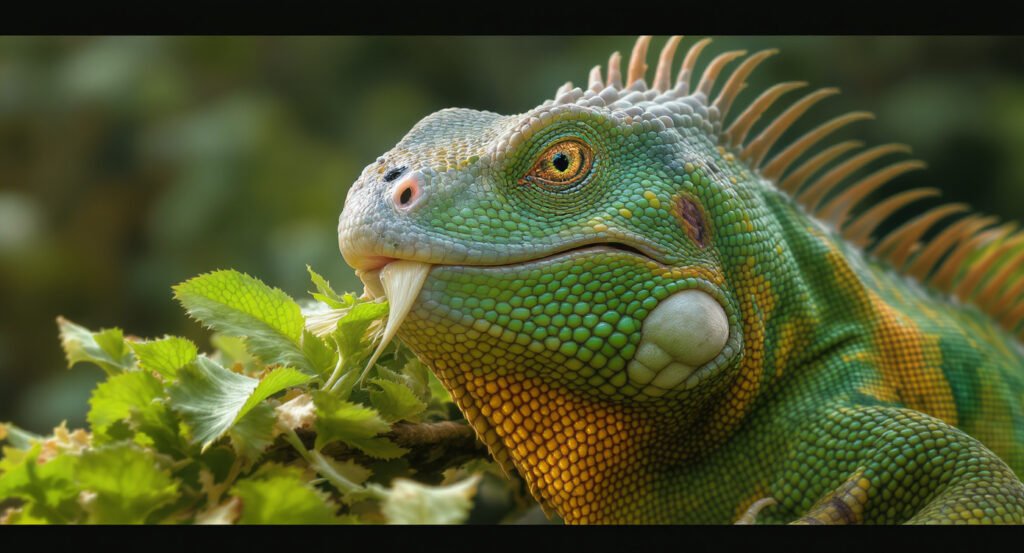
Green iguanas are strictly herbivorous reptiles that require a carefully balanced diet to thrive in captivity. Understanding their nutritional needs is essential for preventing common health problems like metabolic bone disease, kidney failure, and obesity. This comprehensive guide covers everything you need to know about feeding your green iguana properly.
What Do Green Iguanas Eat in the Wild?
In their natural habitat throughout Central and South America, green iguanas consume a diverse array of plant materials. Their diet consists primarily of leaves, flowers, and fruits from various tropical plants. Young iguanas occasionally consume insects, but adult green iguanas are obligate herbivores that derive all their nutrition from plant matter.
Wild iguanas have evolved to extract nutrients from fibrous vegetation high in calcium and low in protein. Their digestive systems are specifically adapted for fermenting plant cellulose, making them fundamentally different from omnivorous or carnivorous reptiles.
Essential Components of a Captive Green Iguana Diet
Leafy Greens: The Foundation (80-90% of Diet)
The bulk of your iguana’s diet should consist of dark, leafy greens that are high in calcium and low in phosphorus. The ideal calcium to phosphorus ratio is 2:1 or higher. Excellent daily staple greens include:
Worried About Your Reptile's Health?
Upload a photo and get instant AI health analysis. Catch problems before they become expensive vet bills.
Get Free Health Check →- Collard greens
- Mustard greens
- Turnip greens
- Dandelion greens
- Escarole
- Endive
- Arugula
- Watercress
- Bok choy
These calcium-rich greens should form the foundation of every meal. Rotate between several varieties to provide nutritional diversity and prevent boredom.
Vegetables and Flowers (10-15% of Diet)
Supplement the leafy green base with colorful vegetables and edible flowers for added nutrients and variety:
- Squash (butternut, acorn, yellow)
- Bell peppers (red, yellow, orange)
- Green beans
- Snap peas
- Okra
- Hibiscus flowers
- Rose petals
- Nasturtiums
These additions provide vitamins A and C while making meals more visually appealing and stimulating for your iguana.
Fruits (5-10% of Diet)
Fruits should be offered sparingly as occasional treats due to their high sugar content. Safe options include:
Never Miss Early Warning Signs
AI photo analysis catches subtle health issues humans miss 80% of the time. Early detection = healthier reptile + lower vet bills.
Start Free Trial →- Figs
- Papaya
- Mango
- Berries (strawberries, blueberries)
- Melon
Limit fruit to once or twice per week to prevent digestive upset and obesity.
How Often Should You Feed Your Green Iguana?
Feeding frequency depends on your iguana’s age and size:
Hatchlings and juveniles (0-18 months): Feed daily, offering as much as they will consume in 15-20 minutes. Young iguanas are growing rapidly and require consistent nutrition.
Subadults (18 months – 3 years): Feed daily with slightly smaller portions as growth rate slows.
Join thousands of successful reptile owners
Try ReptileCoach Free →Adults (3+ years): Feed daily or every other day depending on body condition and activity level. Adults have slower metabolisms and are prone to obesity if overfed.
Always feed iguanas in the morning after they’ve had time to bask and raise their body temperature. Proper temperature is essential for digestion.
Foods to Avoid: Dangerous and Inappropriate Items
Certain foods are toxic, nutritionally inappropriate, or harmful to green iguanas:
- Animal protein: No insects, meat, eggs, or dairy products. Excess protein damages iguana kidneys.
- Spinach: Contains oxalates that bind calcium and prevent absorption.
- Iceberg lettuce: Nutritionally empty and can cause diarrhea.
- Avocado: Toxic to many reptiles.
- Rhubarb: Contains toxic oxalic acid.
- Onions and garlic: Can cause anemia and digestive problems.
- High-oxalate greens: Beet greens, Swiss chard, and parsley in large amounts.
- Cruciferous vegetables in excess: Cabbage, broccoli, and Brussels sprouts contain goitrogens that interfere with thyroid function when fed too frequently.
Supplementation: Calcium and Vitamins
Even with a perfect diet, captive iguanas require supplementation to prevent deficiencies:
"This app saved my bearded dragon's life. The AI caught early MBD in photos I thought looked completely normal. Worth every penny!"
— Sarah K., ReptileCoach User
Get Your Free 7-Day Trial →Calcium Powder
Dust food with calcium powder (without phosphorus or vitamin D3) 5-7 times per week for juveniles and 3-5 times per week for adults. This prevents metabolic bone disease, a common and serious condition in captive iguanas.
Multivitamin Supplement
Provide a reptile multivitamin once or twice weekly. Look for products specifically formulated for herbivorous reptiles with appropriate vitamin A levels.
UVB Lighting
While not a dietary supplement, proper UVB lighting is essential for vitamin D3 synthesis, which enables calcium absorption. Use a high-quality UVB bulb designed for desert species and replace it every 6-12 months.
Preparing and Serving Iguana Food
Proper food preparation maximizes nutrition and safety:
Worried About Your Reptile's Health?
Upload a photo and get instant AI health analysis. Catch problems before they become expensive vet bills.
Get Free Health Check →- Wash all produce thoroughly to remove pesticides
- Chop food into bite-sized pieces appropriate for your iguana’s size
- Mix ingredients together to prevent selective feeding
- Serve food at room temperature, never cold from the refrigerator
- Remove uneaten food after a few hours to prevent bacterial growth
- Provide fresh, clean water daily in a large bowl
Monitoring Your Iguana’s Health and Adjusting Diet
Regular monitoring helps you identify dietary problems early:
- Maintain steady, gradual growth in juveniles
- Watch for signs of metabolic bone disease: soft jaw, swollen limbs, lethargy
- Monitor stool consistency and frequency
- Check body condition – ribs should be barely visible but not prominent
- Schedule annual veterinary checkups with a reptile specialist
Take Your Iguana Care to the Next Level
Managing your green iguana’s diet requires attention to detail and consistent tracking. If you want expert guidance, feeding schedules, and personalized care recommendations, check out the ReptileCoach app for comprehensive tools designed specifically for reptile owners. Our platform helps you create optimized feeding plans, track your iguana’s health metrics, and connect with experienced herpetologists.
Conclusion
A proper diet is the cornerstone of green iguana health. By focusing on calcium-rich leafy greens, avoiding animal protein, supplementing appropriately, and maintaining proper feeding schedules, you’ll give your iguana the best chance at a long, healthy life. Remember that every iguana is an individual – observe your pet’s response to different foods and adjust accordingly while maintaining the core principles of herbivorous nutrition. With dedication and proper care, your green iguana can thrive for 15-20 years or more.
Ready to Give Your Reptile the Best Care?
Stop guessing and start knowing. Get personalized AI-powered care guidance, photo health analysis, and 24/7 expert advice for YOUR specific reptile.
Get Personalized Care Guidance
AI-powered photo analysis and daily care tracking for YOUR reptile
Try Free for 7 Days →