
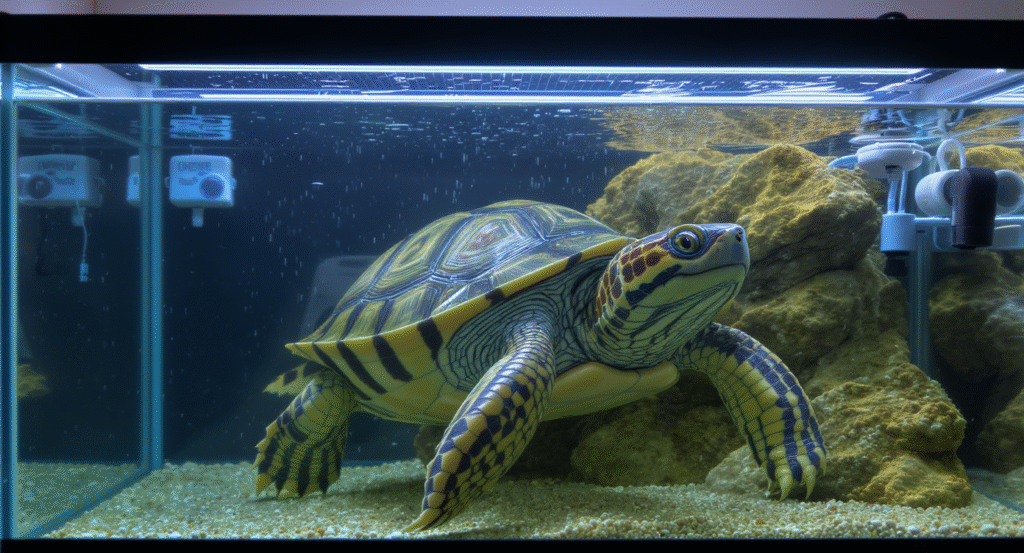
Red-eared sliders are among the most popular pet turtles in the world, known for their distinctive red markings and engaging personalities. However, these semi-aquatic reptiles require a proper setup to thrive in captivity. This comprehensive guide will walk you through everything you need to create an ideal habitat for your red-eared slider.
Understanding Red-Eared Slider Habitat Requirements
Red-eared sliders are native to the southern United States and northern Mexico, where they inhabit ponds, lakes, and slow-moving rivers. In captivity, replicating their natural environment is essential for their health and longevity. A proper setup includes adequate swimming space, a basking area, appropriate lighting, filtration, and temperature control.
Tank Size: How Much Space Does Your Turtle Need?
One of the most common mistakes new turtle owners make is underestimating the space requirements. Red-eared sliders grow significantly larger than the hatchlings sold in pet stores.
Minimum Tank Sizes
- Hatchlings (2-3 inches): 20-30 gallon tank minimum
- Juveniles (4-6 inches): 55-75 gallon tank
- Adults (8-12 inches): 75-125+ gallon tank
A good rule of thumb is to provide 10 gallons of water per inch of shell length. Since adult red-eared sliders can reach 8-12 inches, larger is always better. Consider investing in a 75-gallon or larger tank from the start to avoid costly upgrades as your turtle grows.
Worried About Your Reptile's Health?
Upload a photo and get instant AI health analysis. Catch problems before they become expensive vet bills.
Get Free Health Check →Water Depth and Quality
Red-eared sliders are strong swimmers and need sufficient water depth to exhibit natural behaviors. The water should be at least 1.5 to 2 times the length of your turtle’s shell deep. For an adult turtle, this means 12-16 inches of water depth.
Filtration System
Turtles are messy eaters and produce significant waste, making powerful filtration essential. Choose a canister filter or turtle-specific filter rated for at least twice your tank’s volume. For a 75-gallon tank, use a filter designed for 150 gallons. This helps maintain water quality between weekly partial water changes.
Perform 25-30% water changes weekly, even with a good filter. Test water parameters regularly using an aquarium test kit to ensure ammonia and nitrite levels remain at zero, with nitrates below 40 ppm.
The Basking Area: Essential for Health
Red-eared sliders are cold-blooded and must leave the water to regulate their body temperature and dry their shells completely. The basking area should be easily accessible and large enough for your turtle to comfortably turn around.
Never Miss Early Warning Signs
AI photo analysis catches subtle health issues humans miss 80% of the time. Early detection = healthier reptile + lower vet bills.
Start Free Trial →Basking Platform Options
- Commercial turtle docks that attach to tank sides
- DIY platforms made from egg crate lighting diffuser or slate
- Above-tank basking areas (ideal for larger setups)
- Floating cork bark or turtle platforms
The basking surface should be positioned so your turtle can climb out easily, with a ramp or textured surface for grip. Ensure the platform is stable and positioned under the heat and UVB lamps.
Lighting and Temperature Requirements
Proper lighting is crucial for red-eared slider health. You’ll need two types of lighting: heat and UVB.
Heat Lamp
The basking area should reach 85-90°F (29-32°C). Use a heat lamp with a reflector dome positioned 8-12 inches above the basking spot. Adjust the distance to achieve the correct temperature, which you should verify with a digital thermometer.
UVB Lighting
UVB light is essential for calcium metabolism and shell health. Without adequate UVB, turtles develop metabolic bone disease. Use a reptile-specific UVB bulb (10.0 or 12% UVB) positioned 10-12 inches above the basking area. Replace UVB bulbs every 6-12 months, as their output diminishes over time even when they still produce visible light.
Join thousands of successful reptile owners
Try ReptileCoach Free →Maintain a 12-hour light cycle using a timer. Water temperature should range from 75-78°F (24-26°C), which can be achieved with a submersible aquarium heater if room temperature is cooler.
Substrate Considerations
Many turtle keepers prefer a bare-bottom tank for easier cleaning and to prevent substrate ingestion. If you prefer substrate for aesthetic reasons, use large river rocks (too large to swallow) or sand. Avoid gravel, as turtles may accidentally ingest small stones while feeding, leading to impaction.
Additional Setup Components
Decorations and Enrichment
While not essential, aquatic plants (artificial or live like java fern and anubias) and smooth rocks provide hiding spots and enrichment. Ensure decorations don’t have sharp edges and are secured so they won’t fall on your turtle.
Thermometers
Use at least two thermometers: one for water temperature and one for the basking area. Digital thermometers with probes provide the most accurate readings.
"This app saved my bearded dragon's life. The AI caught early MBD in photos I thought looked completely normal. Worth every penny!"
— Sarah K., ReptileCoach User
Get Your Free 7-Day Trial →Setup Checklist
Before bringing your red-eared slider home, ensure you have:
- Appropriately sized tank (75+ gallons for adults)
- Powerful canister filter (rated 2x tank volume)
- Submersible aquarium heater (if needed)
- Basking platform with easy access
- Heat lamp with reflector dome
- UVB bulb (10.0 or 12%)
- Timer for lighting
- Two thermometers (water and basking area)
- Water conditioner (dechlorinator)
- Water test kit
- High-quality turtle pellets and varied diet items
Maintenance Schedule
Consistent maintenance keeps your red-eared slider healthy:
- Daily: Feed (adjust based on age), spot-clean debris, check temperatures
- Weekly: 25-30% water change, clean filter intake, test water parameters
- Monthly: Deep clean basking area, inspect equipment
- Every 6 months: Replace UVB bulb, clean entire tank
Common Setup Mistakes to Avoid
New turtle owners frequently make these errors:
- Choosing a tank that’s too small for adult size
- Using inadequate filtration
- Skipping UVB lighting or using incorrect bulbs
- Not providing a proper basking area
- Maintaining water that’s too shallow
- Neglecting regular water changes
Track Your Turtle’s Care with Ease
Maintaining a red-eared slider requires consistency and attention to detail. From tracking water changes and temperature readings to monitoring feeding schedules and health observations, there’s a lot to remember. That’s where technology can help.
Worried About Your Reptile's Health?
Upload a photo and get instant AI health analysis. Catch problems before they become expensive vet bills.
Get Free Health Check →Track your reptile’s care with our free app at Reptile Coach. Set maintenance reminders, log water parameters, record feeding times, and keep all your turtle care information organized in one place. Whether you’re a first-time turtle owner or an experienced keeper, our app makes reptile husbandry simpler and more effective.
Conclusion
Setting up a proper habitat for your red-eared slider requires initial investment in equipment and space, but the reward is a healthy, active turtle that can live 20-40 years with proper care. Focus on providing adequate swimming space, effective filtration, proper lighting, and a quality basking area. With the right setup and consistent maintenance, your red-eared slider will thrive and become a fascinating long-term companion.
Ready to Give Your Reptile the Best Care?
Stop guessing and start knowing. Get personalized AI-powered care guidance, photo health analysis, and 24/7 expert advice for YOUR specific reptile.
Get Personalized Care Guidance
AI-powered photo analysis and daily care tracking for YOUR reptile
Try Free for 7 Days →