Red-eared slider turtles are among the most popular pet turtles in the world, known for their distinctive red markings and engaging personalities. However, setting up a proper habitat for these aquatic reptiles requires careful planning and the right equipment. This comprehensive guide will walk you through everything you need to create a thriving environment for your red-eared slider.
Understanding Red-Eared Slider Basics
Before diving into setup requirements, it’s important to understand what you’re committing to. Red-eared sliders can live 20-40 years in captivity and grow to 10-12 inches in length. They’re semi-aquatic, meaning they need both water for swimming and a dry basking area. These turtles are also messy eaters and produce significant waste, so filtration is crucial.
Tank Size Requirements
One of the most common mistakes beginners make is purchasing a tank that’s too small. The general rule is to provide 10 gallons of water per inch of shell length. For a full-grown red-eared slider, this means a minimum of 75-100 gallons, though 120 gallons or larger is ideal.
Hatchlings can start in smaller enclosures (20-40 gallons), but be prepared to upgrade as they grow rapidly in their first few years. Glass aquariums are the most popular choice, though large plastic storage tubs or stock tanks can work for adult turtles and are often more affordable.
Worried About Your Reptile's Health?
Upload a photo and get instant AI health analysis. Catch problems before they become expensive vet bills.
Get Free Health Check →Water Depth and Quality
Red-eared sliders are strong swimmers and need water deep enough to fully submerge and turn around comfortably. A minimum depth of 1.5 to 2 times the turtle’s shell length is recommended. For adults, this typically means 12-18 inches of water depth.
Filtration System
Water quality is paramount for turtle health. Red-eared sliders produce significantly more waste than fish, so your filtration system should be rated for 2-3 times your tank’s water volume. A canister filter is the most effective option, as it provides mechanical, chemical, and biological filtration.
Popular choices include the Fluval FX series or Penn-Plax Cascade canister filters. Expect to perform 25-50% water changes weekly even with good filtration, and clean your filter media monthly to maintain efficiency.
Basking Area Setup
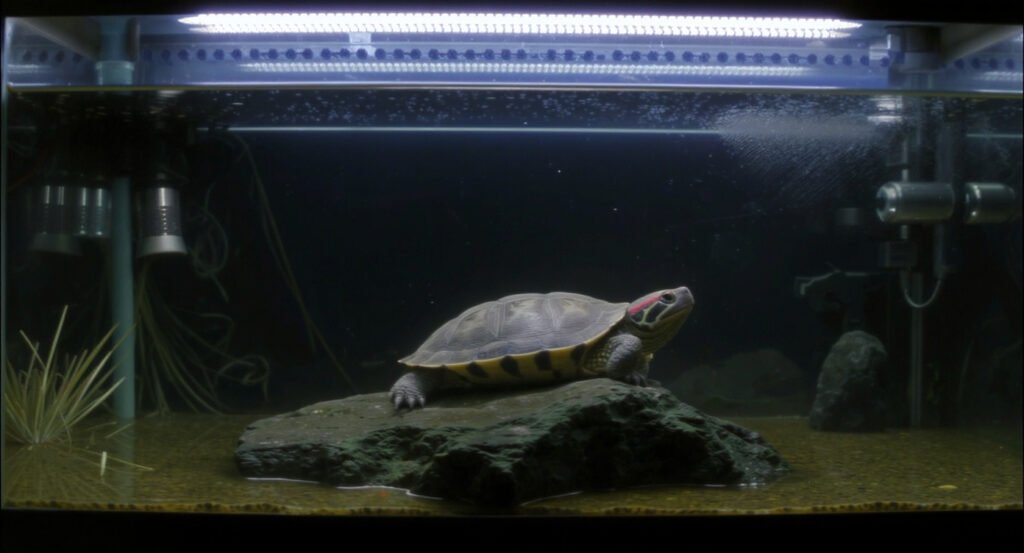
Red-eared sliders must have a completely dry basking platform where they can climb out of the water to rest, thermoregulate, and dry their shells. The basking area should be large enough for your turtle to turn around on and positioned to receive direct lighting.
Never Miss Early Warning Signs
AI photo analysis catches subtle health issues humans miss 80% of the time. Early detection = healthier reptile + lower vet bills.
Start Free Trial →Basking Platform Options
- Commercial floating docks: Products like Zoo Med’s Turtle Dock attach to tank walls with suction cups and float as water levels change
- Above-tank basking areas: Platforms that sit above the waterline, accessed by ramps
- DIY solutions: Stacked rocks, driftwood, or egg crate platforms covered with non-toxic materials
Ensure the basking area is smooth to prevent shell damage and stable enough that your turtle won’t flip it over.
Lighting Requirements
Proper lighting is non-negotiable for red-eared slider health. You’ll need two types of lighting working together.
UVB Lighting
UVB light enables turtles to synthesize vitamin D3, which is essential for calcium metabolism and shell health. Without adequate UVB, your turtle will develop metabolic bone disease, a serious and potentially fatal condition.
Use a reptile-specific UVB bulb (10.0 or 10% UVB output) positioned 10-12 inches above the basking area. These bulbs lose effectiveness over time, so replace them every 6-12 months even if they still produce visible light. Mercury vapor bulbs are an excellent all-in-one option that provides both UVB and heat.
Join thousands of successful reptile owners
Try ReptileCoach Free →Heat Lamp
A separate heat lamp should create a basking temperature of 88-92°F (31-33°C). Use a ceramic heat emitter, halogen flood bulb, or incandescent bulb with an appropriate wattage for your setup. Always use a thermometer to verify temperatures rather than guessing.
Keep the water temperature between 74-78°F (23-26°C) using an aquarium heater if your room temperature drops below this range.
Substrate Considerations
Many experienced turtle keepers recommend a bare-bottom tank for red-eared sliders. This makes cleaning significantly easier and eliminates the risk of impaction if your turtle ingests substrate.
If you prefer a more natural appearance, large river rocks (too big to swallow) or sand can work, but they require more maintenance. Avoid gravel, as turtles may accidentally ingest small pieces while feeding.
"This app saved my bearded dragon's life. The AI caught early MBD in photos I thought looked completely normal. Worth every penny!"
— Sarah K., ReptileCoach User
Get Your Free 7-Day Trial →Essential Equipment Checklist
- Tank (75-120+ gallons for adults)
- Canister filter rated for 2-3x your water volume
- Basking platform
- UVB bulb (10.0 or 10%) with fixture
- Heat lamp with fixture and bulb
- Aquarium heater (if needed)
- Thermometers for air and water temperature
- Water conditioner (dechlorinator)
- Timer for lights (12 hours on/off cycle)
Maintenance Schedule
Proper maintenance prevents health issues and keeps your setup running smoothly:
- Daily: Check temperatures, remove uneaten food
- Weekly: 25-50% water change, check equipment
- Monthly: Clean filter media, deep clean basking area
- Every 6-12 months: Replace UVB bulbs
Common Setup Mistakes to Avoid
Even with the best intentions, beginners often make these mistakes:
- Starting with a tank that’s too small
- Using inadequate filtration
- Neglecting UVB lighting or using outdated bulbs
- Creating basking areas that are too small or inaccessible
- Insufficient water depth
- Poor water quality maintenance
Final Thoughts
Setting up a proper habitat for a red-eared slider requires an initial investment of time and money, but the result is a healthy, active turtle that can be a companion for decades. The key is to research before purchasing your turtle and have the complete setup running for at least a week before bringing your new pet home.
Remember that your turtle’s needs will change as it grows. Start with equipment that can accommodate an adult turtle, or plan for upgrades as your hatchling matures. With the right setup and consistent care, your red-eared slider will thrive.
Worried About Your Reptile's Health?
Upload a photo and get instant AI health analysis. Catch problems before they become expensive vet bills.
Get Free Health Check →Need help tracking your turtle’s care schedule, water parameters, and health records? Check out ReptileCoach, the comprehensive app designed specifically for reptile keepers. Keep all your pet care information organized in one place and never miss important maintenance tasks again.
Ready to Give Your Reptile the Best Care?
Stop guessing and start knowing. Get personalized AI-powered care guidance, photo health analysis, and 24/7 expert advice for YOUR specific reptile.
Get Personalized Care Guidance
AI-powered photo analysis and daily care tracking for YOUR reptile
Try Free for 7 Days →