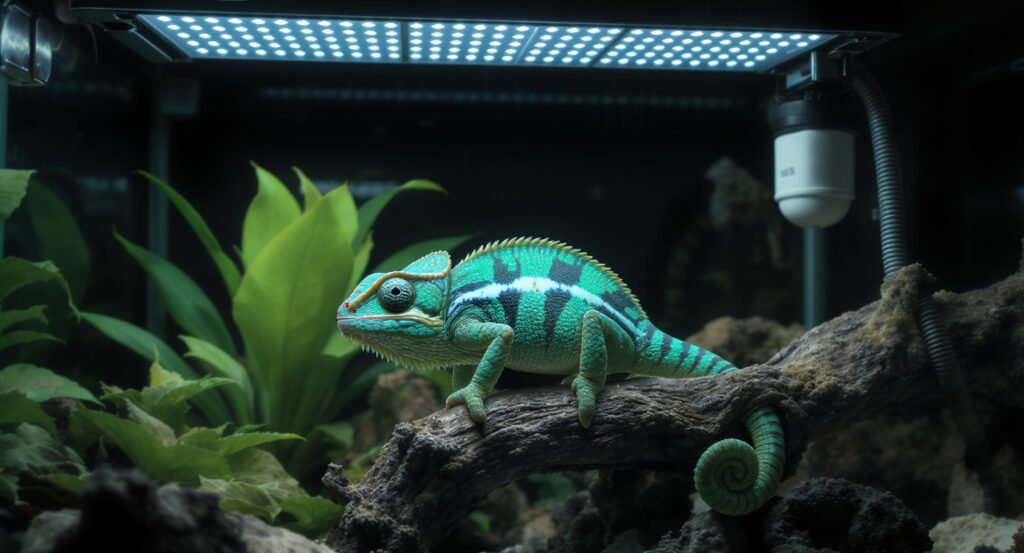
Setting up proper UVB lighting for your chameleon isn’t just important—it’s absolutely essential for their survival. Unlike many other reptiles, chameleons are particularly sensitive to lighting conditions, and inadequate UVB exposure quickly leads to serious health problems. This comprehensive guide walks you through everything you need to know about chameleon UVB lighting, from selecting equipment to maintenance schedules.
Why UVB Lighting Is Non-Negotiable for Chameleons
Chameleons are arboreal reptiles that spend their lives in the canopy where they receive filtered but substantial sunlight. In captivity, replicating this natural UV exposure is critical for several biological processes:
- Vitamin D3 synthesis: UVB radiation enables chameleons to produce vitamin D3 in their skin, which is essential for calcium absorption
- Metabolic regulation: Proper UVB exposure influences appetite, activity levels, and reproductive cycles
- Immune function: Research shows UVB contributes to overall immune system health
- Behavioral well-being: Chameleons exhibit more natural behaviors when provided with appropriate lighting
Without adequate UVB, chameleons develop metabolic bone disease (MBD), a painful and often fatal condition characterized by soft bones, deformities, tremors, and inability to move or eat. Prevention is straightforward with correct lighting—treatment after MBD develops is difficult and doesn’t always succeed.
Understanding UVB Bulb Types and Ratings
Linear Fluorescent T5 HO Bulbs (Recommended)
T5 High Output (HO) linear fluorescent bulbs represent the gold standard for chameleon UVB lighting. These bulbs provide:
Worried About Your Reptile's Health?
Upload a photo and get instant AI health analysis. Catch problems before they become expensive vet bills.
Get Free Health Check →- Even UV distribution across the enclosure width
- Consistent output over 12-month lifespan
- Higher UV output than older T8 technology
- Better penetration through screen mesh tops
For most chameleon species, select bulbs rated 5.0 or 6% UVB. These designations indicate the percentage of total light output emitted as UVB radiation. Common reliable brands include Arcadia, Zoo Med ReptiSun, and Reptile Systems.
Compact Fluorescent Bulbs (Generally Not Recommended)
Compact or coil UVB bulbs are marketed as convenient alternatives but have significant drawbacks for chameleons:
- Limited coverage area creates UV “hot spots” and shadows
- Inconsistent output that degrades more quickly
- Historical reports of eye problems in reptiles (though modern bulbs are improved)
While better than no UVB, compact bulbs should be considered a temporary solution only.
Mercury Vapor Bulbs
Mercury vapor bulbs combine heat and UVB in a single unit. These can work for certain setups but require careful consideration:
Never Miss Early Warning Signs
AI photo analysis catches subtle health issues humans miss 80% of the time. Early detection = healthier reptile + lower vet bills.
Start Free Trial →- Generate significant heat—may be too intense for screen enclosures
- Best suited for glass terrariums with good ventilation
- Require careful positioning to avoid thermal burns
- More expensive initial investment
Proper Placement and Distance
Bulb positioning significantly impacts UV exposure. Follow these guidelines:
Distance from basking area: Position basking branches 8-12 inches below T5 HO UVB bulbs. Closer placement risks overexposure, while greater distance reduces beneficial UV to insufficient levels.
Screen considerations: Standard screen mesh blocks approximately 30-50% of UVB. Account for this by either:
- Mounting UVB fixtures directly on top of screen (simplest method)
- Using external mounting brackets to position fixtures inside the enclosure
- Selecting slightly stronger bulb ratings if mounting on screen
Coverage area: The UVB fixture should span at least 50% of the enclosure’s length, ideally positioned over the chameleon’s primary activity zones and basking areas.
Join thousands of successful reptile owners
Try ReptileCoach Free →The Critical Importance of Bulb Replacement
Here’s something many chameleon keepers get wrong: UVB bulbs must be replaced on schedule even when they still produce visible light. UV output degrades significantly before the bulb burns out visually.
Replacement schedule by bulb type:
- T5 HO bulbs: Replace every 12 months
- T8 bulbs: Replace every 6-9 months
- Compact fluorescent: Replace every 6 months
- Mercury vapor: Replace every 12 months
Set a calendar reminder for replacement dates. Many keepers write the installation date directly on the bulb with permanent marker.
Managing your chameleon’s lighting schedule alongside feeding, misting, and health monitoring can feel overwhelming. The Reptile Coach app helps you track bulb replacement dates, coordinate photoperiods with other care tasks, and receive timely reminders so your chameleon’s lighting stays optimal year-round.
"This app saved my bearded dragon's life. The AI caught early MBD in photos I thought looked completely normal. Worth every penny!"
— Sarah K., ReptileCoach User
Get Your Free 7-Day Trial →Creating Proper Light Gradients
In nature, chameleons move between sunlit and shaded areas to thermoregulate and control UV exposure. Your enclosure should replicate this choice through vertical gradients:
- High-exposure zone: Upper basking branches directly below UVB fixture
- Moderate zone: Mid-level branches with partial coverage
- Low-UV refuge: Lower enclosure areas with dense foliage where chameleons can retreat
This gradient approach prevents both overexposure and underexposure while allowing natural behavioral regulation.
Photoperiod: Day/Night Cycles
Chameleons need consistent 12-hour light cycles. Use automatic timers to turn both UVB and heat lamps on and off simultaneously. Avoid:
- 24-hour lighting (causes chronic stress)
- Irregular schedules (disrupts circadian rhythms)
- Gradual dimming systems (unnecessary and potentially disruptive)
Simple digital timers cost less than $15 and eliminate human error.
Worried About Your Reptile's Health?
Upload a photo and get instant AI health analysis. Catch problems before they become expensive vet bills.
Get Free Health Check →Monitoring and Measuring UVB Output
For optimal accuracy, consider investing in a Solarmeter 6.5 UV Index meter. This device measures actual UVB reaching your chameleon’s basking spots, taking the guesswork out of placement. Target readings between 3.0-6.0 UVI for most chameleon species.
Setting Up Your System: Step-by-Step
- Choose appropriate T5 HO fixture and 5.0/6% bulb for your enclosure size
- Install fixture on top of screen lid or mount with external brackets
- Position heat lamp alongside UVB fixture
- Place basking branches 8-12 inches below the UVB bulb
- Create additional branches at varying heights for gradient options
- Connect both lights to a timer for 12-hour photoperiod
- Measure temperatures and UVB levels (if meter available)
- Set calendar reminder for bulb replacement in 12 months
Beyond Lighting: The Complete Picture
While proper UVB is foundational, remember it’s part of a larger care protocol. Chameleons also need appropriate calcium supplementation (with and without D3), proper hydration systems, correct humidity levels, and species-appropriate nutrition.
Getting UVB lighting right from day one sets your chameleon up for a long, healthy life. Invest in quality equipment, maintain proper replacement schedules, and monitor your chameleon’s behavior and physical condition regularly. With the right setup, you’ll see vibrant colors, strong bones, and natural behaviors that make chameleon keeping so rewarding.
Ready to Give Your Reptile the Best Care?
Stop guessing and start knowing. Get personalized AI-powered care guidance, photo health analysis, and 24/7 expert advice for YOUR specific reptile.
Get Personalized Care Guidance
AI-powered photo analysis and daily care tracking for YOUR reptile
Try Free for 7 Days →