
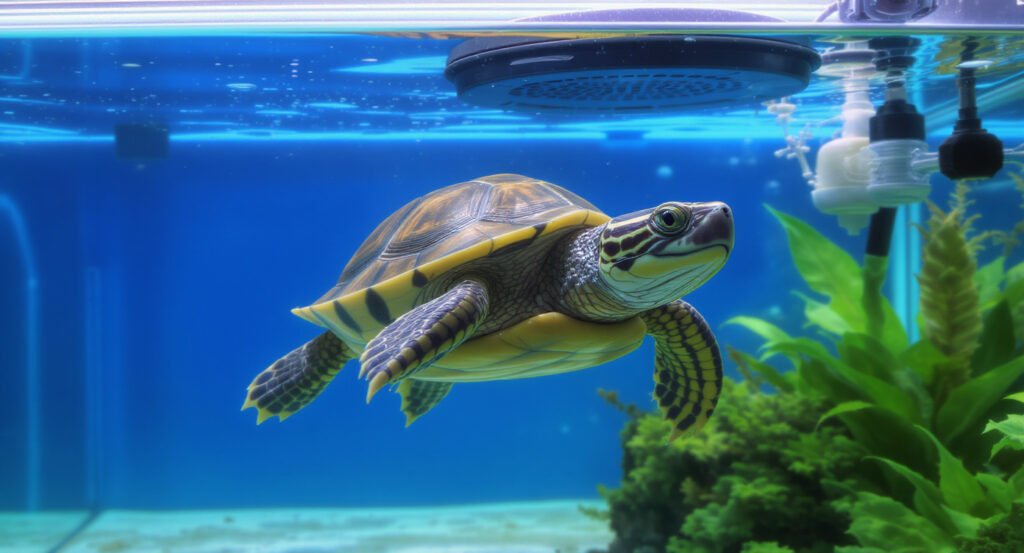
Red-eared sliders are among the most popular pet turtles in the world, known for their distinctive red patches behind their eyes and friendly personalities. However, these semi-aquatic reptiles require a carefully planned habitat to thrive in captivity. This comprehensive guide will walk you through everything you need to know about setting up the perfect red-eared slider tank.
Understanding Red-Eared Slider Habitat Requirements
Before diving into tank setup, it’s essential to understand that red-eared sliders are semi-aquatic turtles native to the southern United States. In the wild, they spend time both in water and basking on logs or rocks under the sun. Your captive habitat must replicate these natural conditions to ensure your turtle’s health and happiness.
Adult red-eared sliders can reach 10-12 inches in shell length, with females typically growing larger than males. This substantial size means you’ll need a spacious enclosure—much larger than the small tanks often sold in pet stores.
Tank Size and Setup Essentials
Choosing the Right Tank Size
The general rule for red-eared slider tanks is to provide 10 gallons of water per inch of shell length. For an adult turtle measuring 10 inches, you’ll need at least a 100-gallon tank. Hatchlings can start in a 20-40 gallon tank, but be prepared to upgrade as they grow rapidly during their first few years.
Worried About Your Reptile's Health?
Upload a photo and get instant AI health analysis. Catch problems before they become expensive vet bills.
Get Free Health Check →Many turtle keepers opt for custom-built enclosures, stock tanks, or large plastic tubs as cost-effective alternatives to glass aquariums. Whatever you choose, ensure it’s sturdy, waterproof, and easy to clean.
Water Depth and Quality
Red-eared sliders need water deep enough to swim and turn around comfortably—typically at least 1.5 times the length of the turtle’s shell. Water quality is critical for preventing shell rot and respiratory infections. Invest in a high-quality canister filter rated for at least twice your tank’s water volume, as turtles are messy eaters and produce significant waste.
Perform weekly water changes of 25-50% and monitor ammonia, nitrite, and nitrate levels regularly. Dechlorinate tap water before adding it to the tank to protect your turtle’s sensitive skin and eyes.
Creating a Basking Area
Your red-eared slider needs a dry basking platform where it can completely leave the water. This area should be easily accessible via a ramp or stacked rocks and large enough for your turtle to turn around. Commercial basking docks, floating platforms, or DIY solutions using rocks and driftwood all work well.
Never Miss Early Warning Signs
AI photo analysis catches subtle health issues humans miss 80% of the time. Early detection = healthier reptile + lower vet bills.
Start Free Trial →The basking spot should be positioned under heating and UVB lights to create a temperature gradient in your tank.
Temperature and Lighting Requirements
Heat Sources
Proper temperature regulation is crucial for red-eared slider health. The basking area should reach 85-90°F, while water temperature should be maintained at 75-80°F. Use an aquarium heater for the water and a basking bulb for the dry area. Always monitor temperatures with reliable thermometers placed in multiple locations.
UVB Lighting
Red-eared sliders require UVB lighting to synthesize vitamin D3, which enables calcium absorption for strong bones and shells. Without adequate UVB exposure, turtles develop metabolic bone disease, a serious and potentially fatal condition.
Install a UVB bulb (10.0 or 12% UVB) positioned 10-12 inches above the basking area. These bulbs must be replaced every 6-12 months, even if they still produce visible light, as UVB output diminishes over time. Provide a 12-14 hour light cycle daily to mimic natural day-night patterns.
Join thousands of successful reptile owners
Try ReptileCoach Free →Diet and Nutrition
Red-eared sliders are omnivores with dietary needs that change as they mature. Juveniles require more protein (70-80% of diet), while adults shift toward more plant matter (60-70% of diet).
Protein Sources
Offer a variety of protein including commercial turtle pellets, feeder fish (occasionally), earthworms, crickets, and dried shrimp. Feed juveniles daily, while adults can be fed every other day to prevent obesity.
Plant Matter
Provide dark leafy greens like collard greens, dandelion greens, red leaf lettuce, and aquatic plants such as water lettuce or duckweed. Avoid iceberg lettuce, which has minimal nutritional value.
Calcium Supplementation
Dust food with calcium powder 2-3 times weekly for juveniles and once weekly for adults. A cuttlebone in the tank provides additional calcium and helps satisfy natural chewing behaviors.
"This app saved my bearded dragon's life. The AI caught early MBD in photos I thought looked completely normal. Worth every penny!"
— Sarah K., ReptileCoach User
Get Your Free 7-Day Trial →Track your pet’s care with our free app to maintain feeding schedules and monitor dietary variety.
Common Health Problems and Prevention
Shell Rot
This bacterial or fungal infection appears as soft spots, discoloration, or foul-smelling areas on the shell. Prevention centers on maintaining excellent water quality and providing adequate basking time for the shell to dry completely.
Respiratory Infections
Symptoms include wheezing, nasal discharge, lethargy, and floating lopsidedly. These infections often result from incorrect temperatures or poor water quality. Maintain proper heating and filtration to prevent respiratory issues.
Metabolic Bone Disease
This devastating condition results from inadequate UVB exposure or calcium deficiency. Signs include soft shell, swollen limbs, and difficulty moving. Prevention through proper lighting and diet is far easier than treatment.
Worried About Your Reptile's Health?
Upload a photo and get instant AI health analysis. Catch problems before they become expensive vet bills.
Get Free Health Check →Long-Term Care Tips
Red-eared sliders can live 20-40 years with proper care, making them a serious long-term commitment. Establish a maintenance routine that includes daily feeding and observation, weekly water changes, monthly filter cleaning, and semi-annual bulb replacements.
Handle your turtle gently and infrequently, as they’re not cuddly pets and can become stressed by excessive handling. Always wash your hands after touching your turtle or cleaning the tank, as reptiles can carry Salmonella.
Regular veterinary checkups with a reptile-experienced vet ensure your turtle stays healthy. Schedule annual wellness exams and seek immediate care if you notice changes in appetite, behavior, or appearance.
Conclusion
Setting up a proper red-eared slider habitat requires significant initial investment in equipment and ongoing commitment to maintenance, but the reward is a healthy, active turtle that will be part of your family for decades. By providing adequate space, clean water, proper heating and lighting, and a balanced diet, you’ll create an environment where your red-eared slider can thrive. Remember that successful turtle keeping is about replicating natural conditions as closely as possible—your turtle’s health depends on your dedication to meeting these complex needs.
Never Miss Early Warning Signs
AI photo analysis catches subtle health issues humans miss 80% of the time. Early detection = healthier reptile + lower vet bills.
Start Free Trial →Ready to Give Your Reptile the Best Care?
Stop guessing and start knowing. Get personalized AI-powered care guidance, photo health analysis, and 24/7 expert advice for YOUR specific reptile.
Get Personalized Care Guidance
AI-powered photo analysis and daily care tracking for YOUR reptile
Try Free for 7 Days →