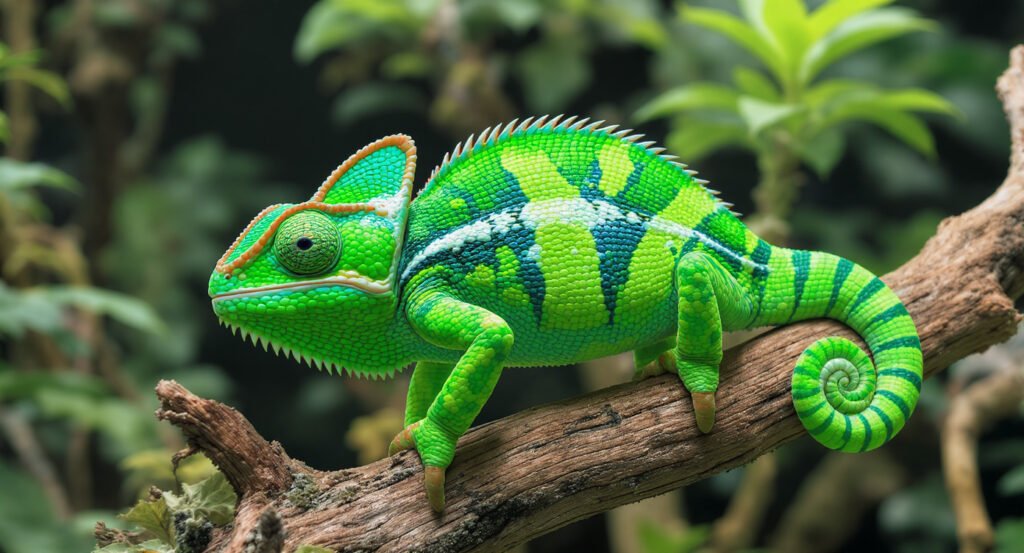
Chameleons are among the most captivating reptiles in the pet trade, renowned for their ability to change colors in response to mood, temperature, and health status. However, this remarkable trait depends heavily on proper husbandry, and nothing impacts chameleon health more directly than UVB lighting. Without adequate UVB exposure, chameleons cannot synthesize vitamin D3, leading to metabolic bone disease, poor coloration, and shortened lifespans.
This comprehensive guide will walk you through everything you need to know about setting up optimal UVB lighting for your chameleon, ensuring vibrant color changes and long-term health.
Why UVB Lighting Is Critical for Chameleons
Unlike many other reptiles, chameleons are exclusively diurnal and arboreal, meaning they spend their days basking in natural sunlight high in the canopy. In captivity, replicating this natural UVB exposure is non-negotiable. UVB radiation in the 290-320nm range enables chameleons to produce vitamin D3, which regulates calcium absorption and supports bone health, immune function, and proper metabolic processes.
Without sufficient UVB, chameleons develop metabolic bone disease (MBD), characterized by weak bones, tremors, deformities, and eventually paralysis or death. Additionally, inadequate lighting directly impacts their ability to display healthy, vibrant colors. Dull, dark, or stress-related coloration often indicates poor lighting conditions.
Worried About Your Reptile's Health?
Upload a photo and get instant AI health analysis. Catch problems before they become expensive vet bills.
Get Free Health Check →Choosing the Right UVB Bulb
Not all UVB bulbs are created equal. For chameleons, you need to select bulbs that provide appropriate UVB output at the correct distance from the basking area.
Linear Fluorescent T5 HO Bulbs (Recommended)
The gold standard for chameleon keeping is T5 High Output linear fluorescent bulbs. These provide consistent UVB output across a wide area, which is ideal for the spacious vertical enclosures chameleons require.
- 5.0 UVB bulbs: Suitable for smaller enclosures (18-24 inches tall) or screen-topped setups where UVB penetration is reduced
- 10.0 UVB bulbs: Ideal for taller enclosures (36+ inches) or glass/hybrid enclosures where maximum penetration is needed
Mount T5 HO fixtures 8-12 inches above the basking area for species like veiled and panther chameleons. For smaller species like pygmy chameleons, maintain 10-15 inches of distance.
Compact Fluorescent and Mercury Vapor Bulbs
While compact fluorescent UVB bulbs are available, they provide limited coverage and are generally inadequate for chameleon enclosures. Mercury vapor bulbs can work but produce both heat and UVB, making temperature regulation challenging. Stick with linear T5 fixtures for best results.
Never Miss Early Warning Signs
AI photo analysis catches subtle health issues humans miss 80% of the time. Early detection = healthier reptile + lower vet bills.
Start Free Trial →Setting Up Your UVB Lighting System
Step 1: Position Your Fixture Correctly
Mount your T5 HO fixture on top of the enclosure, running the length of the cage. For screen-topped enclosures, place the fixture directly on the screen to minimize UVB loss. Screen mesh can block up to 50% of UVB radiation, so positioning matters.
For glass or PVC enclosures, mount the fixture inside the enclosure or ensure the glass is UVB-transparent (most standard glass blocks UVB).
Step 2: Create a UVB Gradient
Chameleons need to self-regulate their UVB exposure. Position the bulb so the basking zone receives the highest UVB levels (UVI of 3.0-6.0 for most species), while lower and shaded areas provide refuge with minimal UVB exposure.
Use a Solarmeter 6.5 to measure UVI at various points in the enclosure. This investment ensures you’re providing safe, effective UVB levels.
Join thousands of successful reptile owners
Try ReptileCoach Free →Step 3: Integrate with Basking Lights
UVB bulbs produce minimal heat, so you’ll need a separate basking bulb (halogen or incandescent) to create a thermal gradient. Position the basking bulb near the UVB fixture so your chameleon receives both heat and UVB simultaneously, mimicking natural sunlight.
Target basking temperatures of 85-95°F for adult veiled and panther chameleons, with ambient temperatures around 72-80°F.
Lighting Schedule and Maintenance
Photoperiod Requirements
Chameleons require a consistent day/night cycle to maintain healthy circadian rhythms. Provide 12 hours of light and 12 hours of complete darkness. Use a digital timer to automate your lighting schedule and eliminate human error.
Never leave lights on 24/7, as this causes chronic stress, suppresses immune function, and disrupts color-changing behavior.
"This app saved my bearded dragon's life. The AI caught early MBD in photos I thought looked completely normal. Worth every penny!"
— Sarah K., ReptileCoach User
Get Your Free 7-Day Trial →Bulb Replacement
UVB output degrades over time, even when bulbs remain visibly functional. Replace T5 bulbs every 12 months to maintain adequate UVB levels. Mark your calendar or set a reminder to ensure timely replacements.
Some keepers use a Solarmeter to monitor UVB degradation and extend bulb life slightly, but annual replacement is the safest practice.
Common UVB Lighting Mistakes to Avoid
- Using coil/compact bulbs as primary UVB source: These lack coverage and can cause eye issues in some reptiles
- Placing bulbs too far away: UVB strength diminishes rapidly with distance; proper positioning is crucial
- Keeping old bulbs beyond their lifespan: Invisible UVB depletion can occur months before visible light fades
- Blocking UVB with glass or plastic: Always verify materials are UVB-transparent or position bulbs inside the enclosure
- No UVB gradient: Chameleons must be able to retreat from intense UVB when needed
Monitoring Your Chameleon’s Response
Proper UVB lighting should result in vibrant, dynamic coloration, strong appetite, active behavior, and healthy bone development. Watch for warning signs of inadequate UVB:
- Consistently dark or dull coloration
- Lethargy or reluctance to bask
- Soft jaw or limbs (early MBD)
- Tremors or difficulty climbing
If you notice these symptoms, reassess your lighting setup immediately and consult a reptile veterinarian experienced with chameleons.
Worried About Your Reptile's Health?
Upload a photo and get instant AI health analysis. Catch problems before they become expensive vet bills.
Get Free Health Check →Take Your Chameleon Care to the Next Level
Setting up optimal UVB lighting is just one component of successful chameleon keeping. From humidity management to feeding schedules and health monitoring, there’s a lot to master. Get personalized care advice in our AI-powered app, where you can receive customized guidance for your specific chameleon species and setup.
With the right UVB lighting system in place, you’ll provide your chameleon with the foundation for a healthy, colorful life. Remember: consistent lighting, proper positioning, regular maintenance, and careful monitoring are the keys to success. Your chameleon’s brilliant color displays will be your reward for getting the details right.
Ready to Give Your Reptile the Best Care?
Stop guessing and start knowing. Get personalized AI-powered care guidance, photo health analysis, and 24/7 expert advice for YOUR specific reptile.
Get Personalized Care Guidance
AI-powered photo analysis and daily care tracking for YOUR reptile
Try Free for 7 Days →