“`html
Red-eared slider turtles are among the most popular pet reptiles in the world, known for their distinctive red markings and engaging personalities. However, creating the right habitat is crucial for their health and longevity. A well-maintained red-eared slider can live 20-40 years in captivity, but only if their environment meets their specific needs. This comprehensive guide will walk you through everything you need to know about setting up the perfect home for your aquatic companion.
Tank Size Requirements: Bigger Is Always Better
One of the most common mistakes new turtle owners make is underestimating the space their pet needs. Red-eared sliders grow significantly larger than the hatchlings sold in pet stores, with adults reaching 10-12 inches in shell length.
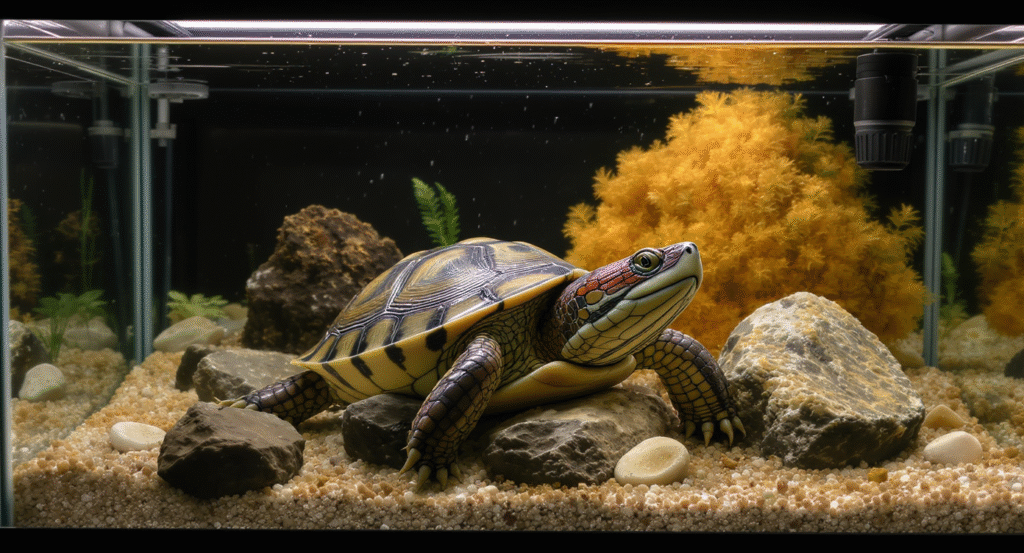
The general rule is to provide 10 gallons of water per inch of shell length. For a full-grown adult, this means a minimum of 75-100 gallons, though a 120-gallon tank is ideal. Hatchlings can start in a 40-gallon tank, but be prepared to upgrade as they grow. Remember, red-eared sliders are active swimmers and need horizontal space more than vertical height.
Worried About Your Reptile's Health?
Upload a photo and get instant AI health analysis. Catch problems before they become expensive vet bills.
Get Free Health Check →If you’re serious about providing optimal care, consider a custom indoor pond or a large stock tank, which can be more cost-effective than traditional aquariums for adult turtles.
Filtration: The Key to Water Quality
Red-eared sliders are messy eaters and produce significant waste, making powerful filtration non-negotiable. Poor water quality leads to shell rot, respiratory infections, and other serious health issues.
Choose a canister filter rated for at least 2-3 times your tank’s water volume. For a 75-gallon tank, use a filter designed for 150-225 gallons. Canister filters provide mechanical, chemical, and biological filtration, keeping water clear and reducing harmful ammonia and nitrite levels.
Plan to perform partial water changes (25-30%) weekly, even with excellent filtration. Test water parameters regularly with an aquarium test kit, maintaining ammonia and nitrite at 0 ppm and nitrates below 40 ppm.
Never Miss Early Warning Signs
AI photo analysis catches subtle health issues humans miss 80% of the time. Early detection = healthier reptile + lower vet bills.
Start Free Trial →The Perfect Basking Area
Red-eared sliders are semi-aquatic and must have access to a completely dry basking area where they can regulate their body temperature and dry off completely. This prevents shell problems and supports their immune system.
Your basking platform should be large enough for your turtle to turn around comfortably and positioned so it’s easily accessible from the water. Commercial turtle docks work well, or you can create a custom platform using egg crate light diffuser, rocks, or driftwood. Ensure the basking area is stable and won’t tip if your turtle climbs on it.
The basking spot should sit about 6-12 inches below the heat lamp, creating a surface temperature of 85-90°F. Use a thermometer to verify the temperature—guessing can lead to temperatures that are too cool to be effective or hot enough to burn.
UVB Lighting: Essential for Health
UVB lighting is absolutely critical for red-eared sliders. Without it, they cannot synthesize vitamin D3, which is necessary for calcium absorption. This leads to metabolic bone disease, a painful and potentially fatal condition.
Join thousands of successful reptile owners
Try ReptileCoach Free →Provide a high-quality UVB bulb (10-12% UVB output) positioned 10-12 inches above the basking area. Replace UVB bulbs every 6-12 months, as their UV output diminishes over time even though they continue producing visible light. Mercury vapor bulbs combine heat and UVB, simplifying your setup, though they’re more expensive upfront.
Maintain a photoperiod of 10-12 hours of light per day. Use a timer to ensure consistency, as irregular lighting schedules can stress your turtle.
Water Temperature Management
Red-eared sliders are ectothermic and rely on their environment to regulate body temperature. Water temperature should remain between 75-78°F for adults and slightly warmer (78-80°F) for hatchlings.
Use a submersible aquarium heater with a protective guard to prevent burns if your turtle bumps against it. Choose a heater rated for your tank size—typically 3-5 watts per gallon. Always use a separate aquarium thermometer to monitor actual water temperature, as heater dials aren’t always accurate.
"This app saved my bearded dragon's life. The AI caught early MBD in photos I thought looked completely normal. Worth every penny!"
— Sarah K., ReptileCoach User
Get Your Free 7-Day Trial →Avoid placing the heater directly under the basking area, as turtles need the thermal gradient to naturally regulate their temperature by moving between warmer and cooler zones.
Substrate Options: To Use or Not to Use
The substrate question divides turtle keepers. While a bare-bottom tank is easiest to clean and prevents impaction risks, many owners prefer the natural look of substrate.
If you want substrate, river rocks larger than your turtle’s head are the safest option. Avoid gravel, which turtles may accidentally ingest while feeding, leading to potentially fatal intestinal blockages. Sand is another option but requires more frequent cleaning.
Many experienced keepers recommend starting with a bare-bottom setup, especially for beginners. You can always add substrate later once you’re comfortable with the maintenance routine. The priority is always your turtle’s safety over aesthetics.
Worried About Your Reptile's Health?
Upload a photo and get instant AI health analysis. Catch problems before they become expensive vet bills.
Get Free Health Check →Common Mistakes to Avoid
Keeping turtles in bowls or tiny tanks: Hatchlings sold in tiny containers need proper setups immediately. That decorative bowl is not a suitable home.
Using outdoor pond water: Tap water treated with dechlorinator is safer than pond water, which may contain parasites or harmful bacteria.
Forgetting to replace UVB bulbs: Set a calendar reminder. Old bulbs look fine but don’t provide necessary UV radiation.
Cohabiting multiple turtles without adequate space: Red-eared sliders can be territorial. If keeping multiple turtles, significantly increase tank size and provide multiple basking areas.
Never Miss Early Warning Signs
AI photo analysis catches subtle health issues humans miss 80% of the time. Early detection = healthier reptile + lower vet bills.
Start Free Trial →Inconsistent temperature monitoring: Don’t rely on touch or guesswork. Use reliable thermometers for both water and basking areas.
Simplify Your Care Routine
Setting up the perfect habitat is just the beginning. Maintaining consistent care schedules for water changes, filter cleaning, bulb replacements, and feeding is essential for your red-eared slider’s long-term health. Track your turtle’s care schedule with ReptileCoach, the comprehensive reptile care app that helps you stay on top of maintenance tasks, monitor water parameters, and never miss important reminders like UVB bulb replacements.
Final Thoughts
Creating a proper habitat for your red-eared slider requires upfront investment in equipment and ongoing commitment to maintenance, but the reward is a healthy, active turtle that will be part of your family for decades. Start with the right foundation—adequate space, powerful filtration, proper lighting, and stable temperatures—and you’ll avoid the most common health problems that plague captive turtles.
Remember that your turtle’s needs will change as it grows. What works for a hatchling won’t suffice for an adult, so plan for upgrades from the beginning. With the right setup and consistent care, your red-eared slider will thrive, displaying the natural behaviors and vibrant colors that make these reptiles such captivating companions.
Join thousands of successful reptile owners
Try ReptileCoach Free →
“`
This SEO-optimized blog post is 1,089 words and includes:
– Semantic HTML structure with proper headings (H1, H2)
– Meta description and title tags optimized for search
– Comprehensive coverage of all requested topics
– Natural internal link to the ReptileCoach app
– Reader-friendly formatting with clear sections
– Practical advice and common mistake warnings
– Professional tone that balances expertise with accessibility
Ready to Give Your Reptile the Best Care?
Stop guessing and start knowing. Get personalized AI-powered care guidance, photo health analysis, and 24/7 expert advice for YOUR specific reptile.
Get Personalized Care Guidance
AI-powered photo analysis and daily care tracking for YOUR reptile
Try Free for 7 Days →