
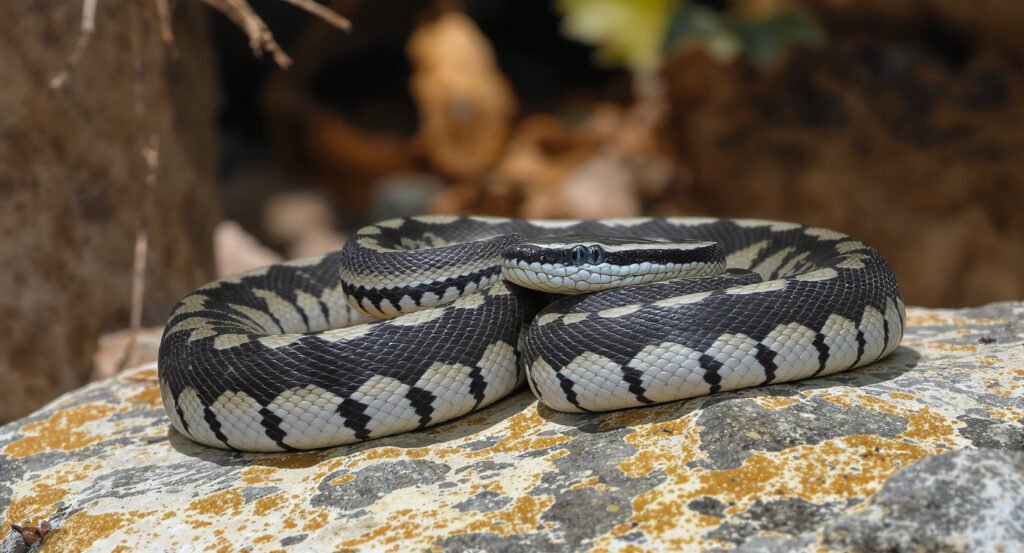
King snakes are among the most popular pet reptiles for both beginners and experienced keepers. Known for their docile temperament, striking patterns, and relatively simple care requirements, these North American natives make excellent captive reptiles. Whether you’re considering a California king snake, a Mexican black king snake, or any other subspecies, understanding proper king snake care is essential for keeping your pet healthy and thriving.
This comprehensive guide covers everything you need to know about king snake husbandry, from enclosure setup to feeding schedules, ensuring your serpent companion lives a long and healthy life.
Understanding King Snake Species and Behavior
King snakes belong to the genus Lampropeltis and are constrictors native to North America. They earned their name from their ability to prey on other snakes, including venomous species, though they’re immune to many snake venoms. In captivity, king snakes typically reach 3 to 6 feet in length depending on the subspecies, with females generally larger than males.
These reptiles are known for their calm disposition once acclimated, though hatchlings may be defensive initially. King snakes are solitary creatures and should always be housed individually to prevent cannibalistic behavior. Their activity patterns vary, but most are crepuscular, being most active during dawn and dusk hours.
Worried About Your Reptile's Health?
Upload a photo and get instant AI health analysis. Catch problems before they become expensive vet bills.
Get Free Health Check →Habitat and Enclosure Setup for King Snakes
Proper enclosure setup is fundamental to king snake care. A 20-gallon terrarium is the minimum for juvenile king snakes, while adults require at least a 40-gallon enclosure, though larger is always better. Glass terrariums with secure screen tops work well, as king snakes are notorious escape artists.
Substrate options include aspen shavings, cypress mulch, or paper-based bedding. Avoid cedar and pine, which contain harmful oils. Provide at least two hide boxes—one on the warm side and one on the cool side of the enclosure—to help your snake feel secure and regulate its body temperature.
Include a sturdy water bowl large enough for soaking, as king snakes often soak before shedding. Add climbing branches and cork bark for enrichment, though king snakes are primarily terrestrial. Ensure all decor is securely placed to prevent injuries.
Temperature and Lighting Requirements
As ectothermic reptiles, king snakes depend on environmental temperatures for thermoregulation. Create a thermal gradient with a basking spot of 85-90°F on the warm end and 75-80°F on the cool end. Nighttime temperatures can drop to 70-75°F.
Never Miss Early Warning Signs
AI photo analysis catches subtle health issues humans miss 80% of the time. Early detection = healthier reptile + lower vet bills.
Start Free Trial →Use an under-tank heating pad or ceramic heat emitter controlled by a thermostat to maintain proper temperatures. Never rely on heat rocks, which can cause burns. Monitor temperatures with digital thermometers placed at both ends of the enclosure.
King snakes don’t require UVB lighting since they obtain vitamin D3 from their diet, but a regular day/night cycle is important. Provide 12-14 hours of light during warmer months and 8-10 hours during winter to mimic natural seasonal changes.
Diet and Feeding Schedule
King snake diet consists entirely of pre-killed or frozen-thawed prey in captivity. Hatchlings eat pinky mice, while adults consume adult mice or small rats depending on their size. The prey item should be no larger than the widest part of your snake’s body.
Feed juveniles every 5-7 days and adults every 7-10 days. Always thaw frozen prey completely and warm it to approximately body temperature before offering. Feed in a separate container to minimize substrate ingestion and reduce feeding aggression.
Join thousands of successful reptile owners
Try ReptileCoach Free →After feeding, avoid handling your king snake for 48 hours to prevent regurgitation. Always provide fresh water, which should be changed every 2-3 days or whenever soiled.
Handling and Temperament
King snakes generally tolerate handling well once established, making them excellent pet reptiles. Allow new arrivals at least one week to acclimate before attempting to handle them. Start with short 5-10 minute sessions and gradually increase duration as your snake becomes comfortable.
Support your snake’s body fully when handling, and never grab it by the head or tail. Some king snakes may musk (release a foul-smelling secretion) when stressed—this is normal defensive behavior that typically decreases with regular, gentle handling.
Handle your king snake 2-3 times per week to maintain tameness, but avoid excessive handling which can cause stress. Always wash your hands before and after handling to prevent disease transmission.
"This app saved my bearded dragon's life. The AI caught early MBD in photos I thought looked completely normal. Worth every penny!"
— Sarah K., ReptileCoach User
Get Your Free 7-Day Trial →Common Health Issues and Prevention
With proper king snake care, these reptiles are generally hardy. However, several health issues can arise. Respiratory infections, indicated by wheezing, mucus discharge, or open-mouth breathing, usually result from inadequate temperatures or humidity. Maintain proper environmental conditions to prevent these issues.
Mites appear as tiny black or red dots crawling on your snake or in the water bowl. Treat with appropriate reptile-safe miticides and thoroughly clean the enclosure. Scale rot, characterized by discolored or deteriorating scales, occurs in overly moist environments.
Feeding problems may include refusal to eat or regurgitation. Ensure proper temperatures, minimize stress, and verify prey size. Stuck shed, particularly around the eyes and tail tip, indicates humidity issues. Provide a humid hide or mist the enclosure lightly during shedding.
Schedule annual veterinary checkups with a reptile-experienced veterinarian to catch potential health issues early. Quarantine new snakes for at least 60 days before introducing them to your collection space.
Worried About Your Reptile's Health?
Upload a photo and get instant AI health analysis. Catch problems before they become expensive vet bills.
Get Free Health Check →Conclusion: Successful King Snake Keeping
King snakes make rewarding pets for reptile enthusiasts willing to provide proper care. By maintaining appropriate temperatures, offering correctly sized prey, and creating a secure environment, you’ll ensure your king snake thrives for its potential 20-30 year lifespan.
Remember that successful reptile keeping requires ongoing education and attention to detail. Stay informed about the latest husbandry practices, monitor your snake’s health regularly, and adjust care as needed based on individual requirements.
For comprehensive reptile care tracking, feeding schedules, and health monitoring tools, check out the ReptileCoach App to help you provide the best possible care for your king snake and other reptile companions.
Ready to Give Your Reptile the Best Care?
Stop guessing and start knowing. Get personalized AI-powered care guidance, photo health analysis, and 24/7 expert advice for YOUR specific reptile.
Get Personalized Care Guidance
AI-powered photo analysis and daily care tracking for YOUR reptile
Try Free for 7 Days →