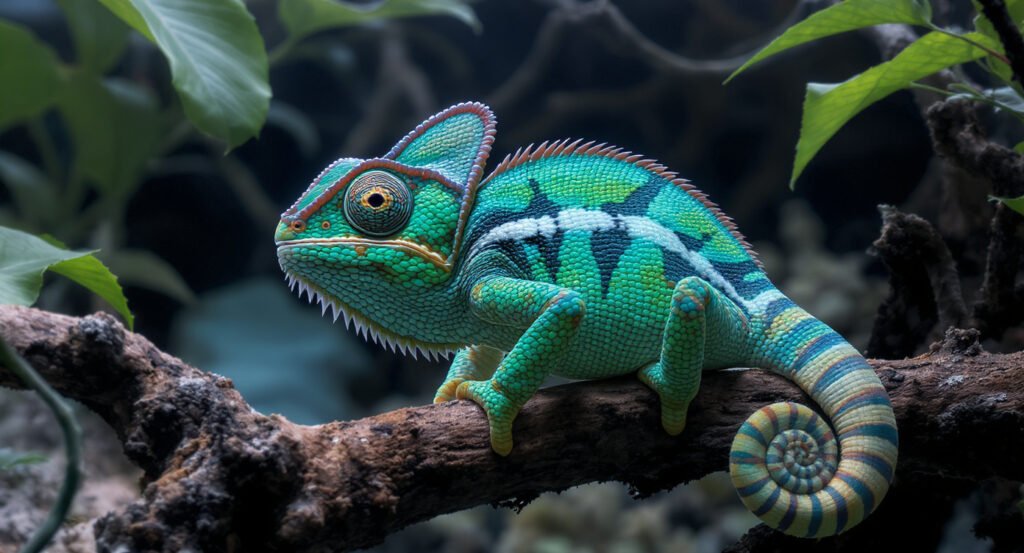
Chameleons are among the most demanding reptiles to keep in captivity, and improper UVB lighting is one of the leading causes of health problems and premature death in pet chameleons. Unlike many other reptiles, chameleons have evolved in environments with intense, direct sunlight exposure, making high-quality UVB lighting absolutely non-negotiable for their health. Understanding the science behind UVB and how to implement it correctly can mean the difference between a thriving chameleon and one suffering from metabolic bone disease.
Why UVB Lighting Is Critical for Chameleons
UVB radiation—specifically wavelengths between 290-315nm—triggers the synthesis of vitamin D3 in a chameleon’s skin. Without adequate vitamin D3, chameleons cannot metabolize calcium properly, regardless of how much calcium they consume through their diet. This creates a cascade of health problems collectively known as metabolic bone disease (MBD), which manifests as soft, rubbery bones, deformities, tremors, and eventually paralysis or death.
In their native habitats across Africa and Madagascar, chameleons bask in intense equatorial and subtropical sunlight, receiving UVB exposure far exceeding what most artificial bulbs provide. Replicating this in captivity requires understanding UVI (UV Index) measurements and selecting appropriate equipment.
Understanding UVI and Ferguson Zones
The Ferguson Zone system, developed by Dr. Gary Ferguson, categorizes reptiles by their natural UVB exposure levels. Chameleons, depending on species, fall into Ferguson Zones 3-4, meaning they require relatively high UVB exposure. Most veiled and panther chameleons thrive with a UVI of 2-3 in their main activity areas, with a basking spot reaching UVI 3-6.
Worried About Your Reptile's Health?
Upload a photo and get instant AI health analysis. Catch problems before they become expensive vet bills.
Get Free Health Check →UVI is measured with a Solarmeter 6.5 or similar UV meter—tools that every serious chameleon keeper should own. Without measuring actual UVI at your chameleon’s basking level, you’re essentially guessing at a parameter that directly impacts your animal’s health.
Choosing the Right UVB Bulb
The UVB bulb market is filled with options of wildly varying quality and output. For chameleons, linear T5 HO (High Output) fluorescent bulbs are the gold standard. These bulbs produce strong, consistent UVB output across a broad area and maintain effectiveness longer than compact or coil bulbs.
Recommended UVB Bulbs for Chameleons
- Arcadia 6% or 12% T5 HO – Industry-leading output with excellent UVB spectrum
- Zoo Med Reptisun 5.0 or 10.0 T5 HO – Reliable American-made option with good output
- Exo Terra Repti-Glo 5.0 or 10.0 T5 – Widely available with consistent performance
For most chameleon enclosures, the 6% or 5.0 bulbs work well when mounted appropriately. The 12% or 10.0 bulbs are better suited for larger enclosures where the bulb must be mounted higher. Never use coil UVB bulbs as primary lighting for chameleons—they produce insufficient and inconsistent output.
Proper Bulb Placement and Distance
UVB intensity decreases dramatically with distance from the bulb. This inverse-square law means that doubling the distance from a bulb reduces UVB intensity by approximately 75%. For T5 HO bulbs with a 6% output, placing your chameleon’s basking spot 10-12 inches from the bulb typically achieves appropriate UVI levels. Higher output 12% bulbs may need to be mounted 16-20 inches away to avoid excessive UV exposure.
Never Miss Early Warning Signs
AI photo analysis catches subtle health issues humans miss 80% of the time. Early detection = healthier reptile + lower vet bills.
Start Free Trial →Always position UVB bulbs inside or directly above a mesh enclosure. Mesh does reduce UVB transmission by approximately 30-50%, so account for this when calculating placement. Glass and plastic block virtually all UVB radiation and should never be placed between the bulb and your chameleon.
Lighting Schedules and Photoperiod
Chameleons require consistent day-night cycles that mimic their natural photoperiod. In most cases, a 12-hour light and 12-hour dark cycle works well year-round, though some keepers adjust slightly seasonally for breeding purposes. Using a reliable timer eliminates human error and ensures your chameleon receives consistent lighting.
Always turn off all lighting at night, including any heat sources if temperatures permit. Chameleons need complete darkness to sleep properly, and light disturbances at night can cause chronic stress.
Bulb Replacement Schedule
UVB output degrades long before a bulb visually appears to burn out. Most T5 HO UVB bulbs lose significant effectiveness at 6-12 months despite still producing visible light. Establish a replacement schedule based on manufacturer recommendations—typically every 6 months for high-output bulbs used with chameleons. Mark replacement dates on a calendar or use reminder apps to stay consistent.
Join thousands of successful reptile owners
Try ReptileCoach Free →After replacing bulbs, re-measure UVI at your chameleon’s basking level to confirm appropriate output, as different bulb batches can vary slightly in performance.
Combining UVB with Basking Temperatures
Effective vitamin D3 synthesis requires not just UVB exposure but also appropriate basking temperatures. Chameleons thermoregulate behaviorally, moving between warmer basking areas and cooler retreat zones throughout the day. Without proper basking temperatures (typically 85-95°F for most species), chameleons cannot effectively use the UVB they’re exposed to.
Position your UVB bulb parallel to or overlapping with the basking spot so your chameleon receives simultaneous heat and UVB exposure during natural basking behavior. This mimics the sun’s natural delivery of both heat and UV radiation simultaneously.
Signs of UVB Deficiency
Recognizing early signs of inadequate UVB helps you intervene before serious damage occurs:
"This app saved my bearded dragon's life. The AI caught early MBD in photos I thought looked completely normal. Worth every penny!"
— Sarah K., ReptileCoach User
Get Your Free 7-Day Trial →- Lethargy and reduced activity levels
- Loss of appetite and weight loss
- Tremors or shaking, especially in the limbs
- Swollen or painful-appearing limbs
- Inability to grip branches properly
- Curved spine or bowed legs
- Pathological fractures from minimal trauma
If you observe these symptoms, seek veterinary care immediately. X-rays can confirm bone density issues, and treatment protocols including injectable calcium and vitamin D3 may be necessary. Prevention through proper lighting is always preferable to treating established MBD.
Supplementation Alongside UVB
Even with excellent UVB lighting, dietary calcium supplementation remains important. Dust feeder insects with calcium powder (without D3) at most feedings, and use a vitamin supplement containing D3 only once or twice monthly when proper UVB is provided. Over-supplementation of D3 from dietary sources combined with adequate UVB synthesis can lead to vitamin D3 toxicity, so balance is key.
Seasonal and Environmental Considerations
In regions with warm climates, supervised outdoor exposure during appropriate weather provides unfiltered natural sunlight that surpasses any artificial alternative. Even short outdoor sessions can benefit chameleon health significantly. Always supervise outdoor time and provide shade access to prevent overheating. Never leave chameleons unattended outdoors due to predator risks and escape possibilities, as well as sudden weather changes or power outages.
Common UVB Lighting Mistakes to Avoid
Many new chameleon keepers make preventable errors with UVB lighting. Avoid using bulbs past their effective lifespan—mark replacement dates on your calendar. Don’t rely on compact UVB bulbs for primary lighting. Never use glass or plastic between the bulb and your chameleon, as these materials block UVB. And remember that UVB cannot pass through glass, so window sunlight is not a substitute for proper artificial UVB.
Worried About Your Reptile's Health?
Upload a photo and get instant AI health analysis. Catch problems before they become expensive vet bills.
Get Free Health Check →Also be cautious of over-supplementing calcium when you have proper UVB. With adequate UVB exposure, chameleons synthesize their own D3, so excessive D3 supplementation can lead to toxicity. Work with an experienced reptile veterinarian to develop an appropriate supplementation schedule alongside your UVB setup.
Take Your Chameleon Care to the Next Level
Proper UVB lighting is foundational to chameleon health, but it’s just one piece of the husbandry puzzle. From temperature gradients and humidity levels to nutrition and health monitoring, successful chameleon keeping requires attention to many interconnected details. That’s why thousands of reptile keepers trust the ReptileCoach App to manage their reptile care routines. With species-specific care guides, feeding schedules, health tracking, and reminders for bulb replacements, the app helps ensure you never miss a critical aspect of your chameleon’s care. Download it today and give your chameleon the expert-level care they deserve.
Ready to Give Your Reptile the Best Care?
Stop guessing and start knowing. Get personalized AI-powered care guidance, photo health analysis, and 24/7 expert advice for YOUR specific reptile.
Get Personalized Care Guidance
AI-powered photo analysis and daily care tracking for YOUR reptile
Try Free for 7 Days →