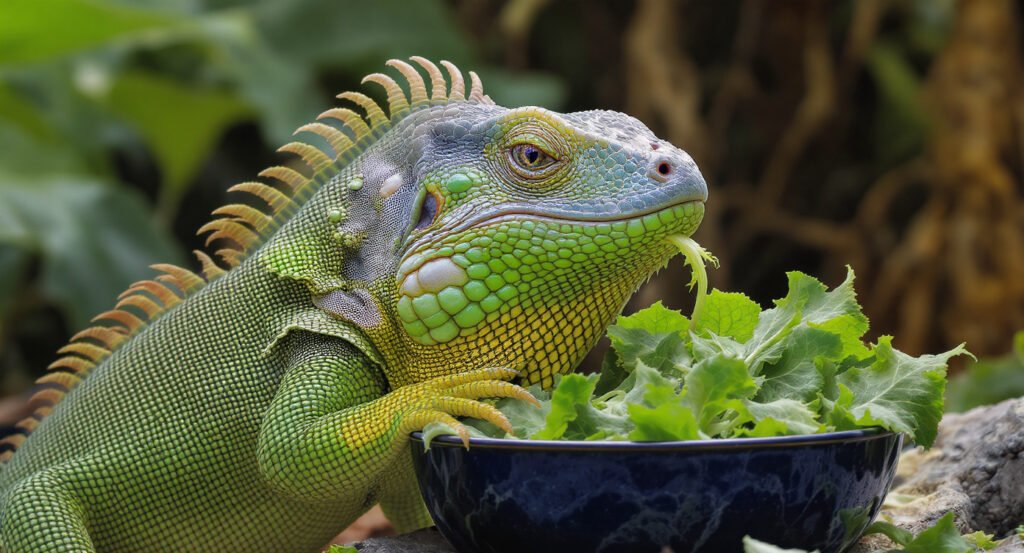
Green iguanas are magnificent herbivorous reptiles that require a carefully balanced diet to thrive in captivity. As one of the most popular pet lizards, understanding proper nutrition is essential for keeping your iguana healthy, vibrant, and active throughout its 15-20 year lifespan. Many new iguana owners make critical dietary mistakes that can lead to metabolic bone disease, kidney failure, and other serious health issues.
Understanding Green Iguana Nutritional Needs
Unlike many other reptiles, green iguanas are strict herbivores once they reach adulthood. Their digestive systems are specifically designed to process plant matter, with a hindgut fermentation chamber that breaks down fibrous vegetation. In the wild, these remarkable creatures spend their days foraging through tropical canopies, consuming leaves, flowers, and fruits that provide the calcium, vitamins, and minerals they need.
The cornerstone of a healthy iguana diet is achieving the proper calcium to phosphorus ratio of approximately 2:1. This ratio is crucial because iguanas require substantial calcium for bone development and maintenance. When phosphorus levels are too high relative to calcium, it can bind with calcium in the body and prevent proper absorption, leading to devastating metabolic bone disease.
Best Foods for Green Iguanas
Building a nutritious meal plan for your green iguana involves selecting leafy greens and vegetables that are high in calcium and low in oxalates and goitrogens. Oxalates can bind calcium and make it unavailable for absorption, while goitrogens can interfere with thyroid function when consumed in excess.
Worried About Your Reptile's Health?
Upload a photo and get instant AI health analysis. Catch problems before they become expensive vet bills.
Get Free Health Check →Staple Foods (70-80% of Diet)
These nutrient-dense greens should form the foundation of every meal:
- Collard greens – Exceptionally high in calcium with an excellent Ca:P ratio
- Mustard greens – Nutrient-rich with good calcium content
- Turnip greens – High in calcium and vitamins A and C
- Dandelion greens – Excellent calcium source that iguanas love
- Escarole – Low in oxalates with moderate calcium
- Arugula – Provides variety with good nutritional profile
- Butternut squash – Rich in vitamin A and fiber
- Acorn squash – Good calcium to phosphorus ratio
Supplementary Vegetables (10-20% of Diet)
These foods add variety and additional nutrients but should be offered in moderation:
- Green beans – Low calcium but good for variety
- Bell peppers – High in vitamin C, all colors acceptable
- Snap peas – Occasional treat with fiber
- Okra – Good calcium content when available
- Hibiscus flowers – Excellent treat high in calcium
Fruits (5-10% of Diet Maximum)
While iguanas enjoy fruits, they should be limited due to high sugar content and poor calcium ratios. Offer these as occasional treats:
- Figs – Best fruit option with higher calcium
- Papaya – Digestive enzymes and moderate nutrition
- Mango – Small amounts for variety
- Strawberries – Occasional treat only
Foods to Avoid Completely
Certain foods are toxic or nutritionally inappropriate for green iguanas and should never be offered. Avoid all animal proteins including insects, meat, eggs, and dairy products. Despite outdated information suggesting otherwise, animal protein causes kidney damage in iguanas. Also eliminate spinach, Swiss chard, and beet greens due to extremely high oxalate levels that block calcium absorption.
Never Miss Early Warning Signs
AI photo analysis catches subtle health issues humans miss 80% of the time. Early detection = healthier reptile + lower vet bills.
Start Free Trial →Never feed lettuce varieties like iceberg or romaine, as they provide almost no nutritional value and can cause diarrhea. Avoid rhubarb entirely as it contains toxic compounds, and skip avocado which is poisonous to many reptile species.
Preparing and Serving Iguana Meals
Proper food preparation maximizes nutrition and prevents choking hazards. Chop all greens and vegetables into pieces roughly the size of your iguana’s head—small enough to eat easily but large enough to require some chewing. This promotes natural feeding behavior and aids digestion.
Offer fresh food daily in a clean dish, removing uneaten portions after a few hours to prevent bacterial growth. Many iguana keepers prepare several days worth of salad mix at once, storing it in the refrigerator in an airtight container. This approach saves time while ensuring consistent nutrition.
Supplementation Requirements
Even with an excellent base diet, green iguanas typically require calcium supplementation. Dust food with calcium powder (without vitamin D3 for iguanas with UVB access) 2-3 times weekly for juveniles and once weekly for adults. A high-quality reptile multivitamin should be offered once weekly to ensure adequate vitamin A and other micronutrients.
Join thousands of successful reptile owners
Try ReptileCoach Free →Feeding Schedules by Age
Young iguanas (under 18 months) are growing rapidly and should have access to fresh food daily, eating as much as they want. Juvenile iguanas may eat twice daily. Adult iguanas typically eat once daily or every other day, with portion sizes roughly equivalent to the size of their body (excluding tail). Monitor body condition closely—you should be able to feel ribs with gentle pressure but not see them prominently.
Common Dietary Mistakes to Avoid
The most frequent error is feeding too much fruit, which leads to obesity and nutrient imbalances. Another critical mistake is relying on iceberg lettuce or low-nutrition vegetables as staples. Many owners also fail to provide adequate UVB lighting, which is essential for vitamin D3 synthesis and calcium metabolism regardless of diet quality.
Inconsistent feeding schedules and failure to monitor weight can allow health problems to develop unnoticed. Regular veterinary checkups with a reptile specialist help catch nutritional deficiencies before they become severe.
Track Your Iguana’s Nutrition with Technology
Managing your green iguana’s complex dietary needs requires attention to detail and consistent record-keeping. Whether you’re a first-time iguana owner or an experienced keeper managing multiple reptiles, having the right tools makes proper nutrition easier to maintain. The ReptileCoach App provides species-specific feeding guides, calcium ratio calculators, supplement scheduling reminders, and health tracking features designed specifically for iguana keepers. Join thousands of reptile enthusiasts who use the app to give their iguanas the best possible care every day.
"This app saved my bearded dragon's life. The AI caught early MBD in photos I thought looked completely normal. Worth every penny!"
— Sarah K., ReptileCoach User
Get Your Free 7-Day Trial →Ready to Give Your Reptile the Best Care?
Stop guessing and start knowing. Get personalized AI-powered care guidance, photo health analysis, and 24/7 expert advice for YOUR specific reptile.
Get Personalized Care Guidance
AI-powered photo analysis and daily care tracking for YOUR reptile
Try Free for 7 Days →